From Coca Cola to McDonalds: How Did Rahul Gandhi Woo the OBCs?
“A United Opposition is coming.”
Spelling out the Congress' game plan ahead of the 2019 Lok Sabha elections, Congress President Rahul Gandhi, assured his audience at the OBC Convention held in New Delhi that PM Narendra Modi, BJP chief Amit Shah and RSS chief Mohan Bhagwat will face a united opposition in six months to one year.
In a bid to woo the voters from Other Backward Classes (OBCs), Gandhi said that skilled and talented people were being denied their due credit and opportunities under the Modi government.
What Did Rahul Gandhi Say?
1. 'Skilled People Were Pushed to the Back Room'
Citing no dearth of skills in the OBC community, Gandhi said that people who really work hard were confined to the back room and the benefits of their labour was enjoyed by someone else.

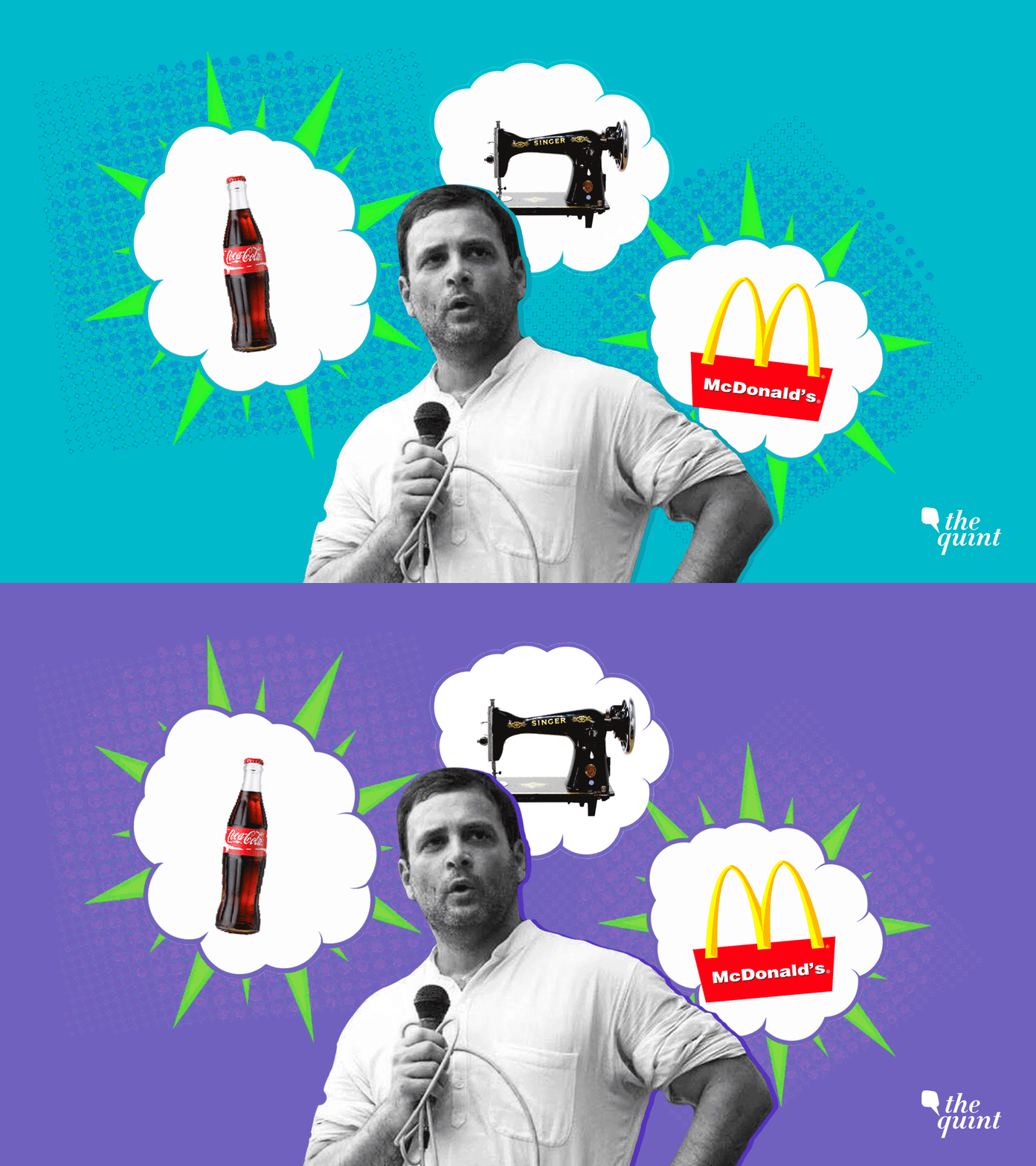
Gandhi also cited examples of successful American entrepreneurs to attack Modi's policies but took the analogies too far by describing the founder of Coca-Cola as a 'shinkanji seller' and that of McDonald's a 'dhaba wala'.
He also said the founders of auto giants Ford, Mercedes and Honda were 'mechanics' whose skills were recognised by the meritocratic system in their countries and allowed them to prosper.
Gandhi's references to occupations instead of caste groups could also imply a veiled attack on PM Modi's ‘chaiwala' politics. Modi, who is a OBC himself has often used his past occupation to boost his appeal during the 2014 election campaign.
2. 'Modi Govt Helped Industrialists, Not Farmers, OBCs'
Attacking the BJP, Gandhi alleged that the Modi government had ignored the interests of farmers, adivasis, OBCs but helped a small group of industrialists by waiving loans totalling about Rs 2.5 lakh crore.

3. 'India Enslaved by RSS, BJP'
The Congress chief asserted that India has been enslaved by two-three leaders of the BJP and the RSS.

Gandhi accused the RSS of dividing people and not allowing them an opportunity to prosper.
4. 'Congress Hands over the Keys of the Bus to OBCs'
Promising to give "space" to OBCs, he said, for 70 years, the Congress party had stood by the OBC community and it would continue to strive for its rights.

"The Congress will bring you to the Vidhan Sabha, Lok Sabha and Rajya Sabha. We wish to empower you,” said Gandhi.
Wooing a Section that Alienated Congress 60 Years Ago
Ahead of the 2014 general elections, Rahul Gandhi had said that he “does not believe in playing the caste card.” Four years down the line, while the BJP is pitching for a quota within quota for the most backwards OBCs (MBCs), the Congress cannot seem to ignore a community which forms a major vote bank in most states.
In late 1960s, socialist ideologue Ram Manohar Lohia's coined the slogan “pichhda paave sau mein saath” (OBCs should get 60 percent), reminding the community that they are entitled to 60 percent of the country's resources. Lohia's words had echoed with the looming sentiment of the Other Backward Classes.
Sixty years down the line, political analysts believe that Gandhi is treading Lohia's path by reminding the OBCs that they should get their due 60 percent entitlement.
Why is Gandhi's Speech Significant?
Political analysts are of the view that Gandhi's speech is significant for two main reasons – it sends a strong message to Congress' allies that the former will uphold the interests of the groups that the latter has been advocating so far, and that it is an attempt by the Congress to win back the confidence of the OBCs.
Others contend that the road for Gandhi will not be smooth mainly because the OBCs have been internally divided about their party allegiances. There is also a possibility that the allies feel threatened by the Congress trying to woo their vote banks.

-
Where You Live Shapes How You Get To Work | The Reason Why

Two-wheelers are the most popular way to get to work in India, accounting for nearly 43% of workplace commutes.
-
High US Salaries, No Green Card Certainty: The Financial Calculation Facing Indian H-1B Families
The suspension of PERM processing at eight technology employers does not cancel existing H-1B visas. What it does is force a question many Indian families have been avoiding: is the US salary worth tying your career and family plans to one employer?
-
Unhedged Position: Can India See An Indonesia-Style Time Correction?
The Nifty is trading below levels it first clocked in 2024. Is there, then, as I have suggested in the headline, potential that the current time correction drags on painfully for the next three-five, even ten years?
-
Navigating Friction And Energy Realities: An Analysis Of Marco Rubio's October Visit To India
Occurring at a critical juncture marked by stalled trade negotiations and escalating geopolitical pressures over global energy supplies, the visit offers a profound window into modern US-India relations.
-
India Exports Capital. Why Not Export Trusteeship?
The big question, then, is whether India can build an institution that global borrowers, investors, banks, and lawyers can trust, even without an Indian connection.
-
France's Economy & Politics Are In Crisis | The Reason Why
Let's look at how the French economy and politics evolved under Nicolas Sarkozy, Franois Hollande and Emmanuel Macron.
-
You May Inherit The Business. You Must Earn Its Credibility.
Succession tests the founder's ability to share authority as much as it tests the next generation's readiness to assume it.
-
Signing Deals Is One Thing; Making Them Work Is Another | The Week In Whys
Sometimes, things don't turn out as planned. Indian companies have lost some bids to rivals, some projects won't produce until 2030.
-
FOMC Wall, PERM Suspension, Hospital Stocks | Talking Points This Week
A PERM suspension would directly affect green-card sponsorship rather than H-1B visas, so the near-term earnings impact could remain relatively limited. The key question is whether this marks a new phase in US scrutiny of Indian IT.
-
Everything, Everywhere, All At Once: Dalal Street's Week To Forget | Joining The Dots
Visa curbs, a Starlink spat and cancer drug caps: what connects this week's shocks for Indian markets









