Five Reasons Why Karnataka Elections Were A Trailer For The 2019 Movie
‘Whoever wins Karnataka loses India' is an electoral truism that got nixed yesterday. It used to be almost as robust an indicator as ‘whoever wins Ohio wins America'. But nobody won Karnataka, thereby depriving us of the polls' quick-fix predictive ability. By this yardstick then, 2019 is an open game, in uncharted territory!
But here are five key takeaways that have made the Karnataka elections a microcosm of what to expect in the general elections in 2019.
One: Modi Will Be India's Strongest Political Leader, But His Wave Will Ebb
I know this assertion will outrage Modi's fans, but the data points, unmistakably, to a diminishing electoral wave. I shall present only facts, without a single adjective, so even the bhakts (as Modi's trolling devotees are colloquially called) will find it difficult to pick holes:
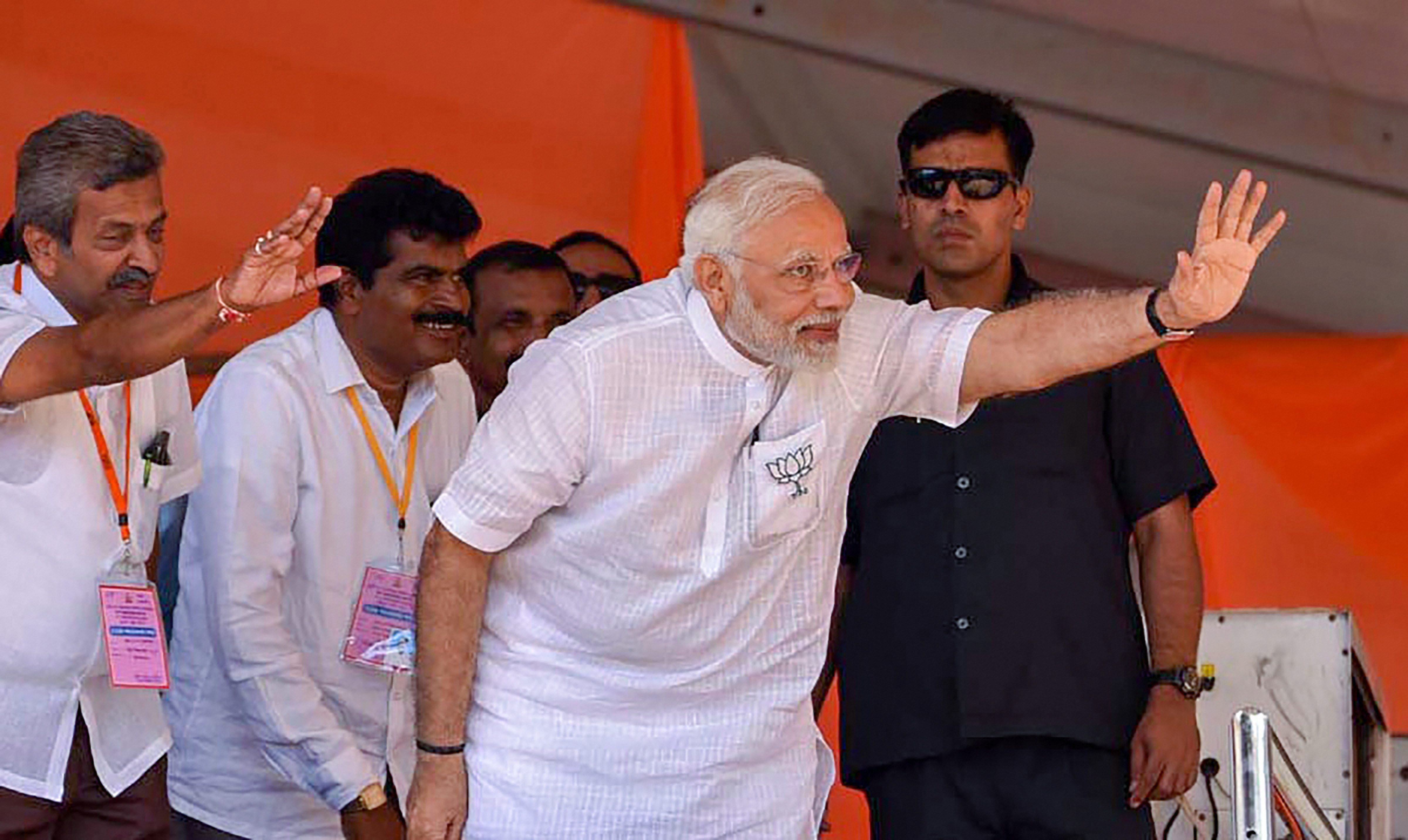
- The Prime Minister virtually put himself on the Karnataka ballot, campaigning with the same intensity that he showed in 2014 (21 rallies in about a week), and is likely to repeat in 2019. So the weak data points cannot be parked at BS Yeddyurappa's doorstep.
- Despite such a hectic outreach, ‘Modi's 104' fell far short of ‘BSY's 110' in the wave-less assembly election of 2008. Can you still call yesterday's outcome a ‘Modi wave'?
- The comparison with ‘Peak Modi data' of 2014 Lok Sabha polls, is even more revealing: the BJP's vote share fell by seven percentage points, from 43 percent to 36 percent; also, while Modi had a clear lead in about 135 assembly constituencies in 2014, he could pull in only 104 yesterday; and the BJP's absolute votes, despite an increase in the number of first-time voters, fell from 1.33 crore to 1.31 crore (even as the Congress gained from 1.26 crore to 1.38 crore)! Would you still call it a wave?
- Compared to 2008, BJP's wins in Bengaluru, thought to be Modi's diehard urban constituency, fell from 19 to 11. Wave?
I shall move on without a comment here, to let the facts do their own talking.
Two: Congress Will Gain Vote Share, But Fall Far Short Of Majority
That's pretty much what will happen in 2019. The Congress is expected to get more votes in Jammu & Kashmir, Punjab, Haryana, Rajasthan, Gujarat, Maharashtra, Madhya Pradesh, Chhatisgarh, Bihar, Jharkhand, Karnataka, Kerala, Telengana, and Assam versus what it notched up in 2014.
But in terms of parliamentary seats, the best the Congress can hope for is a three-digit number short of 150.
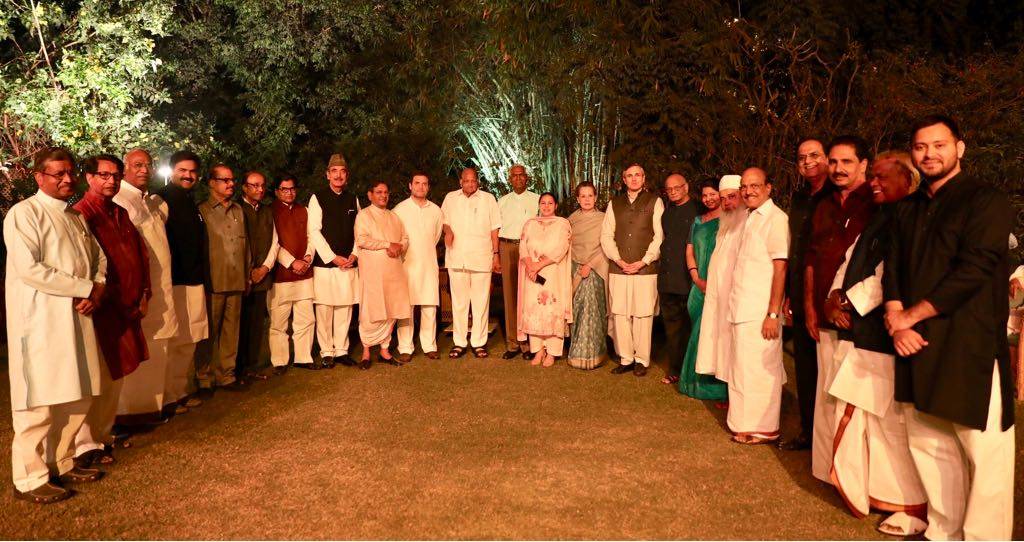
In order to form a government, it will have to do a deal with the regional parties, exactly as it pitched to HD Kumaraswamy's Janata Dal (Secular) in Karnataka. Now whether the Congress is in a position to lead this coalition, or become the junior partner in it, will depend on how close it manages to get to 150 seats.
 @INCIndia/Twitter) ">
Three: Modi-Neutral Regional Parties Could Play It Both Ways
A few regional parties in India are ‘Modi-neutral', that is, they can do a deal with either the BJP or the Congress, as is evident from the option Kumaraswamy has in Karnataka. Other such ‘equidistant' regional operators are Telangana Rashtra Samithi, YSR Congress, Telugu Desam Party, Shiv Sena, AIADMK, DMK, Janata Dal (United), Indian National Lok Dal, and a clutch of tiny outfits.
These shall have the best shot at being in the Union government, irrespective of whether it is a UPA or NDA or Third Front-led government that gets formed after 2019.
To use a Hindi saying, “paanchon ungliyan ghee main” (all five fingers in the fat; certain gains).
Four: Anti-Modi Regional Parties May Get To Play King Or King-Maker
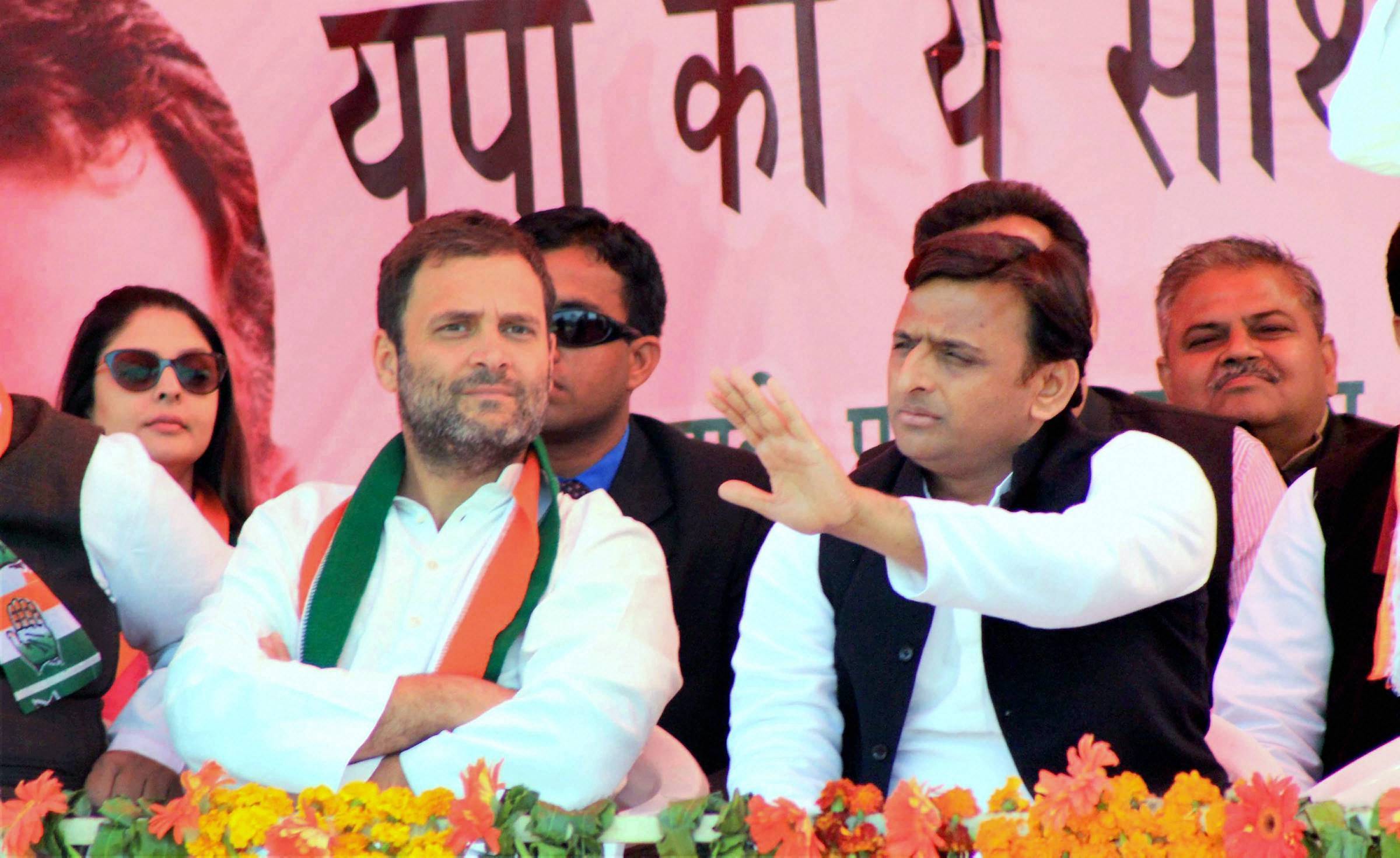
A few regional parties will find it politically impossible to align behind Modi. These include Samajwadi Party, Bahujan Samaj Party, Biju Janata Dal, the Communists, Rashtriya Janata Dal, Trinamool Congress, Nationalist Congress Party, and AIUDF. Their best bet would be a United Front-like outcome in 1996, where a weak Congress is forced to prop up a regional chieftain led Union government.
In either option, they could play the King or Kingmaker. Of course, their default option would be to sit in the opposition.
Five: President Ram Nath Kovind Will Be In Governor Vajubhai Vala's Shoes
Ultimately, it may boil down to President Kovind having to exercise his discretion in inviting either Narendra Modi or Rahul Gandhi or a regional chieftain to form the government, similar to the options before Governor Vajubhai Vala in Bengaluru. Which precedent will the President prefer? We shall have to wait until May 2019 to get an answer here.
Clearly, what happened in Karnataka on Tuesday is a trailer of the movie that will play out after the general elections next year. Enjoy the show.
Raghav Bahl is the co-founder and chairman of Quintillion Media, including BloombergQuint. He is the author of two books, viz ‘Superpower?: The Amazing Race Between China's Hare and India's Tortoise', and ‘SuperEconomies: America, India, China & The Future Of The World'.

-
High US Salaries, No Green Card Certainty: The Financial Calculation Facing Indian H-1B Families

The suspension of PERM processing at eight technology employers does not cancel existing H-1B visas. What it does is force a question many Indian families have been avoiding: is the US salary worth tying your career and family plans to one employer?
-
Unhedged Position: Can India See An Indonesia-Style Time Correction?
The Nifty is trading below levels it first clocked in 2024. Is there, then, as I have suggested in the headline, potential that the current time correction drags on painfully for the next three-five, even ten years?
-
Navigating Friction And Energy Realities: An Analysis Of Marco Rubio's October Visit To India
Occurring at a critical juncture marked by stalled trade negotiations and escalating geopolitical pressures over global energy supplies, the visit offers a profound window into modern US-India relations.
-
India Exports Capital. Why Not Export Trusteeship?
The big question, then, is whether India can build an institution that global borrowers, investors, banks, and lawyers can trust, even without an Indian connection.
-
France's Economy & Politics Are In Crisis | The Reason Why
Let's look at how the French economy and politics evolved under Nicolas Sarkozy, Franois Hollande and Emmanuel Macron.
-
You May Inherit The Business. You Must Earn Its Credibility.
Succession tests the founder's ability to share authority as much as it tests the next generation's readiness to assume it.
-
Signing Deals Is One Thing; Making Them Work Is Another | The Week In Whys
Sometimes, things don't turn out as planned. Indian companies have lost some bids to rivals, some projects won't produce until 2030.
-
FOMC Wall, PERM Suspension, Hospital Stocks | Talking Points This Week
A PERM suspension would directly affect green-card sponsorship rather than H-1B visas, so the near-term earnings impact could remain relatively limited. The key question is whether this marks a new phase in US scrutiny of Indian IT.
-
Everything, Everywhere, All At Once: Dalal Street's Week To Forget | Joining The Dots
Visa curbs, a Starlink spat and cancer drug caps: what connects this week's shocks for Indian markets
-
India Is Going Abroad For Critical Minerals. But It May Take Years To Pay Off | The Reason Why
Although India's steps are in the right direction, they remain modest compared with India's growing dependence.