EWS Reservation Case In Supreme Court: All You Need To Know
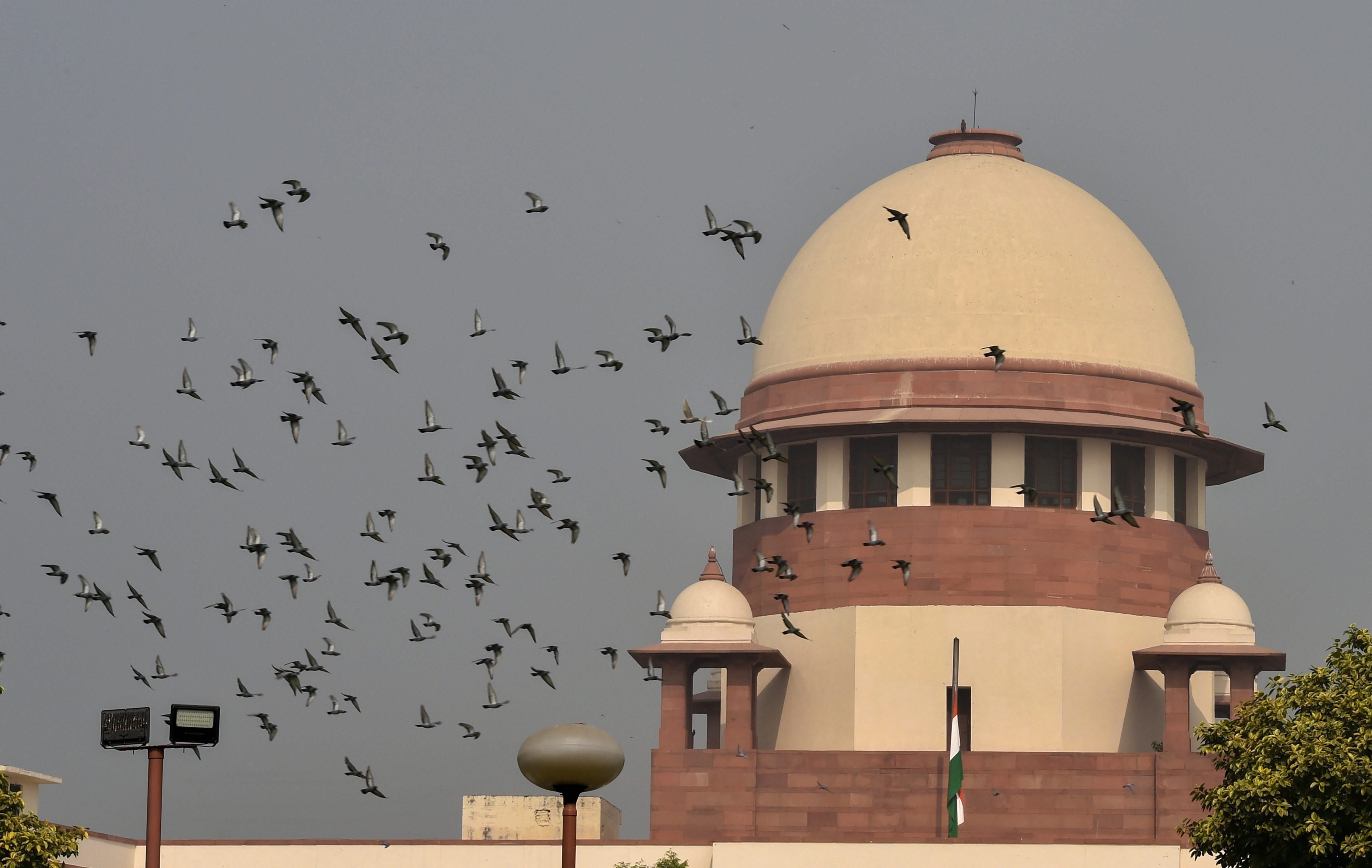
After three years, the Supreme Court has taken up the challenge to the 103rd Constitutional amendment which enabled the government to make special provisions for advancement of economically weaker sections.
The EWS reservation provides 10% reservation of seats in public and private educational institutions as well as in public employment for ‘'economically weaker sections''. The 10% reservation is in addition to the quota for scheduled castes, scheduled tribes, and educationally backward classes of citizens. These categories cannot avail the EWS quota.
The challenge to the reservation is based on two points:
Economic criteria being the basis of reservation.
The breach of the 50% ceiling limit on reserved seats.
Petitioners Argue Against Economic Criteria As Basis And 50% Ceiling Limit
The apex court will examine to what extent can economic criteria be the basis of providing reservation.
Article 15 of the constitution prohibits discrimination on the basis of religion, race, caste, sex or place of birth. However, there could be exceptions to this rule for advancement of any socially and educationally backward classes of citizens or for scheduled castes and scheduled tribes.
The 103rd amendment expanded this exception for making special provision for advancement of any economically weaker sections of citizens.
First, the petitioners have argued that the basis for providing reservation should be social backwardness and that economic condition cannot be the sole reason on which reservation can be granted.
The economic condition of a person is ever evolving and reservation is meant for those who have faced historic exclusion, the petitioners have said.
Relying on the 1992 Indra Sawhney decision by a nine-judge bench, the petitioners have submitted that the majority in that case had specifically stated that economic criteria alone cannot be the basis of providing reservation. Reservations which ignore the issue of backwardness or are based on a single criteria such as caste or income have been consistently struck down, the petitioners have stated.
Second, providing economic reservation cannot be limited to general categories, they've said. Doing so will be the violation of the equality code which is a well-established basic feature of the constitution.
The principle of equality as per the petitioners would be violated as the EWS reservation excludes scheduled castes and scheduled tribes from availing the benefit.
The third argument rests on the 50% ceiling limit for reservations. The petitioners have emphasised on the judgments of M Nagaraj and Jarnail Singh to say that the top court has already held that the ceiling limit of 50% cannot be breached except in very rare situations.
For instance, the petitioner said, the 50% ceiling could be relaxed for remote and far flung areas which are cut off from the rest of the nation resulting in an exceptional situation.
The existing reservation already stands at 49.5% and the additional 10% reservation would take overall reservations well above 50%, the petitioners have argued.
Government Defends Constitutionality Of The Provision
The government's case is that the state is bound to look out for the weaker sections of the society and has defended the EWS reservation on that ground.
In its submissions, it has countered the reliance by the petitioners on the Indra Sawhney judgment. That case dealt with reservation for an entirely different class -- socially and educationally backward and the Scheduled Caste and Scheduled Tribes, it has stated.
The judgment did not deal with reservation for economically weaker sections of the society and anything on this issue in the judgment can only be an observation, the government has said.
The central government has also questioned the argument that economic criteria cannot be the sole basis of reservation and called it an incorrect position. Economic criteria as a basis of reservation has been held as a relevant factor for determination of social and educational backwardness and has relied on the judgment in the case of Society for Unaided Private Schools of Rajasthan to underscore its point.
The top court held in this case that provisions ensuring a level playing field for children, who were prevented from accessing education for lack of means to pay their fees, would not be a violation of Article 14.
The central government is likely to start the oral arguments this week.

-
High US Salaries, No Green Card Certainty: The Financial Calculation Facing Indian H-1B Families

The suspension of PERM processing at eight technology employers does not cancel existing H-1B visas. What it does is force a question many Indian families have been avoiding: is the US salary worth tying your career and family plans to one employer?
-
Unhedged Position: Can India See An Indonesia-Style Time Correction?
The Nifty is trading below levels it first clocked in 2024. Is there, then, as I have suggested in the headline, potential that the current time correction drags on painfully for the next three-five, even ten years?
-
Navigating Friction And Energy Realities: An Analysis Of Marco Rubio's October Visit To India
Occurring at a critical juncture marked by stalled trade negotiations and escalating geopolitical pressures over global energy supplies, the visit offers a profound window into modern US-India relations.
-
India Exports Capital. Why Not Export Trusteeship?
The big question, then, is whether India can build an institution that global borrowers, investors, banks, and lawyers can trust, even without an Indian connection.
-
France's Economy & Politics Are In Crisis | The Reason Why
Let's look at how the French economy and politics evolved under Nicolas Sarkozy, Franois Hollande and Emmanuel Macron.
-
You May Inherit The Business. You Must Earn Its Credibility.
Succession tests the founder's ability to share authority as much as it tests the next generation's readiness to assume it.
-
Signing Deals Is One Thing; Making Them Work Is Another | The Week In Whys
Sometimes, things don't turn out as planned. Indian companies have lost some bids to rivals, some projects won't produce until 2030.
-
FOMC Wall, PERM Suspension, Hospital Stocks | Talking Points This Week
A PERM suspension would directly affect green-card sponsorship rather than H-1B visas, so the near-term earnings impact could remain relatively limited. The key question is whether this marks a new phase in US scrutiny of Indian IT.
-
Everything, Everywhere, All At Once: Dalal Street's Week To Forget | Joining The Dots
Visa curbs, a Starlink spat and cancer drug caps: what connects this week's shocks for Indian markets
-
India Is Going Abroad For Critical Minerals. But It May Take Years To Pay Off | The Reason Why
Although India's steps are in the right direction, they remain modest compared with India's growing dependence.









