Essar Steel Insolvency: Supreme Court Restores Power To Committee Of Creditors
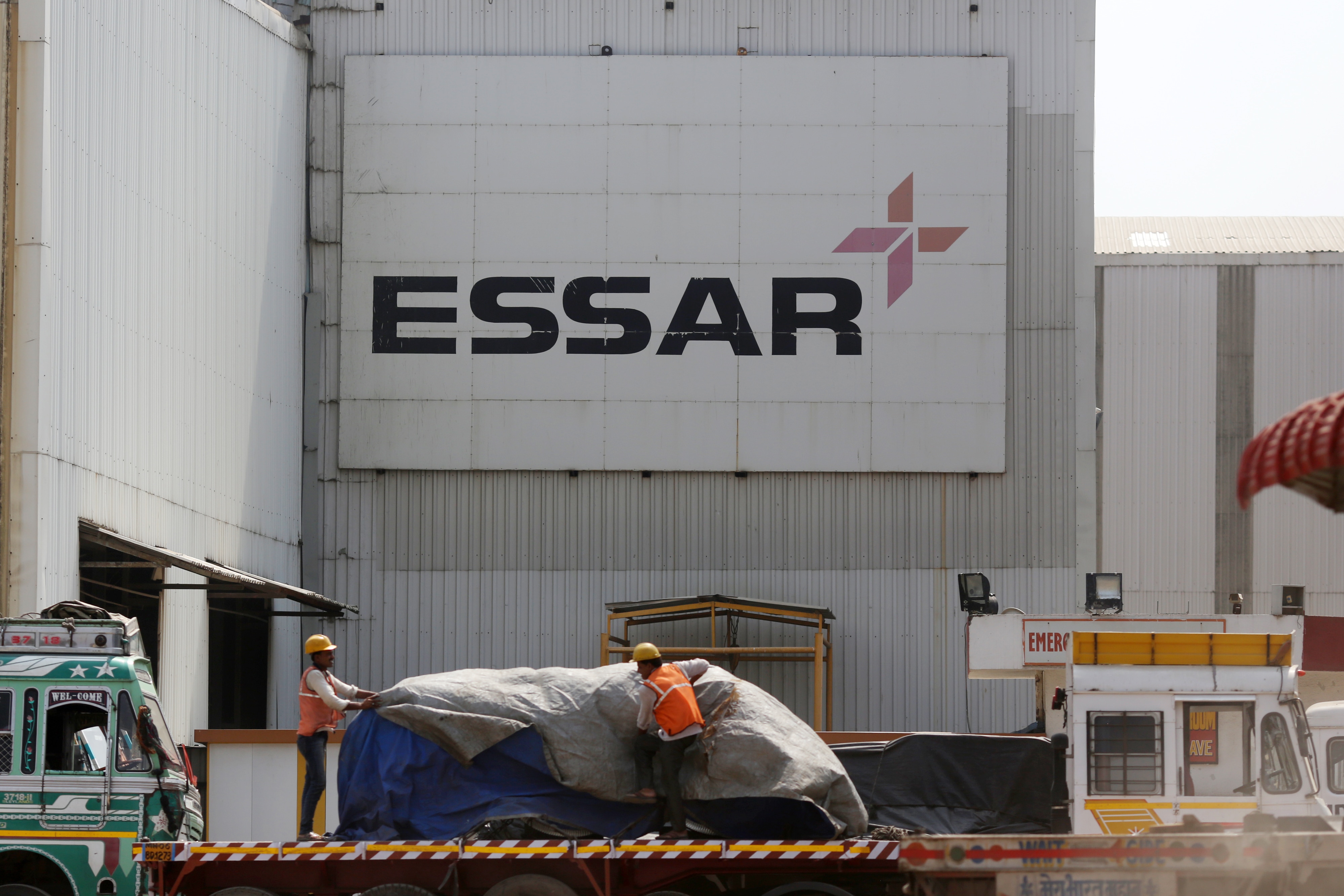
The distribution of claims in the Essar Steel Ltd. insolvency matter will take place according to the resolution plan by winning bidder ArcelorMittal, said the Supreme Court today, setting aside a previous decision by the NCLAT which sought proportionate distribution among different classes of creditors.
Delivering the judgment in court, Justice Nariman said that:
- Principle of equality of creditors is flawed.
- Rights of distribution of claims are with the committee of creditors.
- The CoC's decision must balance the interests of all stakeholders.
In doing so, the court restored primacy to CoC decisions, as has been the case with insolvencies so far under the Insolvency and Bankruptcy Code, 2016. “The NCLT/NCLAT cannot interfere with the commercial decisions taken by the CoC.”
The adjudicating authority can send the resolution plans back to the CoC to be complied with the guidelines, but it cannot change the plan, the Supreme Court clarified.
In another important pronouncement, the court said the 330-day period shall not be mandatory. This deadline was introduced by an amendment to the IBC. The law itself specifies a 270-day deadline for completion of insolvency proceedings, failing which liquidation is triggered. But several court decisions had allowed for litigation periods to be deducted from the 270-day timeline. As a result of which, cases, including the Essar Steel one, have dragged for well over than 270 days. In order to limit the litigation-led delay the IBC amendment had mandated a final 330-day deadline for completion of insolvency including litigation.
“It shall be open for the adjudicating authority to extend the time in exceptional cases,” said Justice Nariman.
The Essar Steel case was decided by a Supreme Court bench comprising Justices Rohinton Nariman, Surya Kant and V Ramasubramanian.
The full written order is yet to be made available.
Vindication For Financial Creditors: SBI
According to Prashant Kumar, chief financial officer and deputy managing director at State Bank of India, the judgment is a vindication for financial creditors who decided the allocation of funds on the basis of security cover and principality. SBI is the largest lender to Essar Steel and is owed more than Rs 13,000 crore, out of the Rs 49,000 crore dues that the steel maker owed to banks and other financial creditors.
Mrutyunjay Mahapatra, managing director and chief executive officer at Syndicate Bank, expected Rs 1,200 crore worth recoveries in the Essar Steel case, now that ArcelorMittal can take over the company.
“While I do think, in commercial matters, time is of the essence and equally important as money in most cases, but there are three layers of court process in IBC that one has to go through and I think sometimes the legal process can be tardy and then the corporate leaders cannot be blamed,” said Sitesh Mukherjee, partner and head of disputes at Trilegal.
“Traditional common law safe harbours of equity and fair play, cannot be allowed to distort purposive economic legislation and policy. We ruined the SICA and even the SARFAESI—the Code will be kept well insulated from the mistakes of the past. That's the most important long-overdue signalling this judgment delivers,” said Sudipta Routh, partner at IndusLaw.
NCLAT's theory that 50 percent should be given to unsecured & 50 percent to secured creditors has been completely disregarded. It was never intended, according to any law, that unsecured & secured creditors should get the same treatment. That ghost has been finally buried; that's the real achievement of this judgment. The judgment lays down the correct principles of transfer of property act, bankruptcy law & supports whole principles of banking laws.Shardul Shroff, executive chairman, Shardul Amarchand Mangaldas
Watch | Nilang Desai and Sitesh Mukherjee analyse the implications of Supreme Court judgment
According to Shardul Shroff, executive chairman of Shardul Amarchand Mangaldas, the judgment paves the way for ArcelorMittal to bring in funds and close the transfer of assets within the next 15 days. The Ruia family has now exhausted all the firepower it had to pose any further legal challenges and if it tries to hold on to Essar Steel even after this judgment, it would amount to contempt of court and there could be heavy punishment, Shroff said.
Satish Kumar Gupta, the resolution professional appointed at Essar Steel, said the approval of the resolution plan by the Supreme Court demonstrates the credibility, effectiveness and transparency of the resolution process under IBC and enhances confidence of various stakeholders and investors in the IBC process. According to Gupta, this will lead to an inflow of Rs 42,000 crore to multiple creditors.
The Case So Far...
Admitted to insolvency in June 2017, Essar Steel's resolution proceedings have faced several legal challenges ranging from promoters, the Ruia family, seeking to make a backdoor entry into the process, despite being barred by law, to the latest issues of parity among different classes of creditors.
In July this year, the National Company Law Appellate Tribunal upheld the Rs 42,000 crore winning bid of ArcelorMittal and ordered an equal recovery of 60.7 percent for secured, unsecured and operational creditors of Essar Steel.
This order was appealed by:
- Secured financial creditors—who are opposed to the NCLAT's decision of putting secured, unsecured and operational creditors on the same footing, and the dilution of the powers of the committee of creditors.
- Financial creditors also challenged the NCLAT's view that guarantees and indemnities provided by Essar Steel promoter Prashant Ruia would become ineffective once financial creditors are paid under the resolution plan.
- One financial creditor, Standard Chartered Bank.
- Unsecured creditors who sought to challenge the constitutionality of amendments to the Insolvency and Bankruptcy Code, 2016, that, among other things, provided a minimum threshold, linked to liquidation value, for payments to operational creditors.
As a result the questions facing the Supreme Court were:
- Should parity exist between financial and operational creditors?
- Can there be differential treatment between financial creditors themslevs?
- Constitutionality of the IBC amendment marking the liquidation value as minimum amount to be given to operational creditors in the insolvency process.
- Validity of the 330-day insolvency period introduced by amendments to IBC in 2019. The 330-day period includes the time taken for litigation.
As part of its judgment, the apex court also ruled that the principle of equality among creditors was flawed. The argument was presented in court after the NCLAT's decision in July, about allocation of funds received from ArcelorMittal. The appellate bench had ruled that all classes of creditors, irrespective of the security they hold would receive 60.7 percent recovery on their outstanding dues. This had benefited Standard Chartered Bank as well as operational creditors.
The secured financial creditors had opposed this logic in the Supreme Court and now reserve the right to decide on the allocation of funds.
“To look at secured and unsecured loans in an equal way is a disaster because then how does one go into fresh lending in a company, assume that security covers you and then find that when assets don't match liabilities, actually you are unsecured. What's the point of security then. It destroys the basis of new lending,” Nilang Desai, partner, AZB & Partners, told BloombergQuint after the judgment came out on Friday.
Lenders to Essar Steel have argued that not considering the security cover while allocating funds would be detrimental to the principles of lending conducted by various lenders.
“The apex court has correctly recognised the difference between secured and unsecured creditors which is essential for the banking industry where majority lending is done basis collateral. The apex court has also given due recognition to the commercial wisdom of the lenders and has made CoC the king,” said Sapan Gupta, national practice head of banking & finance at Shardul Amarchand, the law firm representing the committee of creditors.
Read these stories for more background information on the Essar Steel case and the hearings in the Supreme Court.
Essar Steel's Insolvency: Final Lap?
Day 1: Fair, Equitable Treatment Does Not Mean All Creditors Are Equal, Argues Creditors' Committee
Day 2: Creditors' Committee Says Insolvency Code Mandates Primacy Of Financial Creditors
Day 3: Standard Chartered Got An ‘Extravagant Bonanza', Argues SBI
Day 4: Creditors' Committee Treated Us Worse Than Operational Creditors, Says Standard Chartered
Day 5: Essar Hearing Day 5: Operational Creditors Make Their Case As Hearing Nears Conclusion

-
Navigating Energy Crossroads: S Jaishankar's Call For Diversified Supply Chains At G20 Ministerial Meeting

As geopolitical fault lines continue to test maritime trade routes and commodity flows, Jaishankar's message remains pertinent: true economic resilience requires open markets, protected transit lines, and a genuine commitment to multilateral cooperation rather than coercion.
-
Indians Are Travelling, But Not Every Journey Is A Holiday | The Week In Whys
Pilgrims, patients and working women are the real travellers, and the system hasn't quite caught up with them.
-
Getting To Work Costs Women More | The Reason Why
It is not just about women paying more than men. It is about women paying much more in cities than in villages.
-
AI Bias In Investing Cannot Be Eliminated, But It Can Be Governed
Framing is a particularly important example as identical financial information presented in terms of gains rather than losses can lead an LLM to reach a different assessment.
-
Joining The Dots | Dark Skies, Steady Diya: Why Hope Holds This Diwali
With war, a weak rupee and foreign outflows weighing on sentiment, policymakers at the NDTV World Summit and market veterans at NDTV Profit Ignite: Diwali Edition offered the same advice: stay invested and filter out the noise.
-
The Curious Case of Equitas Small Finance Bank And A CEO Who Quit For Stock
PN Vasudevan believes persistent investor concerns over a perceived conflict of interest had become a governance overhang on Equitas Small Finance Bank's stock, even as the lender improved profitability and asset quality.
-
Talking Points This Week: AI Cash Burn, A Tiger Comeback And An India That Still Finds Its Own Path
India is not immune to higher oil or tighter global liquidity, yet its earnings base is broader, its domestic policy levers are still available.
-
Foreign Investors Own Half Of HDFC Bank and ICICI Bank. An LTCG Cut Could Matter Most Here
Foreign portfolio investors have US$115 billion parked in HDFC Bank, ICICI Bank. If the government cuts long-term capital gains tax, Jefferies says returning foreign money could land here first.
-
'Never Seen This Level Of Negativity': Sandeep Tandon Says The Next Rally May Be Closer Than You Think
Veteran investor Sandeep Tandon says foreign selling is easing, large-caps are due a comeback and mid-caps are crowded, while he turns positive on gold, power and pharma this Diwali.
-
Indians Stay With Family, Not In Hotels | The Reason Why
India still lacks enough clean, reliable and affordable hotels for budget-conscious travellers.










