Electoral Bonds Will Increase Opacity, Warn Political Experts, Opposition Parties
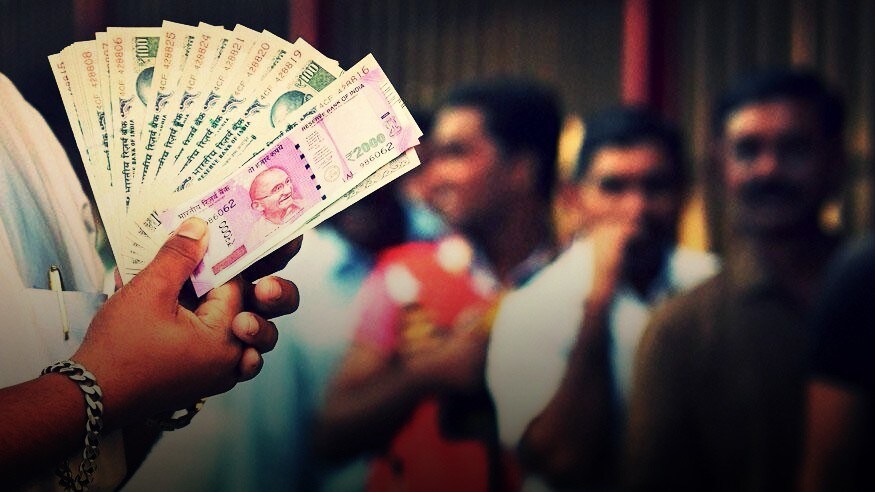
The government has pitched electoral bonds as transparent tool for political funding, but there is growing apprehension that the bonds will instead bring in more opacity.
“As citizens we need to know who is contributing to whom,” Congress Leader and Member of Parliament in the Rajya Sabha, Rajeev Gowda told BloombergQuint. Knowing who is making the donations “is the only way you can understand who is influencing policy,” he said. His party, though, has not made any real protests over the bonds apart from a letter written by Congress treasurer Motilal Vohra.
The government today finalised the terms of issuance of electoral bonds as interest-free banking instruments that can be encashed by an eligible political party through a designated bank account, Finance Minister Arun Jaitley said in the Lok Sabha today. The idea was mooted by the Narendra Modi-led administration in Budget 2017-18.
“It was a money bill should have been challenged in Parliament,” according to Jagdeep Chhokar, founding member of the Association of Democratic Reforms, a non-governmental organisation that works in the area of electoral and political reforms. “All political parties seem to be in it together because the hope is they will gain,” said Chhokar who has been tracking Indian politics for more than two decades.
The Companies Act, the Representation of People Act and the RBI Act has been amended to just facilitate hoodwinking of people in a large way.Jagdeep Chhokar, Founder, Association of Democratic Reforms

Also Read: BQExplains: How Do Electoral Bonds Work?
The other big concern among opposition parties is that the government can access information on who is buying these bonds. “This fails the fairness test because this information is with somebody,” Gowda said.
The banker knows, the RBI knows , the IT department knows. This information is accessible surely to the government of the day.Rajeev Gowda, Rajya Sabha MP and Congress Leader
Chhokar agrees that this is yet another “big danger”. “There is an apprehension that as soon as a corporate buys an electoral bond; the party in power will be alerted”.
But Sheshadri Chari of the Bharatiya Janata Party finds these apprehensions misplaced. “Tomorrow it could be the Congress in power and the BJP can raise the same issue,” said the senior BJP leader. He urged parties and citizens to have “faith in the system” and said the anonymity that electoral bonds can provide a political donor “is a big advantage”.
The political party doesn't know who the donor is so it is protecting the donor also. In case the party to whom the donation has been made doesn't win, the element of vendetta does not appear.Sheshadri Chari, National Executive Member, BJP
Watch the full conversation here.

-
Why Amazon And Flipkart Are Struggling To Beat Meesho In India's Smaller Cities

With 274 million users and lowest-cost logistics, Meesho is defending its value commerce crown against giants like Amazon and Flipkart.
-
High US Salaries, No Green Card Certainty: The Financial Calculation Facing Indian H-1B Families
The suspension of PERM processing at eight technology employers does not cancel existing H-1B visas. What it does is force a question many Indian families have been avoiding: is the US salary worth tying your career and family plans to one employer?
-
Swiggy vs Eternal: Food Delivery's Two Rivals Are No Longer In The Same Race
Eternal is building a private AI assistant, dark.ai. Swiggy is still working out how to make Instamart pay, with an operating loss of Rs 895 crore in the July-September quarter while Blinkit stayed profitable.
-
Where You Live Shapes How You Get To Work | The Reason Why
Two-wheelers are the most popular way to get to work in India, accounting for nearly 43% of workplace commutes.
-
Unhedged Position: Can India See An Indonesia-Style Time Correction?
The Nifty is trading below levels it first clocked in 2024. Is there, then, as I have suggested in the headline, potential that the current time correction drags on painfully for the next three-five, even ten years?
-
Navigating Friction And Energy Realities: An Analysis Of Marco Rubio's October Visit To India
Occurring at a critical juncture marked by stalled trade negotiations and escalating geopolitical pressures over global energy supplies, the visit offers a profound window into modern US-India relations.
-
India Exports Capital. Why Not Export Trusteeship?
The big question, then, is whether India can build an institution that global borrowers, investors, banks, and lawyers can trust, even without an Indian connection.
-
France's Economy & Politics Are In Crisis | The Reason Why
Let's look at how the French economy and politics evolved under Nicolas Sarkozy, Franois Hollande and Emmanuel Macron.
-
You May Inherit The Business. You Must Earn Its Credibility.
Succession tests the founder's ability to share authority as much as it tests the next generation's readiness to assume it.
-
Signing Deals Is One Thing; Making Them Work Is Another | The Week In Whys
Sometimes, things don't turn out as planned. Indian companies have lost some bids to rivals, some projects won't produce until 2030.










