Did Not Formulate Policy, Upheld Legislative Intent: Apex Court On Liquor Ban
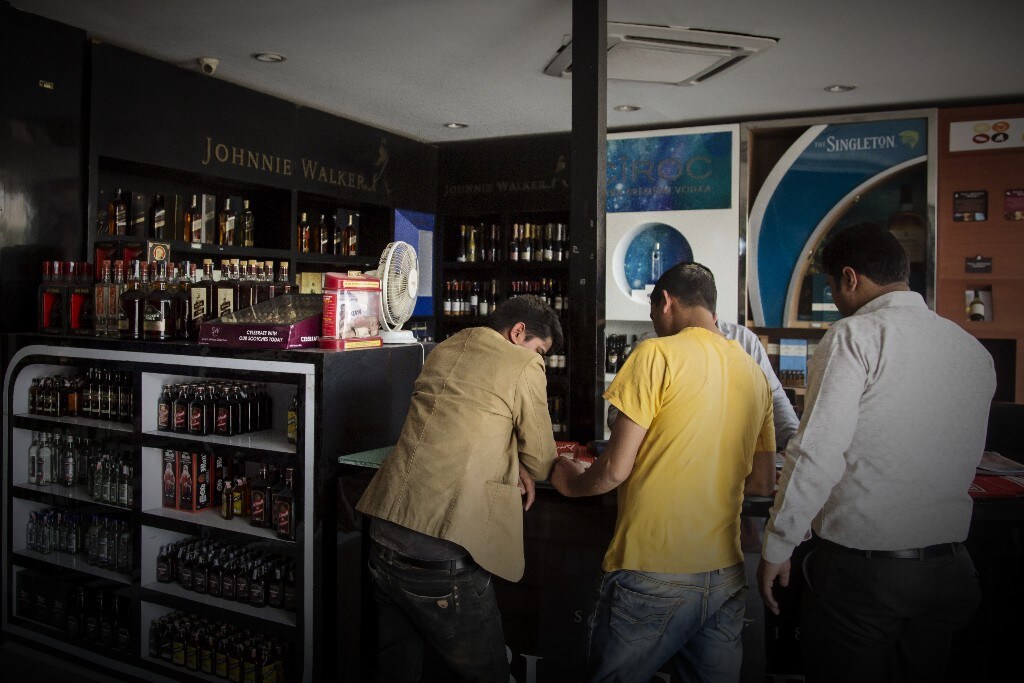
The Supreme Court is not fashioning its own policy but enforcing what has been the view of expert bodies and the Centre, India's apex constitutional body made it clear while delivering its first judgement banning sale of liquor along highways late last year.
The top court's latest order on March 31 again sought to dispel the notion that its decision is an example of the judiciary taking on a legislative function.
The Supreme Court on Friday (March 31) upheld its earlier order banning liquor sale in hotels and restaurants, or liquor outlets, within 500 metres of state and national highways, with some modifications. A bench comprising Chief Justice JS Khehar, justices DY Chandrachud and L Nageswara Rao said the ban will be applicable within 220 metres of the highway in towns with population below 20,000. The court also exempted Meghalaya and Sikkim from the court's order. The order came after more than nine states and Union territories sought a review of the court's earlier ruling.

In its previous judgement, delivered on December 15, 2016, the court mentioned circulars and advisories issued by the National Road Safety Council and the Ministry of Road Transport and Highways between 2004 and 2013 which clarify the central government's policy on liquor sale along highways.
The court said the National Road Safety Council – an advisory body set up by the government to help guide policy on road safety – unanimously decided in a meeting as far back as January 15, 2004 that licences for liquor shops should not be given along national highways.
Thereafter, in October 26, 2007, the Centre had issued a circular to all state governments advising them to remove liquor shops situated along national highways and not issue fresh licences. The government reiterated its stance in at least two advisories in December 2011 and March 2013, citing these liquor outlets as a major cause for drunk driving and consequently, road accidents.
Also Read: Supreme Court's Liquor Ban Could Be A ‘Highway To Hell' For United Spirits: CLSA
The court noted in its December 15, 2016 order that the central government advisories talk of only national highways because of the ''the distribution of legislative competence between the Union and the States. State highways fall under the domain of the states.'' Additionally, because liquor is a state subject, these could only be advisories and not mandates. What the court has done through its order is make the Centre's intent applicable to state highways as well, it said while delivering the judgement.
Explaining its rationale, the court said,
The figures which are available on record indicate that the occurrence of a large number of road accidents is not a phenomenon confined to national highways. Hence, the content of the advisories which have been issued by the Union government as well as their basis, rationale and foundation would equally apply to state highways.Supreme Court Order On December 15, 2016
This is once again reiterated in the order delivered on March 31. The court observed that "there is no logical basis to distinguish between national and state highways. The menace of drunken driving and the resultant fatalities or injuries are not confined only to national highways. Hence, the judgment of this court is neither an exercise of the court having formulated a policy or of having embarked upon a legislative exercise.''
During the hearing on the modification of the order in March, the Centre too made it clear that the court was acting based on the government's intent, ''The judgment is supported by the consistent policy and advisories of the Union government to the states to curb drunken driving and to prohibit the sale of liquor along national highways.”
Also Read: ‘Hotel Industry Will Lose Around $30 Billion A Year On Highway Liquor Ban'

-
Unhedged Position: Can India See An Indonesia-Style Time Correction?

The Nifty is trading below levels it first clocked in 2024. Is there, then, as I have suggested in the headline, potential that the current time correction drags on painfully for the next three-five, even ten years?
-
Navigating Friction And Energy Realities: An Analysis Of Marco Rubio's October Visit To India
Occurring at a critical juncture marked by stalled trade negotiations and escalating geopolitical pressures over global energy supplies, the visit offers a profound window into modern US-India relations.
-
India Exports Capital. Why Not Export Trusteeship?
The big question, then, is whether India can build an institution that global borrowers, investors, banks, and lawyers can trust, even without an Indian connection.
-
France's Economy & Politics Are In Crisis | The Reason Why
Let's look at how the French economy and politics evolved under Nicolas Sarkozy, Franois Hollande and Emmanuel Macron.
-
You May Inherit The Business. You Must Earn Its Credibility.
Succession tests the founder's ability to share authority as much as it tests the next generation's readiness to assume it.
-
Signing Deals Is One Thing; Making Them Work Is Another | The Week In Whys
Sometimes, things don't turn out as planned. Indian companies have lost some bids to rivals, some projects won't produce until 2030.
-
FOMC Wall, PERM Suspension, Hospital Stocks | Talking Points This Week
A PERM suspension would directly affect green-card sponsorship rather than H-1B visas, so the near-term earnings impact could remain relatively limited. The key question is whether this marks a new phase in US scrutiny of Indian IT.
-
Everything, Everywhere, All At Once: Dalal Street's Week To Forget | Joining The Dots
Visa curbs, a Starlink spat and cancer drug caps: what connects this week's shocks for Indian markets
-
India Is Going Abroad For Critical Minerals. But It May Take Years To Pay Off | The Reason Why
Although India's steps are in the right direction, they remain modest compared with India's growing dependence.
-
When Everyone Has AI, What Gives You An Edge?
India's young workforce is entering an uncertain world of work where powerful AI tools are becoming widely accessible. The advantage will belong to those who combine deep expertise with digital fluency, and the distinctly human capabilities that technology cannot manufacture.









