Did Congress Just Hand All Seven Delhi Seats To BJP?
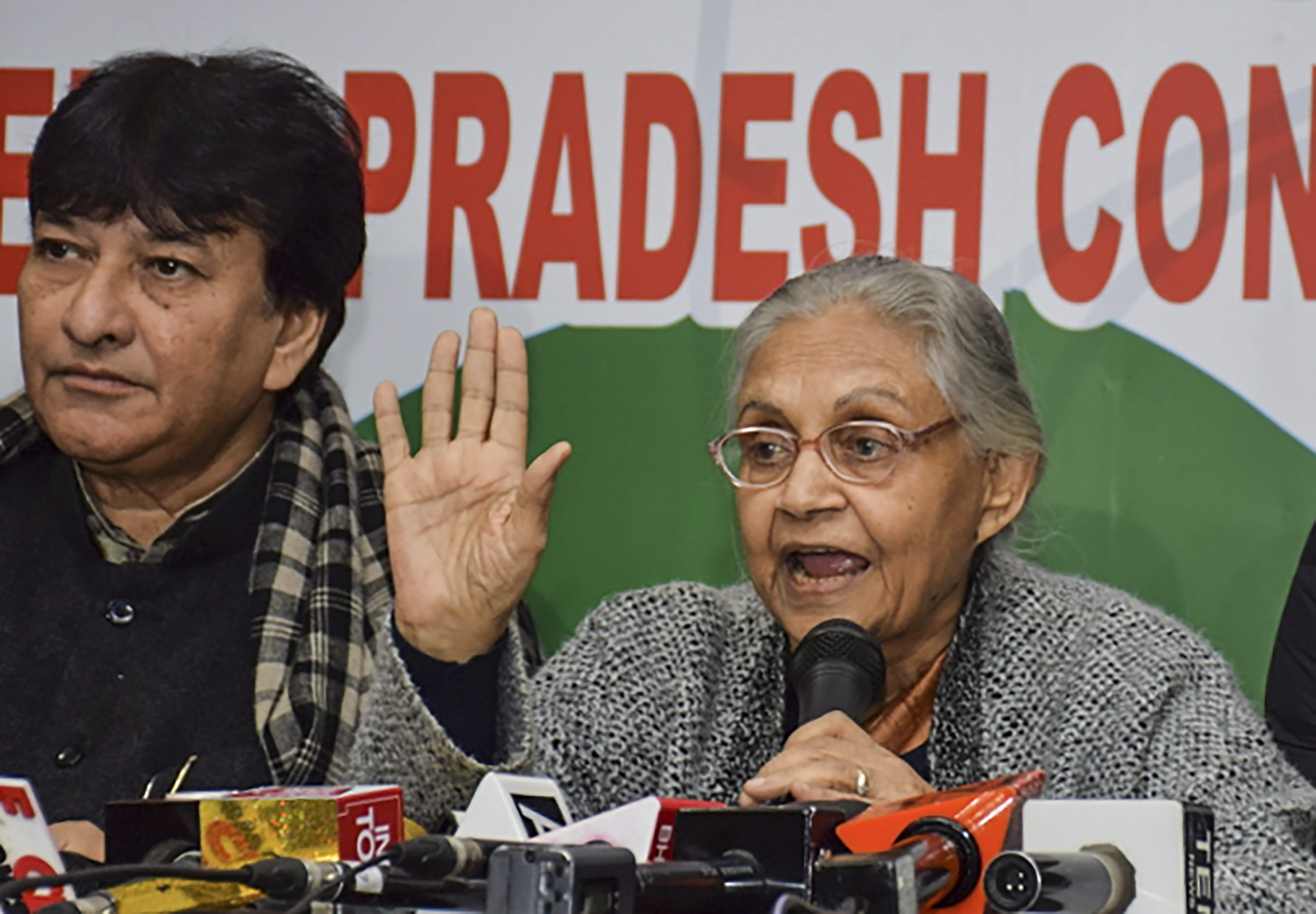
The Indian National Congress effectively ruled out an alliance with the Aam Aadmi Party in Delhi ahead of the Lok Sabha elections, a development that is expected to help the Bharatiya Janata Party by splitting the opposition votes.
The two parties were exploring a seat-sharing formula ahead of the polls to take on the BJP in the seven seats in the national capital. “A unanimous decision has been taken that there will be no alliance in Delhi,” Delhi Congress Chief and former Chief Minister Sheila Dikshit said today. Aam Aadmi Party Chief Arvind Kejriwal responded with an accusation of a “secret understanding” between the Congress and the BJP.
At a time when the whole country wants to defeat Modi- Shah duo, Cong is helping BJP by splitting anti-BJP vote. Rumours r that Cong has some secret understanding wid BJP. Delhi is ready to fight against Cong-BJP alliance. People will defeat this unholy alliance. https://t.co/JUsYMjxCxy
March 5, 2019The Delhi Chief Minister's anger may be based in the realisation that a split in opposition vote between the AAP and the Congress will hand a victory to the BJP. “Clearly a resurgent Congress party and the AAP will be battling it out in Delhi for the same space,” said political analyst Manisha Priyam.
It would be advantage BJP in the election from the word go because the momentum has been lost.Manisha Priyam, Political AnalystFormer AAP Leader and journalist Ashutosh called Kejriwal's outburst on twitter “immature”, saying the Congress' refusal to the alliance may have just been a pressure tactic. He agreed that a failure to form an alliance may hand the BJP all seven Lok Sabha seats in Delhi like in the last general election in 2014.
Today if AAP and Congress don't come together, there is a possibility they will split each-other's votes and benefit BJP.Ashutosh, Former AAP LeaderBut the Congress' alliance woes are not limited to Delhi. Apart from a tie-up with the DMK in Tamil Nadu, the primary opposition party has not managed to cement a seat-sharing formula in any major state. While negotiations are on in Maharashtra and West Bengal, the party has decided to go it alone in Andhra Pradesh and, most importantly, Uttar Pradesh where a united opposition would have given the BJP a tough fight.
CSDS Professor Sanjay Kumar puts this down to “confusion” within the Congress on whether to formulate a short-term strategy that focuses on forming anti-BJP alliances for the Lok Sabha elections and conceding seats to regional players or a long-term strategy which would require strengthening the party even at the cost of potential allies.
The Congress thinks it is the biggest opposition party and the alternative to BJP. They want a larger number of seats despite a poor performance in 2014. This is the dispute.Sanjay Kumar, Professor CSDS

-
Talking Points This Week: Tech Nerves, FII Buying, And A Faraway Banking Shock

The global markets are not shining this Diwali. The exception in the large markets is, India.
-
Midterm Rally Lasted A Day. The Hard Reality Of A Divided US May Last Two Years | Opinion
Between a contested AI boom, a debt ceiling that arrives in 2027 and a president with every incentive to act alone, the next two years may prove more volatile than the first day's rally suggests.
-
Blue Wave Will Derail the AI Trade but Won't Dismantle the AI Era | Unhedged Position
The Democrats' sweep of the US Congress will see politics collide with economic forces both over the long and short term.
-
It's Time To Take The GST Council's Bet On Trust Global
Payment records can prove India's services exports, and clear, proportionate rules can bring foreign digital sellers into the tax net.
-
Opinion | India at 38: From Innovation Overperformer to Innovation Powerhouse
India now has 453 VC-backed deep science startups, 18 of them late-stage, after 117 percent growth since 2020. Laurus Labs, at USD 9.3 billion, is the most valuable deep science company in any middle-income economy outside China.
-
Navigating Energy Crossroads: S Jaishankar's Call For Diversified Supply Chains At G20 Ministerial Meeting
As geopolitical fault lines continue to test maritime trade routes and commodity flows, Jaishankar's message remains pertinent: true economic resilience requires open markets, protected transit lines, and a genuine commitment to multilateral cooperation rather than coercion.
-
Indians Are Travelling, But Not Every Journey Is A Holiday | The Week In Whys
Pilgrims, patients and working women are the real travellers, and the system hasn't quite caught up with them.
-
Getting To Work Costs Women More | The Reason Why
It is not just about women paying more than men. It is about women paying much more in cities than in villages.
-
AI Bias In Investing Cannot Be Eliminated, But It Can Be Governed
Framing is a particularly important example as identical financial information presented in terms of gains rather than losses can lead an LLM to reach a different assessment.









