Education & Affluence, No Guarantee Against Radicalisation?
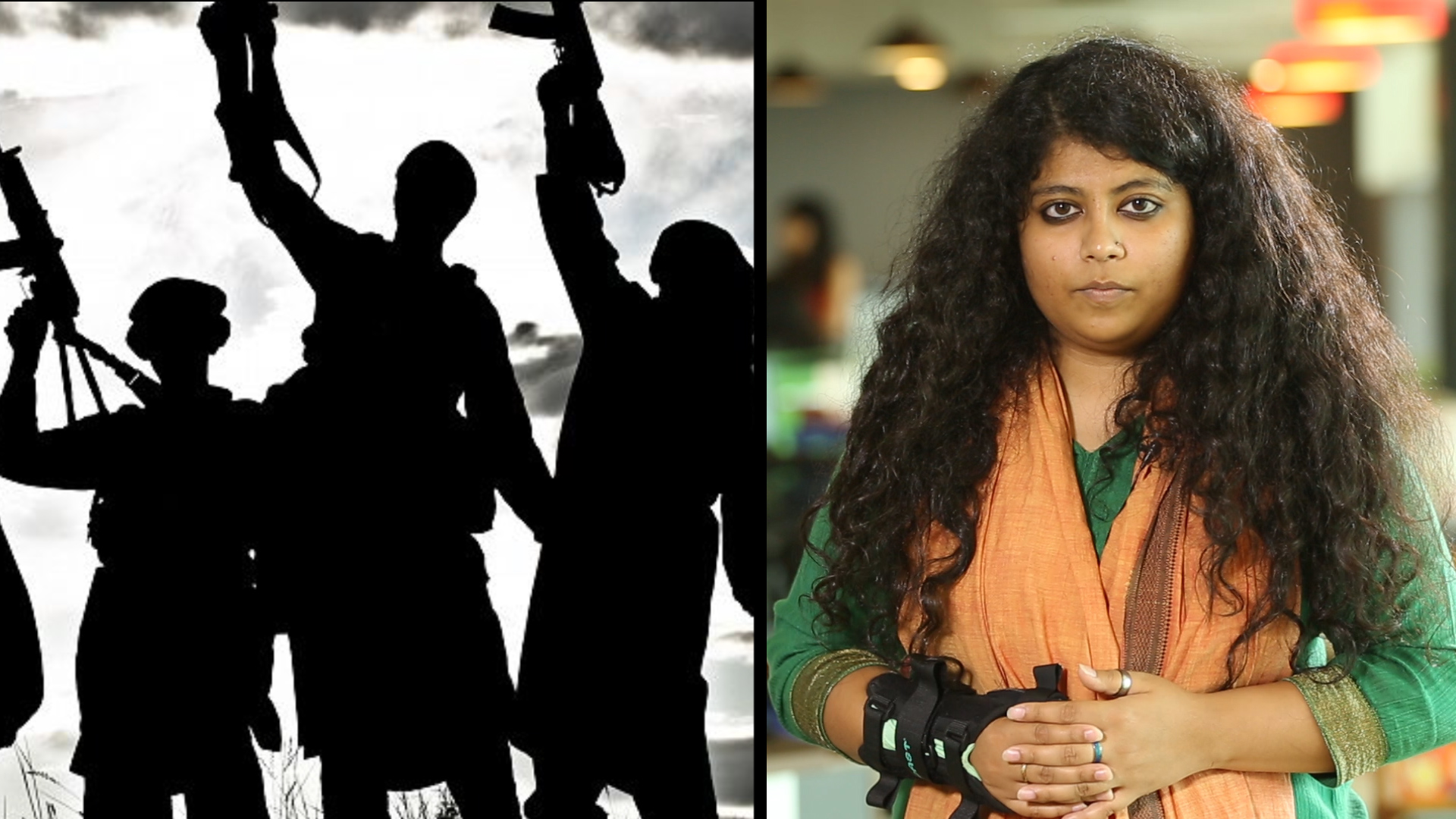
Bangladesh's Home Minister said the attackers who terrorised Dhaka and killed 22 people were all highly educated young men who went to university and none were from a madarsa.
So...no. the standard arguments made to justify radicalisation don't apply here. The attackers were not from poor, destitute backgrounds forced to take up arms and they weren't “uneducated”, making them somehow easier to brainwash.
They were from stable economic backgrounds and university educated. And NO, this isn't a new phenomenon.
- Al Qaeda's chief, Ayman al-Zawahiri, one of the masterminds of 9/11, is a trained surgeon.
- Arif Majeed, the 23-year-old from Navi Mumbai who fought for ISIS in Iraq and Syria was a civil engineering student.
- Fahad Shaikh, another Indian who went to fight for ISIS, was a mechanical engineering graduate and his father, a doctor.
- Mehdi Mansoor Biswas, arrested from Bangalore for running a pro-ISIS Twitter account, is a computer engineer.
This year, personnel files of some ISIS fighters were leaked and one of the most significant details of the 4000 fighters from 71 countries was their level of education. Only 17% of them stopped their education after elementary or middle school and a quarter attended college.
Some even have PhDs, masters and MBAs. Looks like governments world over need to approach radicalisation differently now. Poverty and lack of education just don't cut it as excuses anymore.
And no, this isn't leave to assume that it's any religion at the root of this. Terrorism is always political. No religion encourages violence. Dhaka, Baghdad, 26/11, 9/11, Brussels, Paris, Istanbul – those who suffer and those who mourn span all age groups, genders, religions and regions.
Video Editor: Sashant Kumar

-
Unhedged Position: Can India See An Indonesia-Style Time Correction?

The Nifty is trading below levels it first clocked in 2024. Is there, then, as I have suggested in the headline, potential that the current time correction drags on painfully for the next three-five, even ten years?
-
Navigating Friction And Energy Realities: An Analysis Of Marco Rubio's October Visit To India
Occurring at a critical juncture marked by stalled trade negotiations and escalating geopolitical pressures over global energy supplies, the visit offers a profound window into modern US-India relations.
-
India Exports Capital. Why Not Export Trusteeship?
The big question, then, is whether India can build an institution that global borrowers, investors, banks, and lawyers can trust, even without an Indian connection.
-
France's Economy & Politics Are In Crisis | The Reason Why
Let's look at how the French economy and politics evolved under Nicolas Sarkozy, Franois Hollande and Emmanuel Macron.
-
You May Inherit The Business. You Must Earn Its Credibility.
Succession tests the founder's ability to share authority as much as it tests the next generation's readiness to assume it.
-
Signing Deals Is One Thing; Making Them Work Is Another | The Week In Whys
Sometimes, things don't turn out as planned. Indian companies have lost some bids to rivals, some projects won't produce until 2030.
-
FOMC Wall, PERM Suspension, Hospital Stocks | Talking Points This Week
A PERM suspension would directly affect green-card sponsorship rather than H-1B visas, so the near-term earnings impact could remain relatively limited. The key question is whether this marks a new phase in US scrutiny of Indian IT.
-
Everything, Everywhere, All At Once: Dalal Street's Week To Forget | Joining The Dots
Visa curbs, a Starlink spat and cancer drug caps: what connects this week's shocks for Indian markets
-
India Is Going Abroad For Critical Minerals. But It May Take Years To Pay Off | The Reason Why
Although India's steps are in the right direction, they remain modest compared with India's growing dependence.
-
When Everyone Has AI, What Gives You An Edge?
India's young workforce is entering an uncertain world of work where powerful AI tools are becoming widely accessible. The advantage will belong to those who combine deep expertise with digital fluency, and the distinctly human capabilities that technology cannot manufacture.









