Delhi High Court Allows Bharti Airtel To Rectify 2017 GST Returns
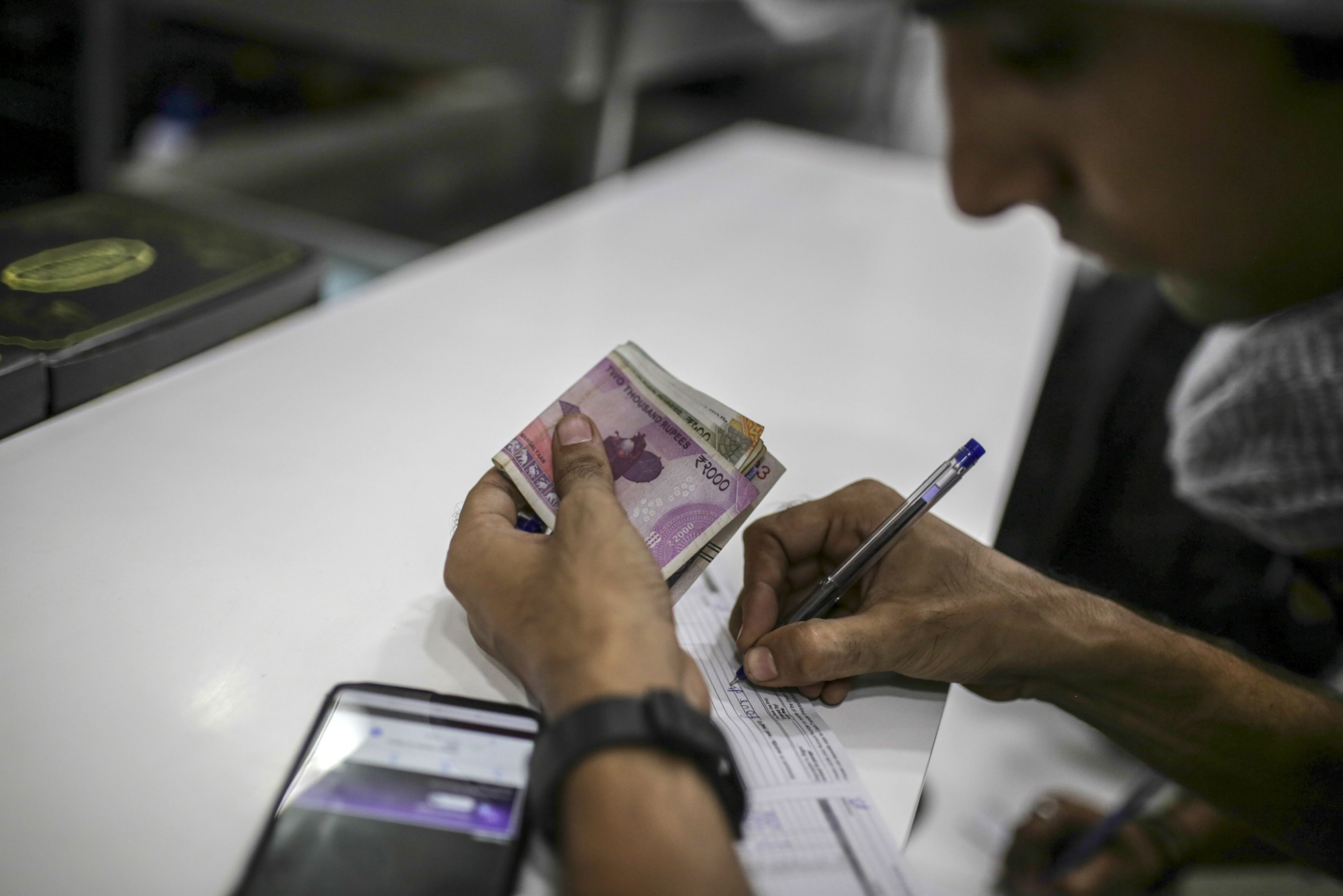
The Delhi High Court allowed Bharti Airtel Ltd. to rectify GST returns filed between July and September 2017 after the telecom operator said it paid excess tax on inputs in absence of a purchase-related tax return form.
The Sunil Mittal-controlled carrier said it paid an excess tax of Rs 923 crore as the details of the input tax credit—the tax paid on inputs that can be adjusted against future tax liabilities—during the period was offered based on estimates on account of non-operationalisation of the GSTR-2A form by the government. So, it underreported its claim for credit.
“Indisputably, if the statutorily prescribed returns, GSTR-2 and GSTR-3 had been operationalised by the government, the petitioner would have known the correct ITC amount available to it in the relevant period, and could have discharged its liability through ITC,” said the division bench of the Delhi High Court comprising Justice Vipin Sanghi and Justice Sanjeev Narula. “As a consequence, the deficiency in reporting the eligible ITC in the months of July-September 2017 in the form GSTR-3B has resulted in excess payment of cash by the petitioner.”
The original scheme of the CGST Act provided for forms GSTR-1 with the details of outward supplies by a dealer, and GSTR-2 that had the inward supplies data of the other dealer to avail the benefit the input tax credit. GSTR-3 electronically collated these details and the monthly tax return was to be filed based on the calculation in form 3.
While forms 2 and 3 were not operationalised, form-2A was introduced in October 2018 for availing input tax credit and GSTR-3B to file summary returns of the monthly tax.
In the absence of the GSTR-2A form during July-September 2017, Bharti Airtel submitted the input tax credit details based on estimates. And in October 2018, the telecom service provider said, it noticed the underreporting and sought to file the rectified returns.
The company argued that the central government failed to introduce GSTR-2 and 3 as mandated under the CGST Act and instead introduced GSTR-3B in the interim to file summary returns. The GSTR-3B form required data to be filled in manually and does not permit data validation before it is uploaded.
“The inability of the respondents to run their IT system as per the structure provided under the CGST Act cannot prejudice the rights of a registered person,” argued senior advocate Tarun Gulati, Bharti Airtel's counsel.
The central government, however, opposed the carrier's plea and said the rectification of mistakes of an earlier tax period couldn't be done in any subsequent period. But the Delhi High Court found favour in the arguments put forward by Bharti Airtel.
The high court asked the central government to verify the refund claim after the rectified return is filed.

-
Ten Things I Learnt This Samvat

Patience can be a trap. Cheap stocks can stay cheap. Leverage can wipe you out. What did Samvat 2082 teach us? Niraj Shah writes on 10 lessons from the year gone by.
-
Talking Points This Week: Tech Nerves, FII Buying, And A Faraway Banking Shock
The global markets are not shining this Diwali. The exception in the large markets is, India.
-
Midterm Rally Lasted A Day. The Hard Reality Of A Divided US May Last Two Years | Opinion
Between a contested AI boom, a debt ceiling that arrives in 2027 and a president with every incentive to act alone, the next two years may prove more volatile than the first day's rally suggests.
-
Blue Wave Will Derail the AI Trade but Won't Dismantle the AI Era | Unhedged Position
The Democrats' sweep of the US Congress will see politics collide with economic forces both over the long and short term.
-
It's Time To Take The GST Council's Bet On Trust Global
Payment records can prove India's services exports, and clear, proportionate rules can bring foreign digital sellers into the tax net.
-
Opinion | India at 38: From Innovation Overperformer to Innovation Powerhouse
India now has 453 VC-backed deep science startups, 18 of them late-stage, after 117 percent growth since 2020. Laurus Labs, at USD 9.3 billion, is the most valuable deep science company in any middle-income economy outside China.
-
Navigating Energy Crossroads: S Jaishankar's Call For Diversified Supply Chains At G20 Ministerial Meeting
As geopolitical fault lines continue to test maritime trade routes and commodity flows, Jaishankar's message remains pertinent: true economic resilience requires open markets, protected transit lines, and a genuine commitment to multilateral cooperation rather than coercion.
-
Indians Are Travelling, But Not Every Journey Is A Holiday | The Week In Whys
Pilgrims, patients and working women are the real travellers, and the system hasn't quite caught up with them.
-
Getting To Work Costs Women More | The Reason Why
It is not just about women paying more than men. It is about women paying much more in cities than in villages.









