Covid-19: NCLTs Saw A 95% Decline In Case Hearings, Study Finds
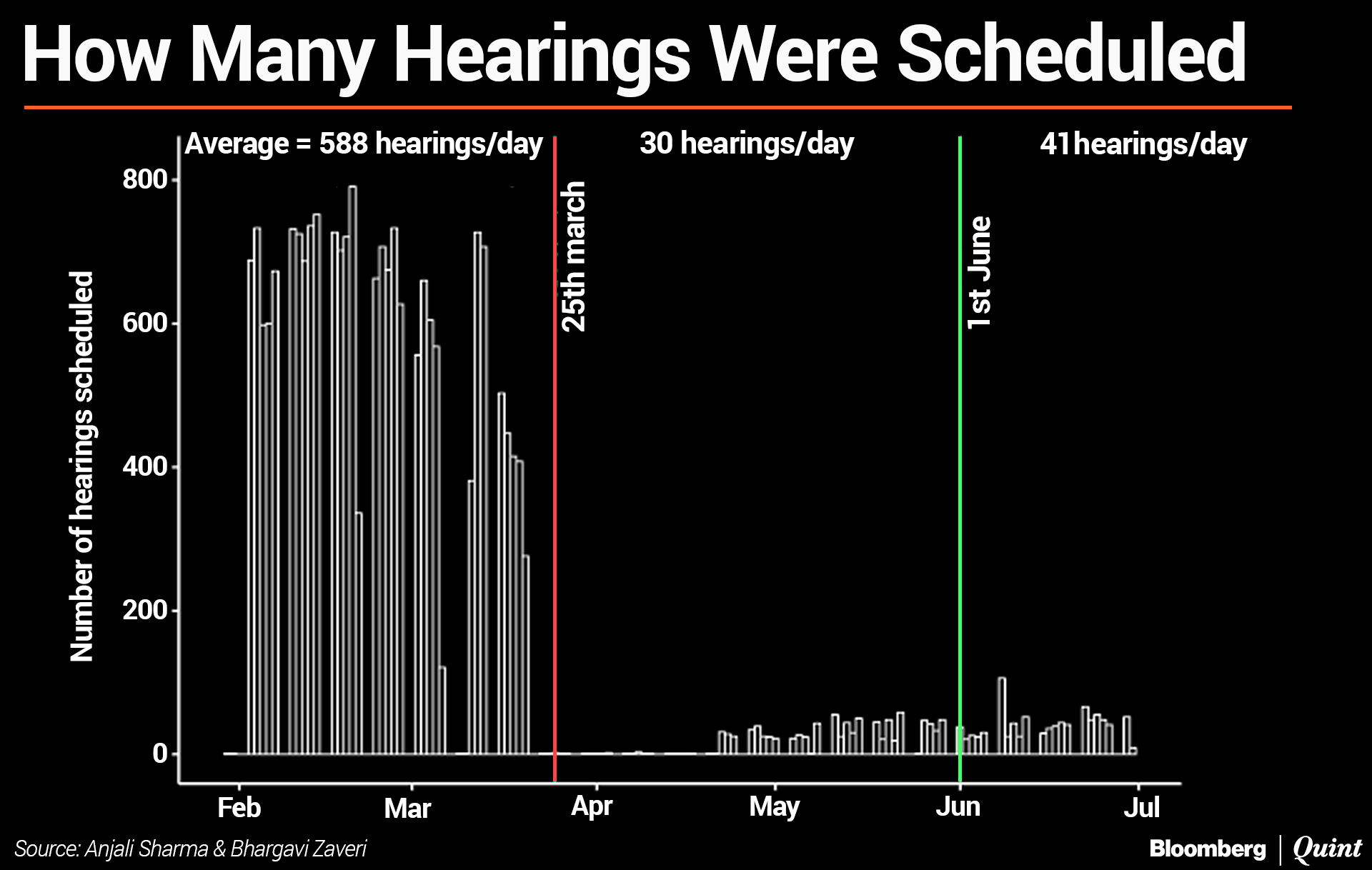
An average of 588 hearings were scheduled across all NCLTs each day before March 2020. That dropped 95% to 30 hearings daily during the lockdown period. The total number of hearings increased marginally to 41 per day as lockdown was lifted, still 93% lower than before the lockdown, according to a study authored by Anjali Sharma and Bhargavi Zaveri of Finance Research Group.
After a closer look at the numbers, the two researchers arrived at 3 key findings:
- Bulk of the hearings during the lockdown period were conducted by benches in three locations, namely Mumbai, New Delhi and Chandigarh.
- There was time variation in when courts started functioning during the lockdown. While courtrooms in Mumbai started scheduling hearings from April 22, those in New Delhi started from May 5 onwards.
- Mumbai, New Delhi and Chandigarh benches managed to ramp up capacity during the unlock period. Other benches did not, even till June 30, building up a steady pattern of scheduling hearings.
The reason for the variation in volume of hearings across locations, however, remains a puzzle for the authors. While e-filing facility was available across some of the benches, the others, over a period of time, instructed litigants to file their proceedings through an e-mail to the Registrar by the other benches, according to the study.
The availability of the e-filing facility does not explain the volume of hearings post lockdown.Measuring Court Output In The Pandemic: Evidence From India's Largest Commercial Tribunal
For instance, the Chandigarh bench, which was hearing cases all through this period, implemented e-filing only towards the later half of June, the study pointed out. With Mumbai and New Delhi being the worst affected by the pandemic, the variation in volumes also cannot be attributed to the severity of the pandemic at a location, stated the study.
‘'It is unclear then as to what has caused this location level variation and why some benches were able to resume functioning as early as mid-April while others could not do so even towards the end of June,'' as per the study.
Covid 19 & Disposal Rate
One encouraging trend emerged during the lockdown period at NCLTs.
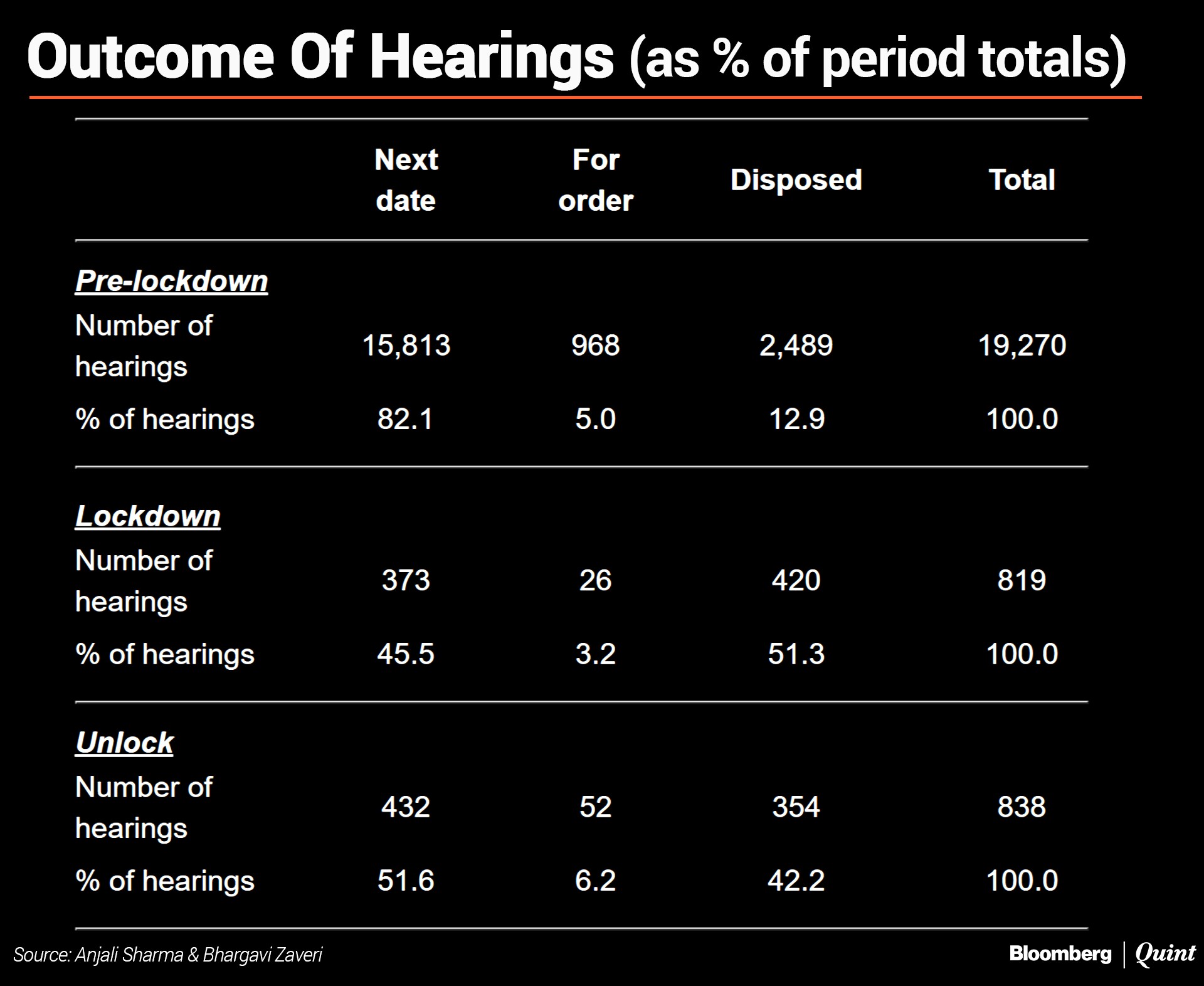
Prior to the pandemic induced lockdown, while a large number of hearings were getting scheduled, nearly 82% of these resulted in a next hearing date being given. During the lockdown period, this changed. The disposal rate improved significantly - from 17.9% to 54.5%, the researchers have found.
One of the reasons could be that NCLTs were hearing only urgent matters that had to be disposed off during the lockdown, according to the authors.
The second is that the pre-lockdown scheduling of nearly 40-50 cases per courtroom per day, was unrealistic. It resulted in a few matters getting actually heard and a next date being given in the remaining. - Measuring Court Output In The Pandemic: Evidence From India's Largest Commercial Tribunal
Sharma and Zaveri have explained that since the number of hearings getting scheduled during the lockdown period were low, these matters were actually getting the attention of the court which resulted in an improved disposal rate. ‘‘Finally, it is also possible that the manner in which courts have dealt with hearings in the lockdown period changed. They were less amenable to allowing re-scheduling,'' they pointed out.
The pattern of a higher disposal rate during the lockdown period continues in the unlock period. However, there is some decline in the disposal rates for matters scheduled for hearing compared to the lockdown period - from 54.5% to 48.4%, as per the study.
Covid-19 & Court Capacity
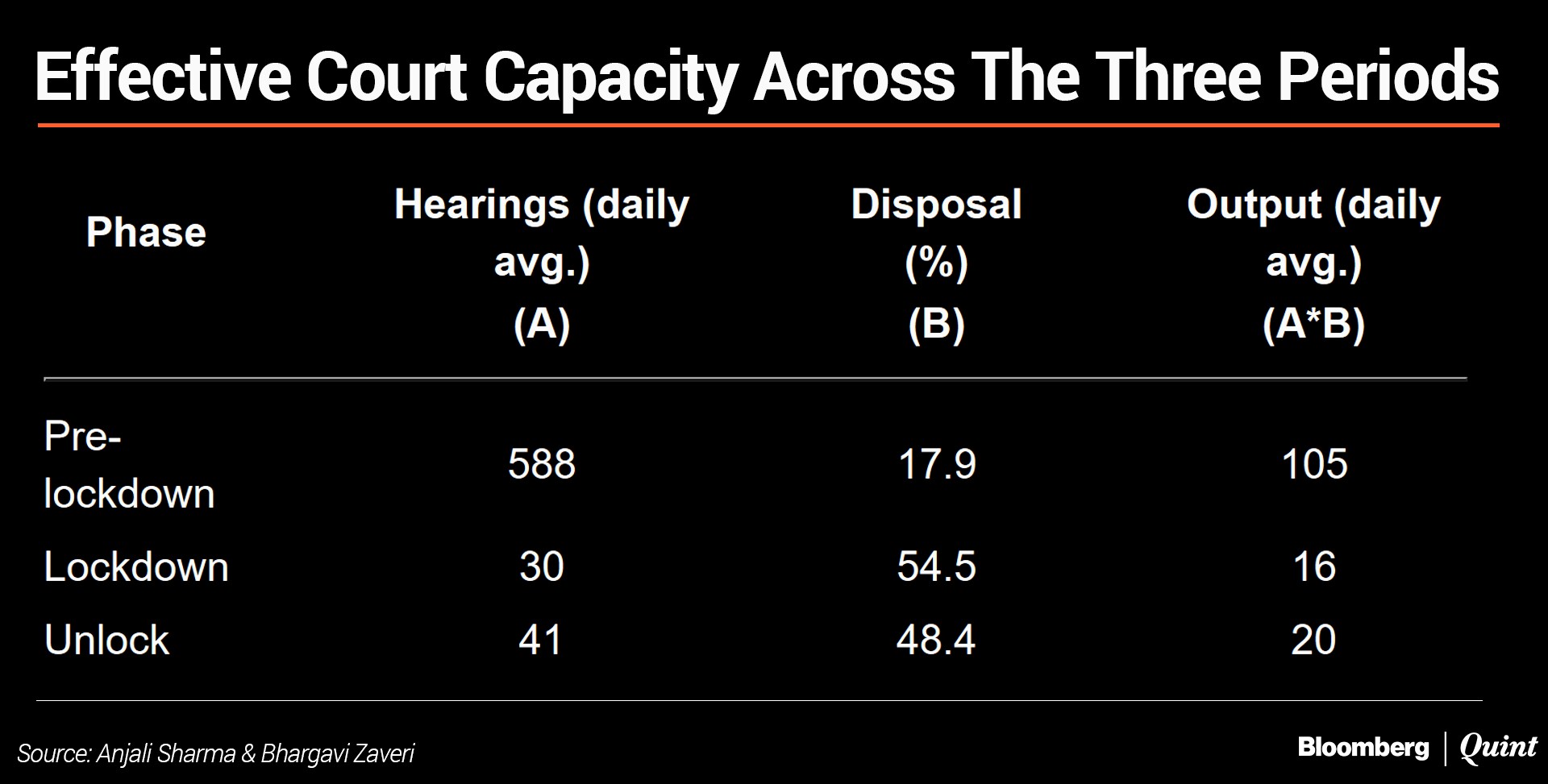
Marrying the data on hearings scheduled and disposal rate gave an interesting insight into the capacity of NCLTs over the pre-, during and post-lockdown period.
It showed that court capacity even in the unlock period is around 19% of pre-lockdown capacity.
“NCLT can adopt a very different mix of hearings and disposal from its pre-lockdown period to increase its overall output. For instance, at a disposal rate of 50%, even scheduling half of the pre-lockdown hearings will result in a higher effective capacity.” - Measuring Court Output In The Pandemic: Evidence From India's Largest Commercial Tribunal
However, this will require courts to analyse the process learnings from the post-lockdown period which resulted in higher disposal rates and apply them on an ongoing basis, the researchers have concluded.
The full study can be found here.

-
Where You Live Shapes How You Get To Work | The Reason Why

Two-wheelers are the most popular way to get to work in India, accounting for nearly 43% of workplace commutes.
-
High US Salaries, No Green Card Certainty: The Financial Calculation Facing Indian H-1B Families
The suspension of PERM processing at eight technology employers does not cancel existing H-1B visas. What it does is force a question many Indian families have been avoiding: is the US salary worth tying your career and family plans to one employer?
-
Unhedged Position: Can India See An Indonesia-Style Time Correction?
The Nifty is trading below levels it first clocked in 2024. Is there, then, as I have suggested in the headline, potential that the current time correction drags on painfully for the next three-five, even ten years?
-
Navigating Friction And Energy Realities: An Analysis Of Marco Rubio's October Visit To India
Occurring at a critical juncture marked by stalled trade negotiations and escalating geopolitical pressures over global energy supplies, the visit offers a profound window into modern US-India relations.
-
India Exports Capital. Why Not Export Trusteeship?
The big question, then, is whether India can build an institution that global borrowers, investors, banks, and lawyers can trust, even without an Indian connection.
-
France's Economy & Politics Are In Crisis | The Reason Why
Let's look at how the French economy and politics evolved under Nicolas Sarkozy, Franois Hollande and Emmanuel Macron.
-
You May Inherit The Business. You Must Earn Its Credibility.
Succession tests the founder's ability to share authority as much as it tests the next generation's readiness to assume it.
-
Signing Deals Is One Thing; Making Them Work Is Another | The Week In Whys
Sometimes, things don't turn out as planned. Indian companies have lost some bids to rivals, some projects won't produce until 2030.
-
FOMC Wall, PERM Suspension, Hospital Stocks | Talking Points This Week
A PERM suspension would directly affect green-card sponsorship rather than H-1B visas, so the near-term earnings impact could remain relatively limited. The key question is whether this marks a new phase in US scrutiny of Indian IT.
-
Everything, Everywhere, All At Once: Dalal Street's Week To Forget | Joining The Dots
Visa curbs, a Starlink spat and cancer drug caps: what connects this week's shocks for Indian markets