Climate Change Running Faster Than Us, U.N. Chief Says Citing Kerala Floods
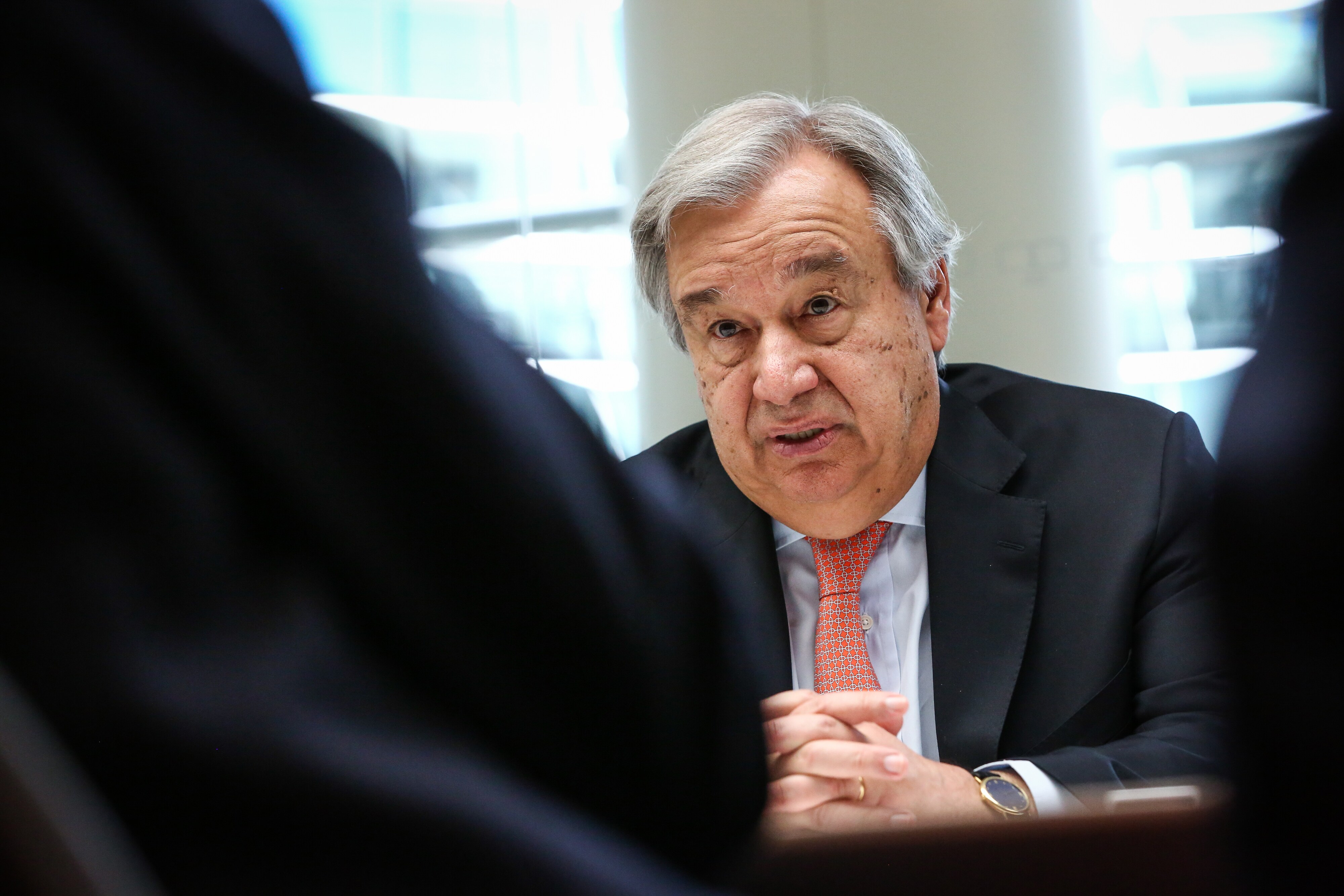
United Nations Secretary General Antonio Guterres cited the devastating floods in Kerala and the raging wildfires in California to seek action to prevent greater climate-related crises and warned that climate change was running faster than us.
The U.N. Secretary General said last year, climate-related disasters were responsible for thousands of deaths and $320 billion in losses.
“Climate change is running faster than we are. The impacts are devastating, and it is usually the poorest and the most vulnerable who are hit first and worst by storms, floods, droughts, wildfires and rising seas,” Guterres said at the launch of the 2018 New Climate Economy report at the U.N. headquarters in New York yesterday.
“This year, we have seen the terrible flooding in Kerala in India, savage wildfires in California and Canada, and dramatic warming in the Arctic that is affecting weather patterns across the northern hemisphere. The trend is clear. The last 19 years included 18 of the warmest years on record, and greenhouse gas concentrations in the atmosphere continue to rise,” he said.
The southern Indian state witnessed the worst flooding in 100 years. About 80 dams had overflowed and more than 370 lives lost. Kerala Chief Minister Pinarayi Vijayan had said that a total of 12 lakh people affected by floods had been housed in 3,314 relief camps in the state.
Guterres warned that runaway climate change is a real possibility, with severe implications for communities, economies, peace and the security of nations.
"Climate change has been proven to amplify and exacerbate other risks. Put simply, we need climate action to prevent ever greater crises. We must act with greater ambition and urgency," he said.
The document, published by the Global Commission on the Economy and Climate - a project comprising several UN bodies and other institutions - finds that the benefits of smarter and clearer growth are significantly under-estimated, and that bold climate action could deliver $26 trillion in economic benefits through to 2030.
Other benefits of switching to a clean economy include the creation of over 65 million new low-carbon jobs, and 700,000 fewer air pollution-related deaths.
"Policy makers should take their feet off the brakes, send a clear signal that the new growth story is here and that it comes with exciting economic and market opportunities,”Ngozi Okonjo-Iweala, former finance minister of Nigeria and co-chair of the Global Commission. “$26 trillion and a more sustainable planet are on offer if we act decisively now."
Guterres added that momentum for climate action is growing every day, with over 130 of the world's most influential companies now committed to using only renewable energy, fossil fuel-dependent countries looking to diversify and over 250 investors with $28 trillion in managed assets signing on to the Climate Action 100+ initiative.
The Climate Action is a five-year initiative led by investors to engage systemically important greenhouse gas emitters and other companies across the global economy that have significant opportunities to drive the clean energy transition and help achieve the goals of the Paris Agreement.
Guterres said clean energy systems help developing countries, where over a billion people still do not have access to electricity.
The UN Secretary-General said climate change will be high on the agenda of the 2018 opening session of the General Assembly, as part of efforts to galvanise action ahead of the milestone 2020 meeting of parties to the 2015 Paris Agreement.
Also Read: Criminal Enterprise To Blame, Says Ecologist Madhav Gadgil Who Foresaw Kerala Floods

-
High US Salaries, No Green Card Certainty: The Financial Calculation Facing Indian H-1B Families

The suspension of PERM processing at eight technology employers does not cancel existing H-1B visas. What it does is force a question many Indian families have been avoiding: is the US salary worth tying your career and family plans to one employer?
-
Unhedged Position: Can India See An Indonesia-Style Time Correction?
The Nifty is trading below levels it first clocked in 2024. Is there, then, as I have suggested in the headline, potential that the current time correction drags on painfully for the next three-five, even ten years?
-
Navigating Friction And Energy Realities: An Analysis Of Marco Rubio's October Visit To India
Occurring at a critical juncture marked by stalled trade negotiations and escalating geopolitical pressures over global energy supplies, the visit offers a profound window into modern US-India relations.
-
India Exports Capital. Why Not Export Trusteeship?
The big question, then, is whether India can build an institution that global borrowers, investors, banks, and lawyers can trust, even without an Indian connection.
-
France's Economy & Politics Are In Crisis | The Reason Why
Let's look at how the French economy and politics evolved under Nicolas Sarkozy, Franois Hollande and Emmanuel Macron.
-
You May Inherit The Business. You Must Earn Its Credibility.
Succession tests the founder's ability to share authority as much as it tests the next generation's readiness to assume it.
-
Signing Deals Is One Thing; Making Them Work Is Another | The Week In Whys
Sometimes, things don't turn out as planned. Indian companies have lost some bids to rivals, some projects won't produce until 2030.
-
FOMC Wall, PERM Suspension, Hospital Stocks | Talking Points This Week
A PERM suspension would directly affect green-card sponsorship rather than H-1B visas, so the near-term earnings impact could remain relatively limited. The key question is whether this marks a new phase in US scrutiny of Indian IT.
-
Everything, Everywhere, All At Once: Dalal Street's Week To Forget | Joining The Dots
Visa curbs, a Starlink spat and cancer drug caps: what connects this week's shocks for Indian markets
-
India Is Going Abroad For Critical Minerals. But It May Take Years To Pay Off | The Reason Why
Although India's steps are in the right direction, they remain modest compared with India's growing dependence.









