China Defends Growing Military Budget Before Annual Congress
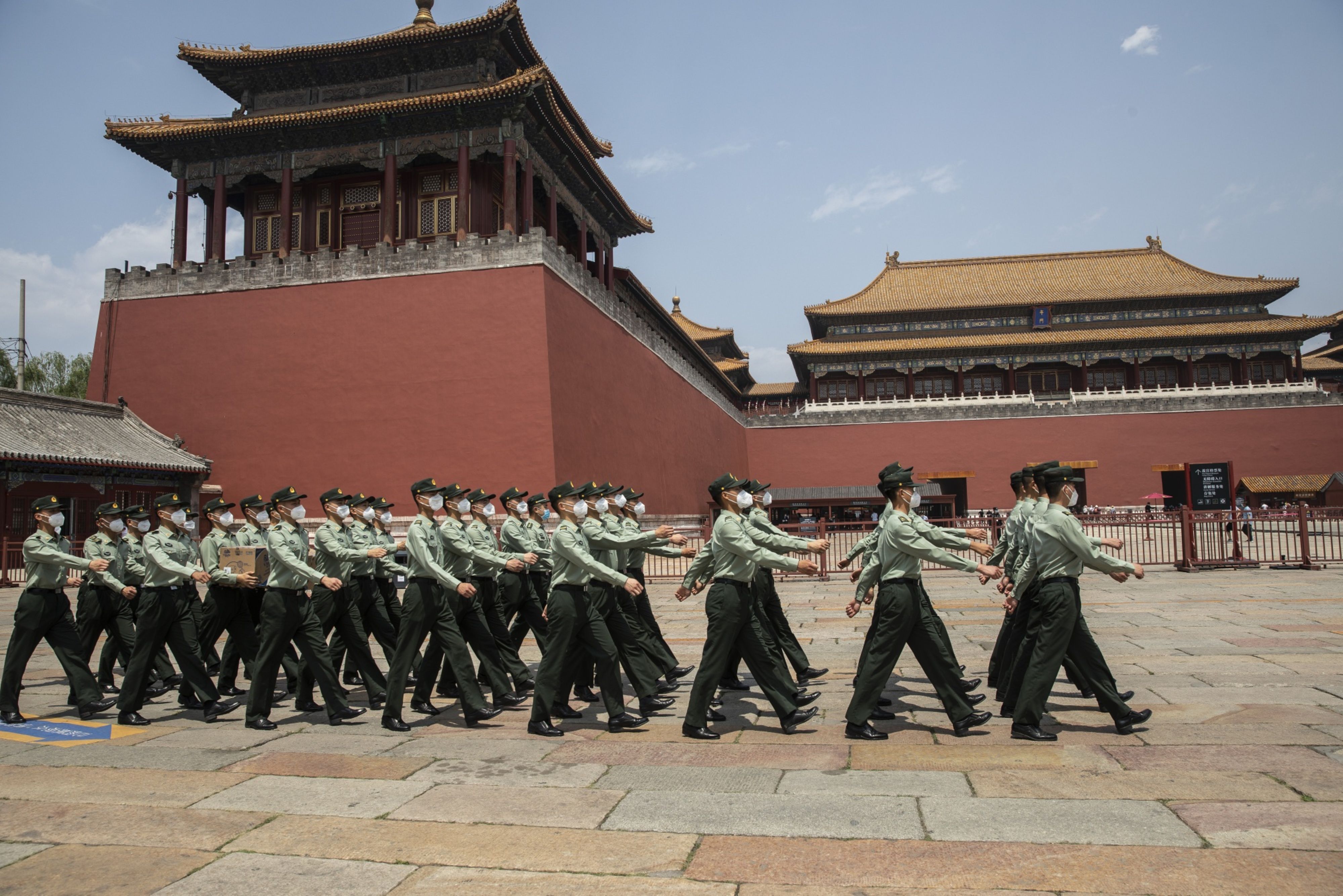
(Bloomberg) -- China needs to increase its military budget to meet “complex security challenges,” a top Chinese official said, amid rising geopolitical tensions with the US.
“The increase in defense spending is needed for meeting the complex security challenges and for China to fulfill its responsibilities as a major country,” said Wang Chao, spokesman of the National People's Congress, the country's top legislative body. He spoke at a press conference in Beijing on Saturday, a day before the official kickoff of the key political event.
China's defense outlays have come under the spotlight amid increasing friction with the US over technology and the war in Ukraine, as well as Beijing's claims to a wide swath of the South China Sea. There have also been concerns over a potential military clash between the superpowers over Taiwan.
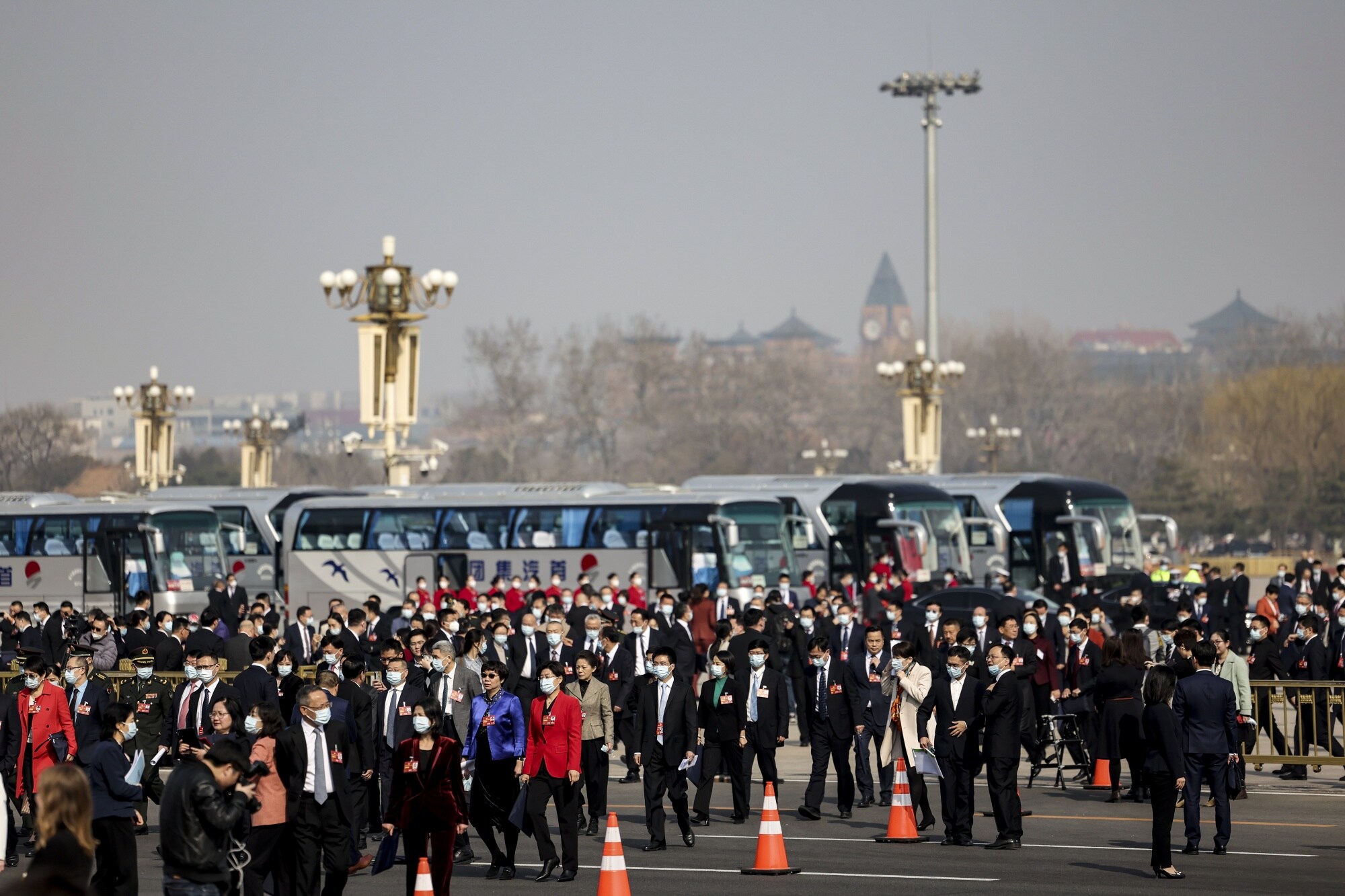
Wang didn't give any forecasts for military spending, but noted that outlays as a share of its gross domestic product have been kept basically stable for many years and the increase is “appropriate and reasonable.”
The nation's overall fiscal budget, including military spending, as well as its economic growth target for this year will be announced on Sunday.
Spending on the military, known as the People's Liberation Army, has increased by at least 6.6% each year over the past three decades, keeping pace or often exceeding economic growth, although the overall spending figure remains far surpassed by the amount of the US's military expenditures.
“The future of China is closely connected with the future of the world. China's military modernization will not be a threat to any country, and it is a positive power to ensure regional stability and world peace instead,” he added.
In its first gathering since the end of Covid Zero, the NPC will also hear plans on how the country's top leaders will strengthen the economy, possibly revamp the ruling party and government institutions, and appoint new officials to government posts — including the premier, vice premiers and other economic and financial leadership roles.
Watch: China's NPC 2023: What to Expect (Video)
A focus point will be the growth target for China's $18 trillion economy, which is expected to be set at higher than 5%. The budget will also be approved, with economists expecting the government to refrain from rolling out major stimulus measures.
Xi Jinping's allies Li Qiang and He Lifeng are set to replace Premier Li Keqiang and Vice Premier Liu He, respectively. The NPC is also likely to appoint a new central bank governor and finance minister. Yi Gang, the current governor of the People's Bank of China, is widely expected to step down, with veteran banker Zhu Hexin potentially in line to take his place.
Last year, GDP growth was only 3% — which was the second-slowest pace since the 1970s and below the official target of around 5.5% — as the government's zero tolerance approach to combating Covid infections hit business and consumer sentiment and the property sector slumped.
New projections by Bloomberg Economics show that if Xi's new appointees push through the right mix of reforms to raise worker productivity, steady trade and technology ties with the US, and offset the effects of a rapidly aging population, China's annual growth out to 2030 could average close to 5%.
Xi announced earlier in the week that the party would roll out plans for “deepening structural reform” in the financial sector and exercise more control over science and technology work. These are considered some of the strategic areas for China as the US moves to prevent Beijing from obtaining advanced computer chips and other high-tech products.
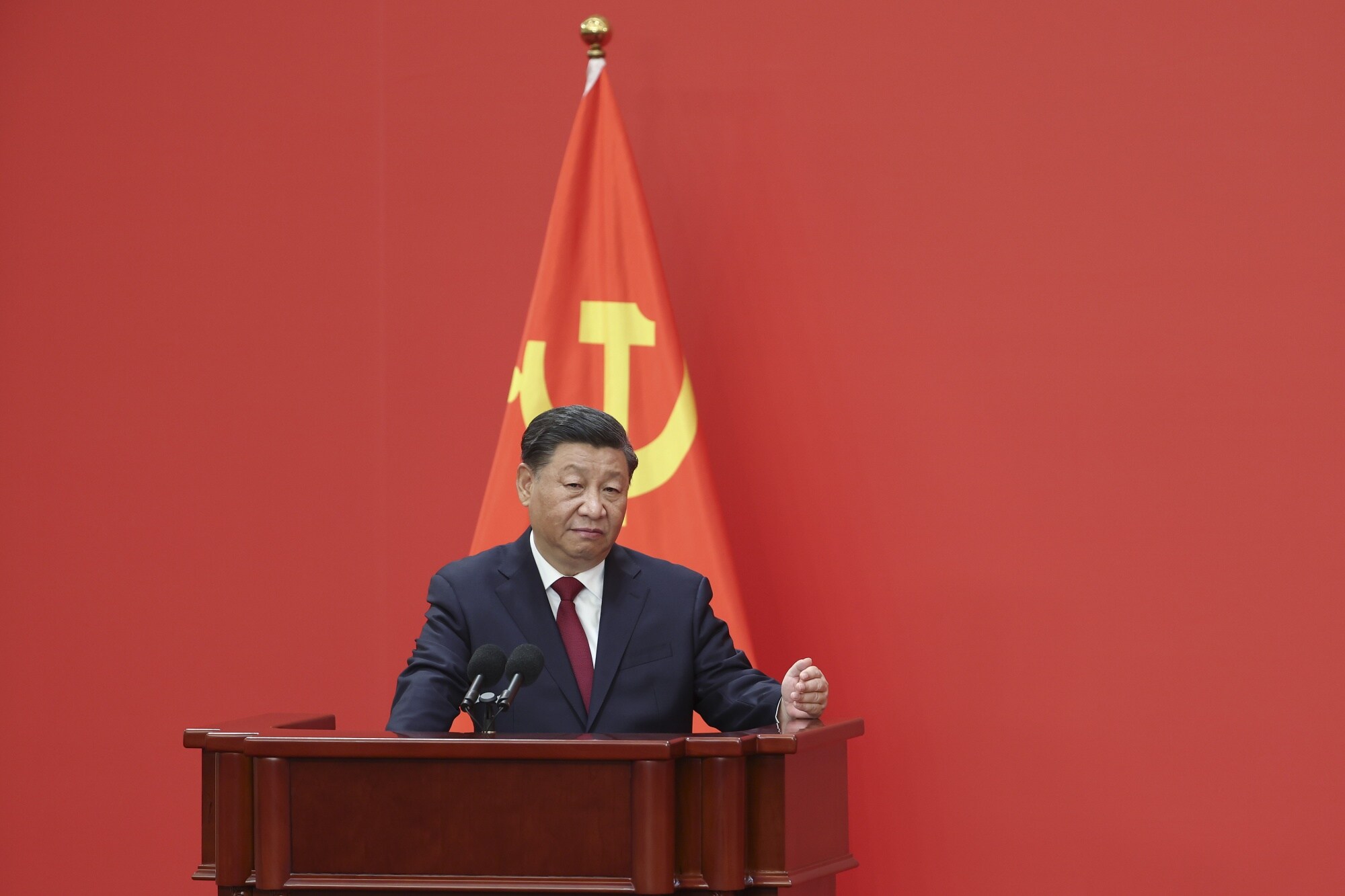
While the focus of the NPC is largely on domestic issues, there may be some signs of change on China's foreign policy or relations with Taiwan. Ties with the West, especially the US, continue to sour, most recently over an alleged Chinese spy balloon as well as over Washington's recent allegations that China is considering providing weapons to Russia.
NPC spokesman Wang dismissed concerns that these kind of issues could destabilize China's relations with Europe, saying there is no “fundamental strategic disagreement or conflict” and the two sides can increase trade and investment, join hands to tackle global challenges such as climate change, and push for political settlement of international and regional hot spots.
“In recent years, we've seen some people claiming China and Europe are ‘systemic rivals' and they've been playing up the so-called China challenge or China threat,” he said. “Fundamentally speaking, such rhetoric is driven by the Cold War mentality and ideological biases.”
The NPC runs alongside the CPPCC, China's leading political advisory body, which comprises delegates from a wide range of industries from arts to business and legal worlds. Collectively, they're referred to as the Lianghui, or “Two Sessions.”
This year's event will end on March 13, Wang said, making it slightly longer than last year's pandemic-shortened gathering.
--With assistance from and .
(Adds background on source of tensions in third paragraph)
More stories like this are available on bloomberg.com
©2023 Bloomberg L.P.

-
Unhedged Position: Can India See An Indonesia-Style Time Correction?

The Nifty is trading below levels it first clocked in 2024. Is there, then, as I have suggested in the headline, potential that the current time correction drags on painfully for the next three-five, even ten years?
-
Navigating Friction And Energy Realities: An Analysis Of Marco Rubio's October Visit To India
Occurring at a critical juncture marked by stalled trade negotiations and escalating geopolitical pressures over global energy supplies, the visit offers a profound window into modern US-India relations.
-
India Exports Capital. Why Not Export Trusteeship?
The big question, then, is whether India can build an institution that global borrowers, investors, banks, and lawyers can trust, even without an Indian connection.
-
France's Economy & Politics Are In Crisis | The Reason Why
Let's look at how the French economy and politics evolved under Nicolas Sarkozy, Franois Hollande and Emmanuel Macron.
-
You May Inherit The Business. You Must Earn Its Credibility.
Succession tests the founder's ability to share authority as much as it tests the next generation's readiness to assume it.
-
Signing Deals Is One Thing; Making Them Work Is Another | The Week In Whys
Sometimes, things don't turn out as planned. Indian companies have lost some bids to rivals, some projects won't produce until 2030.
-
FOMC Wall, PERM Suspension, Hospital Stocks | Talking Points This Week
A PERM suspension would directly affect green-card sponsorship rather than H-1B visas, so the near-term earnings impact could remain relatively limited. The key question is whether this marks a new phase in US scrutiny of Indian IT.
-
Everything, Everywhere, All At Once: Dalal Street's Week To Forget | Joining The Dots
Visa curbs, a Starlink spat and cancer drug caps: what connects this week's shocks for Indian markets
-
India Is Going Abroad For Critical Minerals. But It May Take Years To Pay Off | The Reason Why
Although India's steps are in the right direction, they remain modest compared with India's growing dependence.
-
When Everyone Has AI, What Gives You An Edge?
India's young workforce is entering an uncertain world of work where powerful AI tools are becoming widely accessible. The advantage will belong to those who combine deep expertise with digital fluency, and the distinctly human capabilities that technology cannot manufacture.









