New CJI Sanjiv Khanna Set For Action-Packed Six-Month Tenure
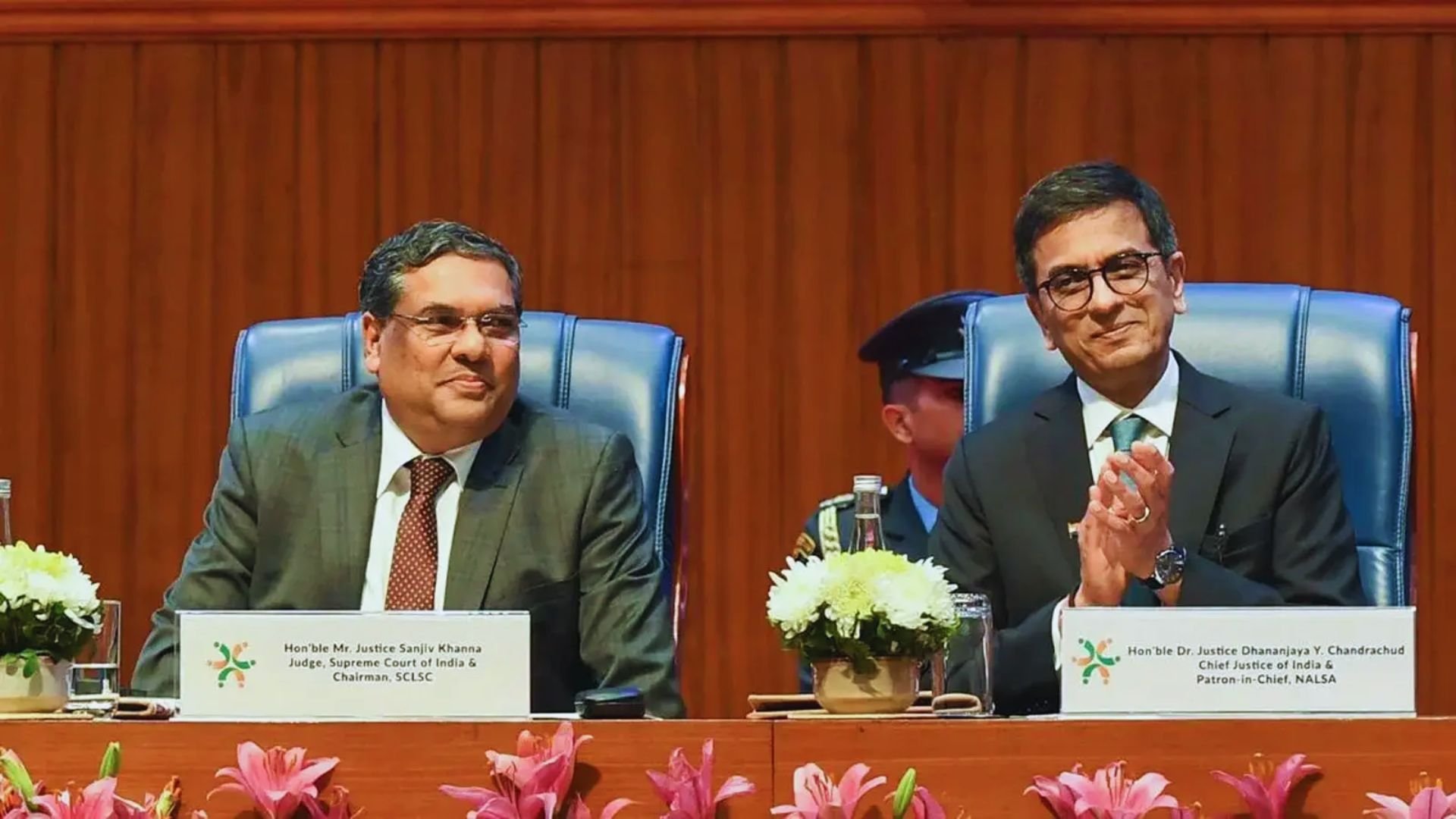
Justice Sanjiv Khanna, who will take charge as the 51st chief justice of India on Nov. 11, a day after incumbent DY Chandrachud demits office, will have his six-month tenure packed with high-profile cases.
Under his aegis, the top court will be adjudicating over Google's Android dominance lawsuit, the marital rape case, and the e-gaming retrospective taxation issue, among others that have the potential to have wide-ranging ramifications on matters of governance and society.
The Google case assumes significance as it is expected to set a tone for Big Tech practices in the Indian market.
So far, the CJI-led bench of the court has issued notice in the case and it awaits hearing. Anti-trust regulator Competition Commission of India has alleged abuse of market dominance by Google through its Google Play policies and its practices in the search market.
Similarly, the highly popular online gaming industry, which is grappling with goods and services tax notices to the tune of over Rs 1.2 trillion, would also be looking for some certainty from the top court.
Justice Khanna will also be dealing with the issue of marital rape that is bound to have a huge impact on notions of patriarchy and a woman's rights with respect to her body.
Since being elevated to the top court in 2019, Justice Khanna has issued a number of significant decisions that have influenced important decisions pertaining to individual liberty, democracy and self-determination. Khanna is known for his careful case preparation, practical approach to conflict resolution, and efficient use of court time.
"Sanjiv Khanna, who happens to be my classmate from Delhi University's Faculty of Law, is likely to bring in more transparency in the office of the CJI," senior counsel Vikas Singh said. "We expect him to be more forthright on issues concerning the institution or concerning the bar."
Justice Khanna's honesty and simplicity are "legendary", said senior counsel Sanjoy Ghose.
By instinct, he abjures publicity and lecturing. So, there could not be a greater contrast in the change of guards. It is too short a tenure but as Justice UU Lalit has demonstrated, even a short term is no handicap if the occupant of the high office is determined to leave his mark behind, according to Ghose.
While Justice Khanna is known for his judgements on tax and commercial matters, people forget that he has also been a part of various important personal liberty judgements, said Vijayendra Pratap Singh, senior partner at AZB & Partners.
He remarked that his views on freedom of press and bail under the Prevention of Money-Laundering Act have kept the executive alive to its obligation to respect the rule of law. Therefore, Justice Khanna's tenure as the CJI is going to be an important one to watch.
Outgoing CJI DY Chandrachud
Justice Khanna seems to have a long-drawn task ahead of his relatively short tenure. This is primarily because Khanna's predecessor, CJI Chandrachud, has been one of the most influential justices of the top court. He has set an ambitious standard through his landmark judgements and bold precedents for future cases. He has contributed to over 200 decisions during his tenure.
He was a part of some of the most critical benches in the recent past. These benches ruled on significant issues such as the Sabarimala temple entry controversy, the Ayodhya dispute, the demolition of the Supertech Twin Towers, the highly contentious KS Puttaswamy case that dealt with the fundamental right to privacy, abortion rights, the challenge to the electoral bonds scheme, and many more.
Criticisms are part and parcel of the position he donned for over 700 days. In his own words, "My life has been like the life of any other person in our society. There have been ups and downs, and I have faced a lot of challenges… But my mantra has always been to live in a sense of optimism and hope," CJI Chandrachud had said in an interview to NDTV.
The outgoing CJI often referred to his court as the people's court and it shows in some of the decisions rendered by him.
When the country was struck by the horror of the RG Kar incident, Chandrachud not only took suo motu cognisance of the case to monitor it at the highest level, he also set up a national task force for the safety and well-being of the doctors.
His pronouncement in the same-sex marriages decision staunchly advocated for the right of same-sex couples to marry each other. However, the decision did not come out in the favour of same-sex couples and when asked about it, he said "outcomes are never something that is personal to a judge. You decide a case based on your vision of the Constitution and on what you believe the vision of a just society for the future is in constitutional terms, which is what I have done".
He even acted promptly when the government sneakily tried to set up fact-check units, ensuring that the freedom of speech is not stifled through a backdoor entry. In its aftermath, the government's proposal for the establishment of fact-check units has been rejected by the Bombay High Court.
Watch The Video Here

-
Getting To Work Costs Women More | The Reason Why

It is not just about women paying more than men. It is about women paying much more in cities than in villages.
-
AI Bias In Investing Cannot Be Eliminated, But It Can Be Governed
Framing is a particularly important example as identical financial information presented in terms of gains rather than losses can lead an LLM to reach a different assessment.
-
Joining The Dots | Dark Skies, Steady Diya: Why Hope Holds This Diwali
With war, a weak rupee and foreign outflows weighing on sentiment, policymakers at the NDTV World Summit and market veterans at NDTV Profit Ignite: Diwali Edition offered the same advice: stay invested and filter out the noise.
-
The Curious Case of Equitas Small Finance Bank And A CEO Who Quit For Stock
PN Vasudevan believes persistent investor concerns over a perceived conflict of interest had become a governance overhang on Equitas Small Finance Bank's stock, even as the lender improved profitability and asset quality.
-
Talking Points This Week: AI Cash Burn, A Tiger Comeback And An India That Still Finds Its Own Path
India is not immune to higher oil or tighter global liquidity, yet its earnings base is broader, its domestic policy levers are still available.
-
Foreign Investors Own Half Of HDFC Bank and ICICI Bank. An LTCG Cut Could Matter Most Here
Foreign portfolio investors have US$115 billion parked in HDFC Bank, ICICI Bank. If the government cuts long-term capital gains tax, Jefferies says returning foreign money could land here first.
-
'Never Seen This Level Of Negativity': Sandeep Tandon Says The Next Rally May Be Closer Than You Think
Veteran investor Sandeep Tandon says foreign selling is easing, large-caps are due a comeback and mid-caps are crowded, while he turns positive on gold, power and pharma this Diwali.
-
Indians Stay With Family, Not In Hotels | The Reason Why
India still lacks enough clean, reliable and affordable hotels for budget-conscious travellers.
-
The Economic Imperative: Analysing The Material Driving Force Behind India-Canada Strategic Reset
This economic complementarity is further reinforced by deep institutional investment ties and talent mobility, which form the bedrock of the bilateral framework.
-
Medicine Pricing: Where Must Profit Stop?
India must confront excessive margins, hidden incentives and regulatory gaps that threaten the integrity of medicine.










