Chief Justice Misra-Led New Supreme Court Bench To Hear Judge Loya Case
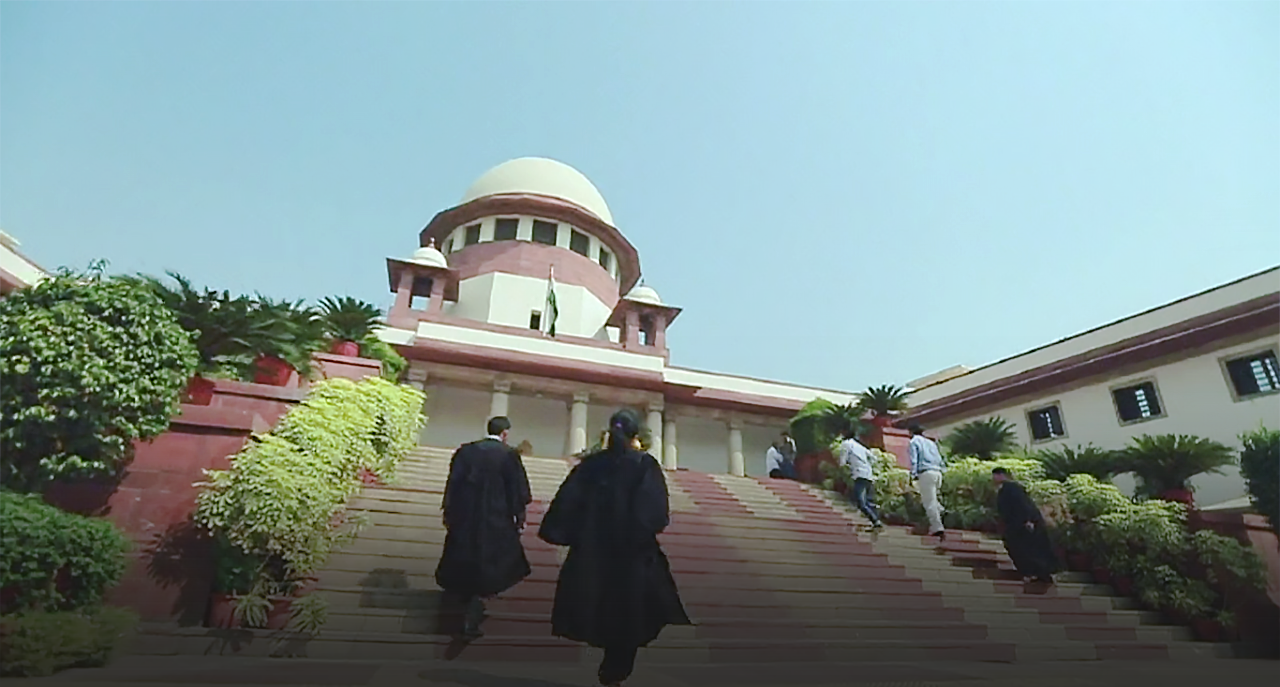
The Supreme Court has changed the bench that will hear a public interest litigation seeking an independent probe into the death of CBI Special Court Judge BH Loya.
On Monday, it will be heard by a bench headed by Chief Justice of India Justice Dipak Misra, and also comprising Justice DY Chandrachud and Justice AM Khanwilkar, according to the top court's cause list.
The matter was first heard by a bench of Justice Arun Mishra and Justice Mohan Shantanagoudar. That was the day four senior judges of the Supreme Court called an unprecedented press conference to publicly air their differences with the Chief Justice over what they called selectively assigning cases of national importance to the benches. When a reporter present at the press conference asked that if their protest was also related to the death of Judge Loya, Justice Gogoi said ‘Yes', wire agency ANI had reported.
Also Read: Rift In Supreme Court Plunges India Into Judicial Crisis
Judge Loya was hearing a matter involving the death of Sohrabuddin Sheikh in a police encounter when Amit Shah—now the president of the ruling Bharatiya Janata Party—was the minister of state for home in Gujarat. Shah was exonerated by the judge who replaced Loya.
In the last hearing, the bench headed by Justice Mishra had asked all the documents related to the case be handed over to the petitioners. It had also included a line saying that the matter should be listed in front of the “appropriate bench”.
After this, the Chief Justice-led bench on Friday passed an order saying it should be listed as per the roster.
Also Read: A Supreme Court Changed Forever: Editorial

-
High US Salaries, No Green Card Certainty: The Financial Calculation Facing Indian H-1B Families

The suspension of PERM processing at eight technology employers does not cancel existing H-1B visas. What it does is force a question many Indian families have been avoiding: is the US salary worth tying your career and family plans to one employer?
-
Unhedged Position: Can India See An Indonesia-Style Time Correction?
The Nifty is trading below levels it first clocked in 2024. Is there, then, as I have suggested in the headline, potential that the current time correction drags on painfully for the next three-five, even ten years?
-
Navigating Friction And Energy Realities: An Analysis Of Marco Rubio's October Visit To India
Occurring at a critical juncture marked by stalled trade negotiations and escalating geopolitical pressures over global energy supplies, the visit offers a profound window into modern US-India relations.
-
India Exports Capital. Why Not Export Trusteeship?
The big question, then, is whether India can build an institution that global borrowers, investors, banks, and lawyers can trust, even without an Indian connection.
-
France's Economy & Politics Are In Crisis | The Reason Why
Let's look at how the French economy and politics evolved under Nicolas Sarkozy, Franois Hollande and Emmanuel Macron.
-
You May Inherit The Business. You Must Earn Its Credibility.
Succession tests the founder's ability to share authority as much as it tests the next generation's readiness to assume it.
-
Signing Deals Is One Thing; Making Them Work Is Another | The Week In Whys
Sometimes, things don't turn out as planned. Indian companies have lost some bids to rivals, some projects won't produce until 2030.
-
FOMC Wall, PERM Suspension, Hospital Stocks | Talking Points This Week
A PERM suspension would directly affect green-card sponsorship rather than H-1B visas, so the near-term earnings impact could remain relatively limited. The key question is whether this marks a new phase in US scrutiny of Indian IT.
-
Everything, Everywhere, All At Once: Dalal Street's Week To Forget | Joining The Dots
Visa curbs, a Starlink spat and cancer drug caps: what connects this week's shocks for Indian markets
-
India Is Going Abroad For Critical Minerals. But It May Take Years To Pay Off | The Reason Why
Although India's steps are in the right direction, they remain modest compared with India's growing dependence.









