Can AI Own Copyrights? What Does Indian Law Say About It?
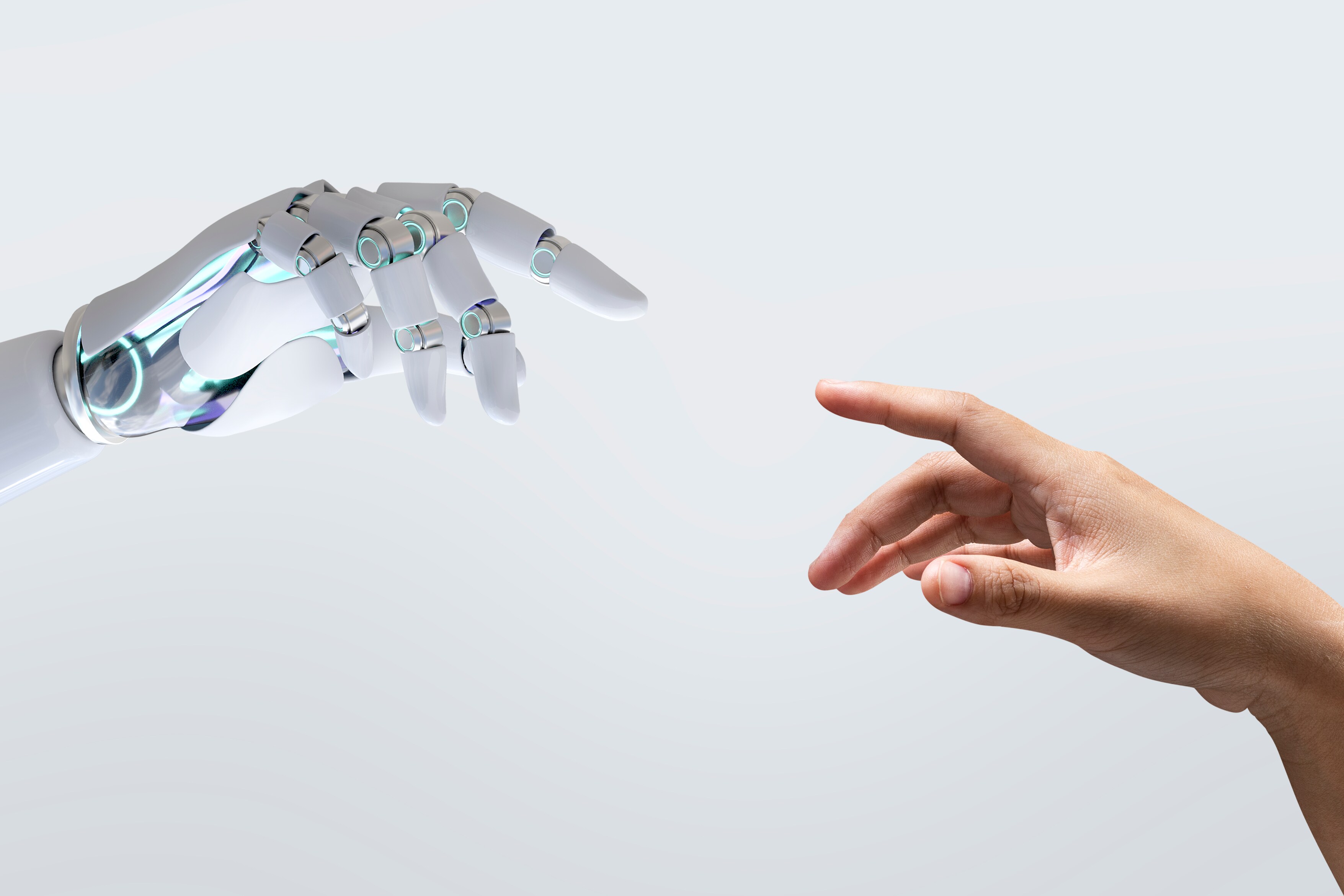
While deciding on the copyright issue of a comic book called "Zarya Of The Dawn", the United States Copyright Office made an interesting decision recently.
The office took away the first copyright and gave a new one, but this time, they said pictures made by artificial intelligence in the comic book don't get copyright protection. This shows they think there's a difference between content made by people and that made by AI.
In a related context, the U.K. Supreme Court recently ruled that an AI machine cannot be considered an inventor under the Patents Act of 1977. While hearing an appeal by technologist Stephen Thaler, who created the AI machine DABUS, the court emphasised that the law requires an inventor to be a person, and since DABUS is a machine, it does not meet this criterion.
This raises questions about how Indian law addresses similar issues concerning AI and intellectual property.
India's Take On AI Content
While AI systems can be the subject matter of, for example, patent applications or even protected as trade secrets/confidential information, they aren't recognised as capable of holding IP rights as on date, according to Bharadwaj Jaishankar, partner at Induslaw.
Intellectual property laws in India, such as the Copyright Act of 1957, the Trade Marks Act of 1999, the Designs Act of 2000, and the Patents Act of 1970, are designed to protect creations and inventions made by humans. They do not specifically acknowledge AI-generated output as a separate category for protection.
In the Copyright Act of 1957, which aims to safeguard works created by human authors, there is no clear guidance on how copyright applies to works generated by AI.
Indian courts have similarly refused to treat juristic persons as authors of copyrightable intellectual property material, said Vikrant Kumar, partner at Saraf and Partners. The Indian copyright office has followed a similar trend.
The Manual of Trade Marks Practice and Procedure stipulates that a registered proprietor, the person granted ownership of a trademark, must be a legal entity or a human applicant.
As of now, there are no exceptions to these rules, and the existing intellectual property laws in India do not explicitly address or provide protection for creations or inventions generated by artificial intelligence.
Therefore, AI generated content cannot be copyrighted under Indian law, as the legal framework in India lacks explicit provisions for bestowing intellectual property rights upon its creations, said Nishidh Patel, partner at Singhania and Co.
AI Contributions In Human Creations
As per Indian laws, human touch is pre-requisite for obtaining any intellectual property rights for a creation, but there is still no clarification on creations that have an overlap of human and AI contributions.
If the content is created with the assistance of an AI model, the protection is granted to the human using the platform, said JV Abhay, partner at Shardul Amarchand Mangaldas & Co.
Any content created independently by the AI model without direct human input or authorship cannot be conferred on the model, he told NDTV Profit.
In 2020, the copyright office declined a request for copyright protection for a work created by an AI named RAGHAV, where the AI itself was listed as the "author."
There is also no policy guidance from the Indian Copyright Office on whether AI models or non-humans can be considered authors in cases where the AI model is the creator of the work, Siddharth Mahajan, partner at Athena Legal, explained.
However, a subsequent application was submitted, naming both a human and the AI (RAGHAV) as co-authors for a different artwork. Initially, the copyright registration for this joint creation was approved. Unfortunately, this approval was later overturned, leading to the revocation of the copyright registration.
As the AI tools operate using existing data, Intellectual Property and Media-Entertainment lawyer Mudit Tayal pointed out that the threshold of novelty or originality is also a key factor in relation to AI-generated works.
There is a potential scenario where authorship of AI-generated work could be attributed to either the developer of the AI model, or the user who generated the work through prompts, for the purposes of the Copyright Act.JV Abhay, Partner, Shardul Amarchand Mangaldas & Co
Need For New Legal Provisions
Discussions on AI-related matters, encompassing AI rights and regulations, are actively taking place within the Indian government, as per Jaishankar.
Considering the increasing significance, applications, and impact of AI, it is crucial for the government, judiciary, and regulatory bodies to expedite their deliberations on potential laws and regulations governing AI, he said.
Indian intellectual property laws were established before the emergence of advanced generative AI as we know it today. Hence, the other way to seek clarity could be from case laws and precedents.
In the case of Eastern Book Co. vs. D.B. Modak, the Supreme Court established a crucial principle regarding copyright protection. The court ruled that for a work to be considered "original" and qualify for copyright protection, it must exhibit a 'minimal degree of creativity'.
If an AI company can demonstrate significant creativity in its AI-assisted content, meet the legal standard, and qualify as a derivative work, the court may recognise the individual contributing effort and creativity as the 'first author', said Nakul Batra, partner at DSK Legal.
This case set a precedent, introducing the 'modicum of creativity' test, which serves as a benchmark to assess whether a work possesses the necessary level of creativity for eligibility under copyright protection.
Based on past legal decisions, it seems that courts and regulators may be hesitant to interpret these laws broadly to encompass AI, Saraf and Partners' Kumar said, unless there are explicit amendments clearly addressing AI within the scope of these laws.
In other words, without specific changes to the laws, it is unlikely that the existing legal framework would automatically cover or accommodate the nuances of AI, he said.

-
Talking Points This Week: Tech Nerves, FII Buying, And A Faraway Banking Shock

The global markets are not shining this Diwali. The exception in the large markets is, India.
-
Midterm Rally Lasted A Day. The Hard Reality Of A Divided US May Last Two Years | Opinion
Between a contested AI boom, a debt ceiling that arrives in 2027 and a president with every incentive to act alone, the next two years may prove more volatile than the first day's rally suggests.
-
Blue Wave Will Derail the AI Trade but Won't Dismantle the AI Era | Unhedged Position
The Democrats' sweep of the US Congress will see politics collide with economic forces both over the long and short term.
-
It's Time To Take The GST Council's Bet On Trust Global
Payment records can prove India's services exports, and clear, proportionate rules can bring foreign digital sellers into the tax net.
-
Opinion | India at 38: From Innovation Overperformer to Innovation Powerhouse
India now has 453 VC-backed deep science startups, 18 of them late-stage, after 117 percent growth since 2020. Laurus Labs, at USD 9.3 billion, is the most valuable deep science company in any middle-income economy outside China.
-
Navigating Energy Crossroads: S Jaishankar's Call For Diversified Supply Chains At G20 Ministerial Meeting
As geopolitical fault lines continue to test maritime trade routes and commodity flows, Jaishankar's message remains pertinent: true economic resilience requires open markets, protected transit lines, and a genuine commitment to multilateral cooperation rather than coercion.
-
Indians Are Travelling, But Not Every Journey Is A Holiday | The Week In Whys
Pilgrims, patients and working women are the real travellers, and the system hasn't quite caught up with them.
-
Getting To Work Costs Women More | The Reason Why
It is not just about women paying more than men. It is about women paying much more in cities than in villages.
-
AI Bias In Investing Cannot Be Eliminated, But It Can Be Governed
Framing is a particularly important example as identical financial information presented in terms of gains rather than losses can lead an LLM to reach a different assessment.