CAB: Why Assam Is The Epicentre Of Protests Against New Citizenship Law
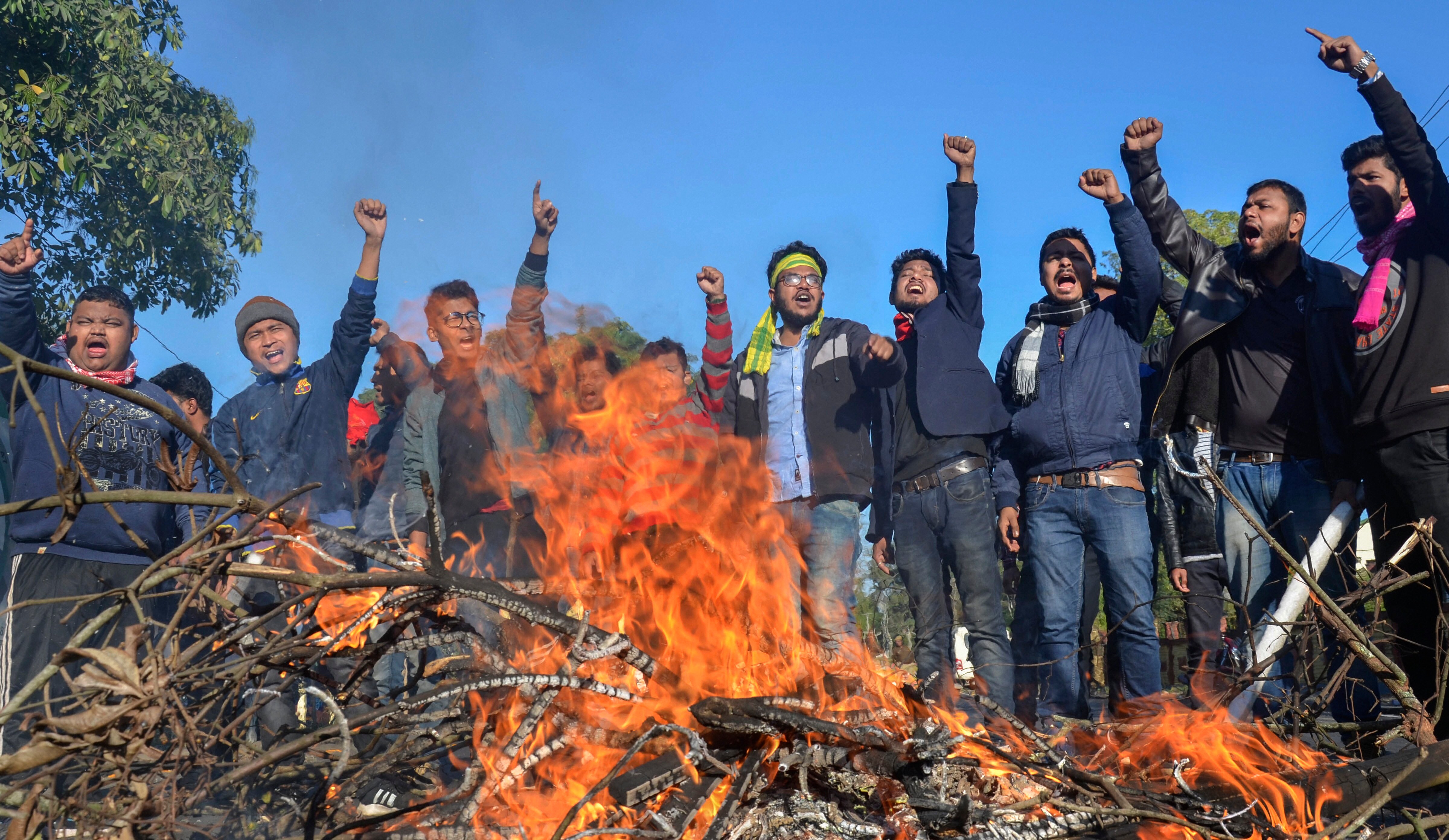
Parts of the country have erupted in protests after the passage of Citizenship Amendment Act. The new law provides for granting citizenship to Hindus, Christians, Buddhists, Jains, Sikhs and Parsis who illegally came to India before Dec. 31, 2014 from Pakistan, Afghanistan and Bangladesh. Muslims are omitted.
Opposition parties have called the change unconstitutional, arguing that it alters the secular nature of India's constitution. The nation's northeastern states, and Assam in particular, have become the epicentre of the protests against the new law. But their fears are different. Let alone Muslims, they don't want any illegal migrant granted citizenship.
The locals in Assam fear that the minority communities, tribes and linguistic groups of the state will be overrun by refugees who have managed to enter the state in the last 30-40 years, according to journalist Anubhav Chakroborty. “The large mobilisation in the tribal areas (against the new law) is because they think a whole bunch of people will settle in here because we are closer to Bangladesh,” he told BloombergQuint.
Student unions and members of civil society have come out against the changed Citizenship Act in the state. But this is not the first such protests in Assam against illegal migration.
The Assam movement started taking shape in 1979 and continued till 1985 against the migrants settling in the state after the partition of India and later creation of Bangladesh. Over the years, Assam has seen the maximum influx of Bangladeshis and the indigenous people fear losing their jobs, said Oineetom Ojha, a journalist with EastMojo.
According to Sajal Nag, professor of history at Assam University, protesters feel that the new law will change the demographics of the state and marginalise the existing population, both politically and economically. “One has to understand that these are small communities and they don't want outsiders turning them into political and economically marginal groups.”
Even before the partition, there was huge opposition from Assam over migration. “That was mainly because the land was too little and the population structure was very fragile. They foresaw that there would be very little left for them if this migration continued.”
The central government said the Citizenship Amendment Act will not be implemented in the northeast. Arunachal Pradesh, Mizoram and Nagaland already have an Inner Line Permit requirement, and it has been extended to Manipur. Meghalaya is demanding a similar protection that keeps out outsiders, even from other parts of India. The permits also protect jobs and land for locals.
Congress is misleading people over the #CitizenshipAmendmentBill2019, most states in the Northeast are outside the ambit of this law, says PM Modi while addressing a rally in Jharkhand.
December 12, 2019
Read: https://t.co/NGgTuE0WWO pic.twitter.com/6ScOfZJPtnThe Assamese expect the maximum impact.
Of the 19 lakh people left out of the National Register of Citizens, multiple reports have said that an estimated 12 lakh were Hindus. Himanta Biswa Sarma, a minister in the Bharatiya Janata Party-led led Assam government, has claimed that around 5 lakh Hindus excluded. The new law would provide citizenship to these people.
Chakroborty warned that the movement could get bigger if the government doesn't pay attention or keeps deploying force. This new law is seen as an imposition of diktat from Delhi over Assam without understanding the community issues of Northeast India, he said.
Nag said people also see this as setting a precedent. “People are worried and fearful that despite our protest and opposition, if they [the government] can do this, then tomorrow something else can be done. We are voiceless and helpless.”
Watch the full video here:

-
A New Samvat Wishlist: Inclusive Prosperity And Human Development

India has strengthened its economic foundations through infrastructure, digital access and enterprise. Its next growth chapter must deepen productivity, create better livelihoods and widen participation in prosperity.
-
Love, Sex Aur Dhokha: The Audacious Plot To Spy On Jensen Huang
A Taipei dinner, a Singapore chip buyer and a suspected Chinese asset: inside the alleged spy operation that got close to NVIDIA's Jensen Huang.
-
Ten Things I Learnt This Samvat
Patience can be a trap. Cheap stocks can stay cheap. Leverage can wipe you out. What did Samvat 2082 teach us? Niraj Shah writes on 10 lessons from the year gone by.
-
Talking Points This Week: Tech Nerves, FII Buying, And A Faraway Banking Shock
The global markets are not shining this Diwali. The exception in the large markets is, India.
-
Midterm Rally Lasted A Day. The Hard Reality Of A Divided US May Last Two Years | Opinion
Between a contested AI boom, a debt ceiling that arrives in 2027 and a president with every incentive to act alone, the next two years may prove more volatile than the first day's rally suggests.
-
Blue Wave Will Derail the AI Trade but Won't Dismantle the AI Era | Unhedged Position
The Democrats' sweep of the US Congress will see politics collide with economic forces both over the long and short term.
-
It's Time To Take The GST Council's Bet On Trust Global
Payment records can prove India's services exports, and clear, proportionate rules can bring foreign digital sellers into the tax net.
-
Opinion | India at 38: From Innovation Overperformer to Innovation Powerhouse
India now has 453 VC-backed deep science startups, 18 of them late-stage, after 117 percent growth since 2020. Laurus Labs, at USD 9.3 billion, is the most valuable deep science company in any middle-income economy outside China.
-
Navigating Energy Crossroads: S Jaishankar's Call For Diversified Supply Chains At G20 Ministerial Meeting
As geopolitical fault lines continue to test maritime trade routes and commodity flows, Jaishankar's message remains pertinent: true economic resilience requires open markets, protected transit lines, and a genuine commitment to multilateral cooperation rather than coercion.









