Move Away From The Fixation With Fiscal Deficit Targeting, Says Bimal Jalan
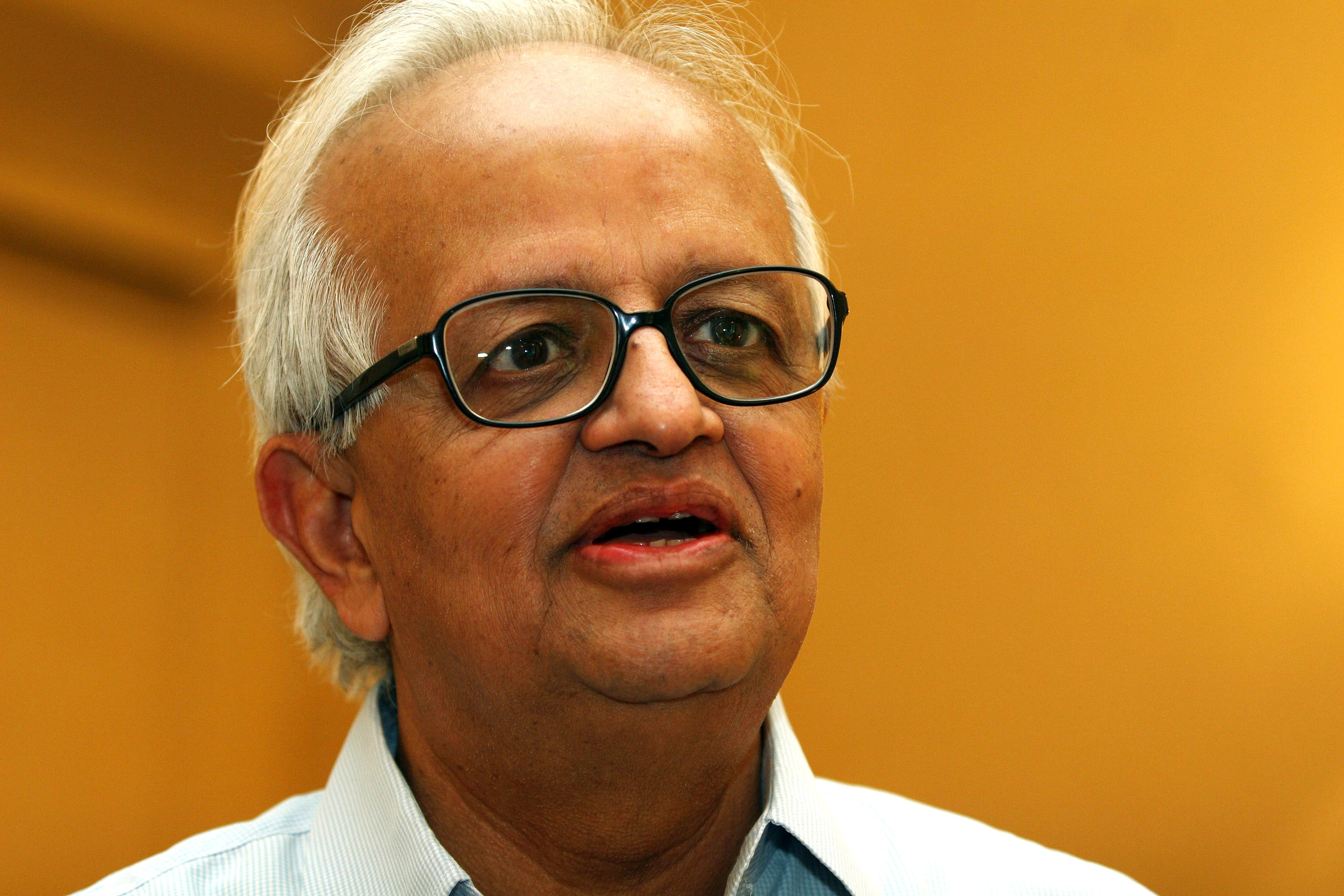
Bimal Jalan, former governor of the Reserve Bank of India, today said it's time for us to move away from the ‘fixation' for meeting a fiscal deficit target and instead must judge a government from the outcomes its economic policies achieve.
There is a fixation somehow among all of us to have a target-related fiscal policy, fiscal deficit, how much it should be, why it should be, and what is the trade-off between what you say growth and inflation and so on, Jalan said speaking at a seminar at the RBI-promoted IGIDR.
Just ask yourself, does it matter so much, whether it is 3.2 percent or 3.4 (percent of GDP). Does it matter for the people of the country?Bimal Jalan, Former RBI Governor
The government has targeted a 3.2 percent of GDP fiscal deficit target for the current fiscal. There are severe concerns on achieving this year given the precarious revenue collection position following the implementation of the Goods and Services Tax, which has put a slew of sectors in the lurch.
The fiscal deficit is the gap between revenue expenditure and revenue receipts.
In the comments, which come days after the official data revealed that government has already exhausted 96.1 percent of the budgeted deficit in the first seven months of the year to March 2018, Jalan clarified that he is not calling for there being any restraint.
“Don't judge a government by its performance (on the fiscal deficit number), judge it on whether what is done regarding policy is leading to the outcomes that we have promised like investments," the former central banker said.
My suggestion to all of you is to move away from fiscal targeting. Moving away from fiscal targeting does not mean that we should have high inflation or high interest rates.Bimal Jalan, Former RBI Governor
On inflation, where the RBI has been mandated to ensure that the price rise is contained at 4 percent in the medium-term with a flexibility of 2 percentage points on either side, Jalan reiterated his call for moving away from a targeted range, and pointed out that there can be circumstances like a drought or external events, which may lead to the resolution being tested.
It is noted that the rating agencies take a very critical view on fiscal slippages, because of the macroeconomic instabilities like inflation that it results in.
Jalan's successor at the central bank, YV Reddy, who was also present, hinted to support Jalan, saying it is welcome to look at fiscal sustainability in a broader aspect, but underlined the need to convince the market about it.
I think sustainable fiscal deficit and its macroeconomic analysis is good. But in reality, are we able to convince the markets? Finally, fiscal sustainability is whether you can raise the money or not?YV Reddy, Former RBI Governor
Even as the country has moved up multiple notches on the rankings in ease of doing business, Jalan said there continues to be a slew of regulatory approvals required for an act like investing in roads and wondered why this happened even when we have a government with the full majority.
Jalan also pitched for reform in the way Parliament functions, stating that the current method of legislative business which sees adjournments, shorter meetings and passing of laws sans debate through voice votes, is not what the Constitution envisions.
“What is the government doing to reform the working of Parliament? It adjourns, meets for two days, voice votes pass most of the resolutions and policies; there is no communication between political parties. However, that is not the intention in the Constitution. The majority government is accountable to Parliament, and Parliament is accountable to the nation.”
Stating that we are a country with “the largest election and also the largest number of people below poverty line,” Jalan said chasing growth should not be our primary objective.
Growth, he said, is only the means by which we can ensure that it will be ‘able to provide basic means of living to everyone'.
Also Read: Government's Lifeline For Banks Won't Hurt Fiscal Consolidation, Says Bimal Jalan

-
Navigating Friction And Energy Realities: An Analysis Of Marco Rubio's October Visit To India

Occurring at a critical juncture marked by stalled trade negotiations and escalating geopolitical pressures over global energy supplies, the visit offers a profound window into modern US-India relations.
-
India Exports Capital. Why Not Export Trusteeship?
The big question, then, is whether India can build an institution that global borrowers, investors, banks, and lawyers can trust, even without an Indian connection.
-
France's Economy & Politics Are In Crisis | The Reason Why
Let's look at how the French economy and politics evolved under Nicolas Sarkozy, Franois Hollande and Emmanuel Macron.
-
You May Inherit The Business. You Must Earn Its Credibility.
Succession tests the founder's ability to share authority as much as it tests the next generation's readiness to assume it.
-
Signing Deals Is One Thing; Making Them Work Is Another | The Week In Whys
Sometimes, things don't turn out as planned. Indian companies have lost some bids to rivals, some projects won't produce until 2030.
-
FOMC Wall, PERM Suspension, Hospital Stocks | Talking Points This Week
A PERM suspension would directly affect green-card sponsorship rather than H-1B visas, so the near-term earnings impact could remain relatively limited. The key question is whether this marks a new phase in US scrutiny of Indian IT.
-
Everything, Everywhere, All At Once: Dalal Street's Week To Forget | Joining The Dots
Visa curbs, a Starlink spat and cancer drug caps: what connects this week's shocks for Indian markets
-
India Is Going Abroad For Critical Minerals. But It May Take Years To Pay Off | The Reason Why
Although India's steps are in the right direction, they remain modest compared with India's growing dependence.
-
When Everyone Has AI, What Gives You An Edge?
India's young workforce is entering an uncertain world of work where powerful AI tools are becoming widely accessible. The advantage will belong to those who combine deep expertise with digital fluency, and the distinctly human capabilities that technology cannot manufacture.
-
Wrong Labels, High Pesticide Residues Holding Back Agri Exports | The Reason Why
India needs stronger domestic food-safety and labelling standards, with best practices becoming part of everyday business for farmers, traders and food companies.










