Bangladesh Sentences Nobel Peace Prize Winner To 6 Months In Prison
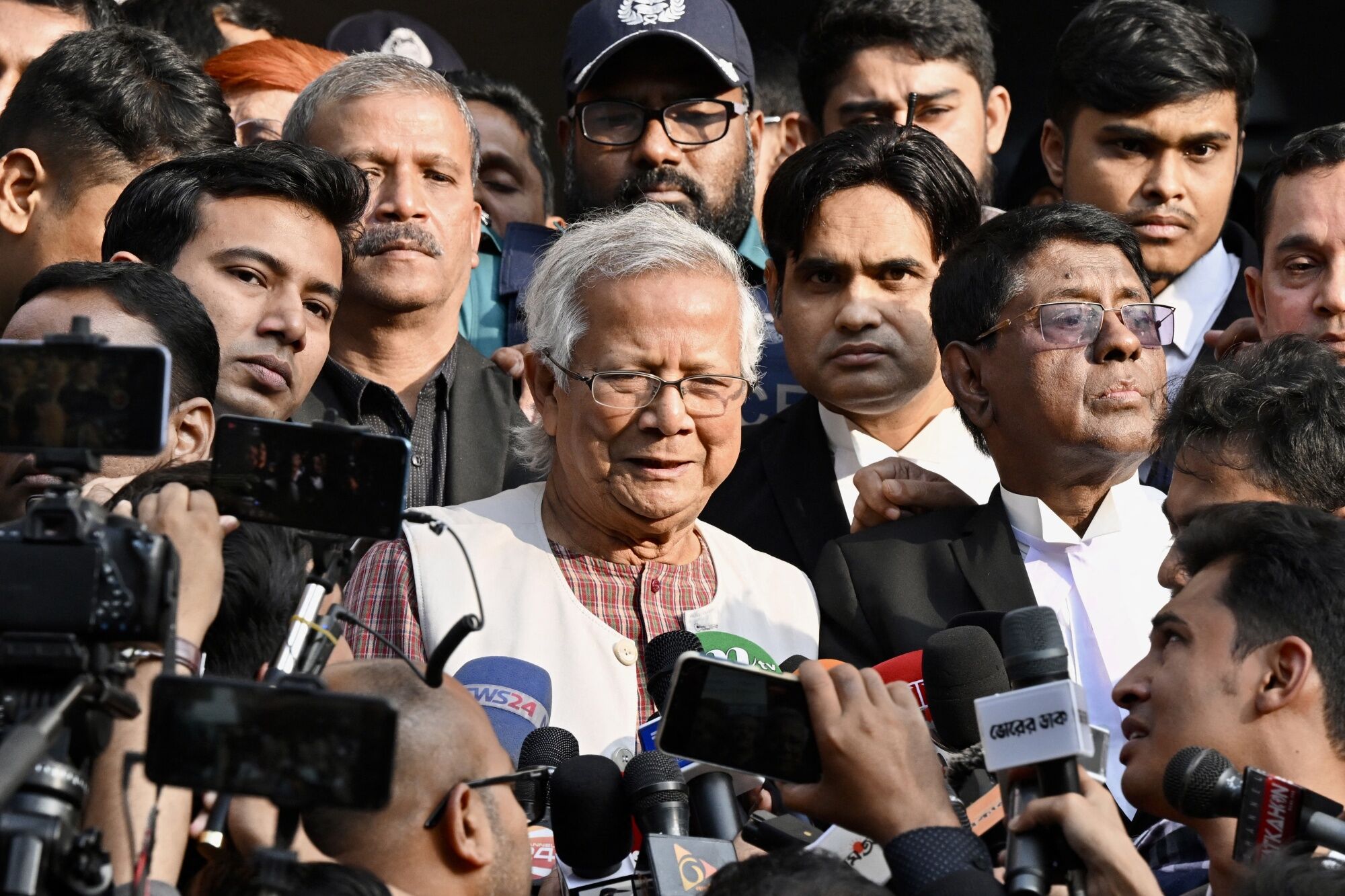
(Bloomberg) -- A Dhaka court sentenced Muhammad Yunus — who won the Nobel Peace Prize for pioneering microloans to some of Bangladesh's poorest — to 6 months in jail for labor law violations.
A labor inspector had found that employees of Grameen Telecom, of which Yunus, 83, is chairman, were denied benefits including leave and welfare deposits. He has denied the allegations.
“We're being punished for something we haven't done,” Yunus said after the verdict. “That's our fate and that's the fate of our nation.”
Judge Sheikh Marina Sultana granted Yunus and three other officials of Grameen Telecom bail for one month, allowing them to appeal the sentencing in the High Court. Yunus's lawyer Abdullah Al Mamun said he will appeal the verdict.
Grameen Telecom, a non-profit organization, owns 34.2% of Bangladesh's largest telecom carrier Grameenphone, a unit of Norway's Telenor ASA.
This is one of about 150 cases filed against Yunus after Prime Minister Sheikh Hasina Wajed's Awami League came to power in 2008, according to Amnesty International. The case is “emblematic of the beleaguered state of human rights in Bangladesh, where the authorities have eroded freedoms and bulldozed critics into submission,” Agnès Callamard, secretary general of Amnesty, said in September.
Hasina has publicly attacked Yunus on many occasions. In 2011, she accused him of “sucking blood from the poor.” In 2022, she alleged that he tried to block World Bank funding of the Padma bridge project. Yunus has denied any role in freezing funds for the bridge project.
(Adds quote from Yunus in third paragraph)
More stories like this are available on bloomberg.com
©2024 Bloomberg L.P.

-
Where You Live Shapes How You Get To Work | The Reason Why

Two-wheelers are the most popular way to get to work in India, accounting for nearly 43% of workplace commutes.
-
High US Salaries, No Green Card Certainty: The Financial Calculation Facing Indian H-1B Families
The suspension of PERM processing at eight technology employers does not cancel existing H-1B visas. What it does is force a question many Indian families have been avoiding: is the US salary worth tying your career and family plans to one employer?
-
Unhedged Position: Can India See An Indonesia-Style Time Correction?
The Nifty is trading below levels it first clocked in 2024. Is there, then, as I have suggested in the headline, potential that the current time correction drags on painfully for the next three-five, even ten years?
-
Navigating Friction And Energy Realities: An Analysis Of Marco Rubio's October Visit To India
Occurring at a critical juncture marked by stalled trade negotiations and escalating geopolitical pressures over global energy supplies, the visit offers a profound window into modern US-India relations.
-
India Exports Capital. Why Not Export Trusteeship?
The big question, then, is whether India can build an institution that global borrowers, investors, banks, and lawyers can trust, even without an Indian connection.
-
France's Economy & Politics Are In Crisis | The Reason Why
Let's look at how the French economy and politics evolved under Nicolas Sarkozy, Franois Hollande and Emmanuel Macron.
-
You May Inherit The Business. You Must Earn Its Credibility.
Succession tests the founder's ability to share authority as much as it tests the next generation's readiness to assume it.
-
Signing Deals Is One Thing; Making Them Work Is Another | The Week In Whys
Sometimes, things don't turn out as planned. Indian companies have lost some bids to rivals, some projects won't produce until 2030.
-
FOMC Wall, PERM Suspension, Hospital Stocks | Talking Points This Week
A PERM suspension would directly affect green-card sponsorship rather than H-1B visas, so the near-term earnings impact could remain relatively limited. The key question is whether this marks a new phase in US scrutiny of Indian IT.
-
Everything, Everywhere, All At Once: Dalal Street's Week To Forget | Joining The Dots
Visa curbs, a Starlink spat and cancer drug caps: what connects this week's shocks for Indian markets









