Audit Regulator NFRA Finds Serious Lapses In Deloitte’s Audit Of IL&FS Financial Services
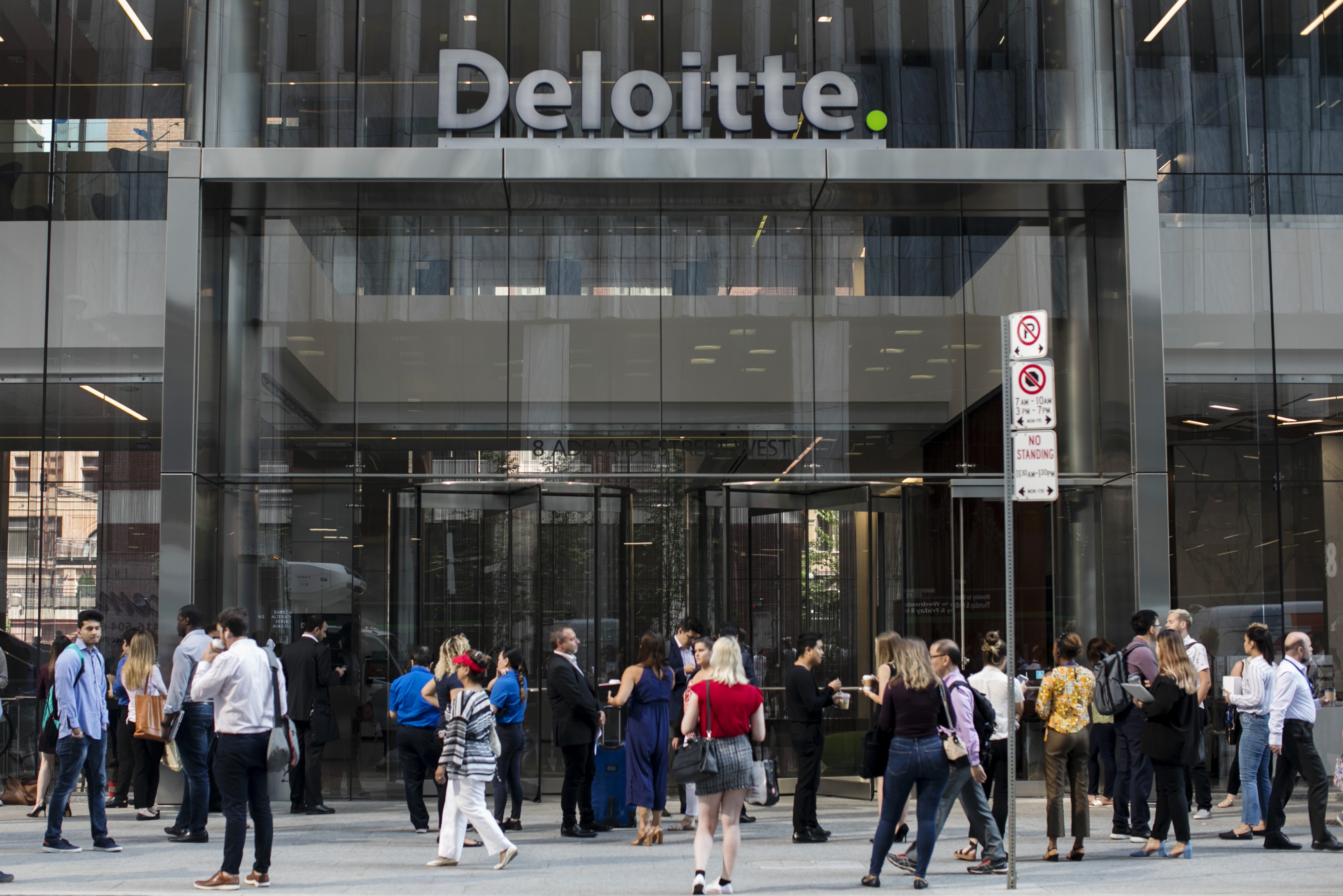
Audit firm Deloitte, Haskins & Sells LLP allowed the management of IL&FS Financial Services Ltd. to conceal negative capital ratios so as to save the company's NBFC license, said the audit regulator in a report published today.
In its very first such audit quality review report, the National Financial Reporting Authority found serious lapses in Deloitte's audit of IFIN's financial statements for financial year 2017-18. The AQR was prompted by financial troubles and allegations of mismanagement and fraud at the IL&FS group of companies in 2018. It was carried out under section 132 (2) (b) of the Companies Act, 2013 that requires NFRA to monitor and enforce compliance with accounting and auditing standards.
Over 11 months of review the NFRA found that Deloitte failed to comply with the requirements of auditing standards and that “the instances of failure noticed are of such significance…that DHS did not have adequate justification for issuing the audit report asserting that the audit was conducted in accordance with the auditing standards”.
Of the most egregious failures on the part of Deloitte, NFRA found that Deloitte accepted the non-banking financial company management's decision not to disclose that net owned funds and capital to risk assets ratio were both negative. Reporting of negative NOF and CRAR would have led to cancellation of the firm's NBFC license.
The net owned funds of the company were negative Rs 45.93 crore as on Mar. 31, 2015, and sharply declined to negative Rs 4,124 crore as on Mar. 31, 2016. The RBI mandates maintaining minimum Rs 2 crore in net owned funds. The IFIN's capital to risk weighted asset ratio was (-)0.40 percent in FY15, and (-) 42.61 percent in FY16, against the minimum requirement of 15 percent, the report said.
The AQR also stated
- Deloitte did not display the required professional skepticism, and did not challenge the management on important issues.
- Deloitte did not adequately question the going concern assumption on basis of which management prepared financial statements.
- The independence of the auditor was compromised by the provision of non-audit services for substantial fees. These non-audit services were clearly prohibited by company law. Mandatory approval of audit committee was also not obtained.
- Deloitte did not question management and challenge inflation of profit by over Rs 180 crore.
- The Engagement Quality Control Review was “a complete sham”.
- Deloitte failed to appropriately deal with identification, categorisation and minimisation of engagement risk. The engagement partner signed the audit report without discharging most of the important duties that such an audit partner has to fulfill. Deloitte also violated standards by appointing two engagement partners, thereby leading to loss of accountability.
NFRA concluded that Deloitte's quality control system and processes are “severely inadequate and ineffective” and will examine whether disciplinary proceedings need to be initiated against the firm or its partners.
The Deloitte India spokesperson shared this comment on the AQR - “DHS LLP will conduct a detailed review into NFRA's report and is exploring its available options in relation to the joint audit of IFIN for FY 2017-2018. We remain confident that our audits have been performed in accordance with applicable laws, regulations and professional standards in India”.
Deloitte, along with KPMG network firm BSR & Associates is currently also facing action by the government which has petitioned the National Company Law Tribunal to ban the two firms for five years. The matter is currently sub-judice.

-
Swiggy vs Eternal: Food Delivery's Two Rivals Are No Longer In The Same Race

Eternal is building a private AI assistant, dark.ai. Swiggy is still working out how to make Instamart pay, with an operating loss of Rs 895 crore in the July-September quarter while Blinkit stayed profitable.
-
Where You Live Shapes How You Get To Work | The Reason Why
Two-wheelers are the most popular way to get to work in India, accounting for nearly 43% of workplace commutes.
-
High US Salaries, No Green Card Certainty: The Financial Calculation Facing Indian H-1B Families
The suspension of PERM processing at eight technology employers does not cancel existing H-1B visas. What it does is force a question many Indian families have been avoiding: is the US salary worth tying your career and family plans to one employer?
-
Unhedged Position: Can India See An Indonesia-Style Time Correction?
The Nifty is trading below levels it first clocked in 2024. Is there, then, as I have suggested in the headline, potential that the current time correction drags on painfully for the next three-five, even ten years?
-
Navigating Friction And Energy Realities: An Analysis Of Marco Rubio's October Visit To India
Occurring at a critical juncture marked by stalled trade negotiations and escalating geopolitical pressures over global energy supplies, the visit offers a profound window into modern US-India relations.
-
India Exports Capital. Why Not Export Trusteeship?
The big question, then, is whether India can build an institution that global borrowers, investors, banks, and lawyers can trust, even without an Indian connection.
-
France's Economy & Politics Are In Crisis | The Reason Why
Let's look at how the French economy and politics evolved under Nicolas Sarkozy, Franois Hollande and Emmanuel Macron.
-
You May Inherit The Business. You Must Earn Its Credibility.
Succession tests the founder's ability to share authority as much as it tests the next generation's readiness to assume it.
-
Signing Deals Is One Thing; Making Them Work Is Another | The Week In Whys
Sometimes, things don't turn out as planned. Indian companies have lost some bids to rivals, some projects won't produce until 2030.
-
FOMC Wall, PERM Suspension, Hospital Stocks | Talking Points This Week
A PERM suspension would directly affect green-card sponsorship rather than H-1B visas, so the near-term earnings impact could remain relatively limited. The key question is whether this marks a new phase in US scrutiny of Indian IT.









