Arun Jaitley Draws Parallel Between Emergency And Nazi Germany
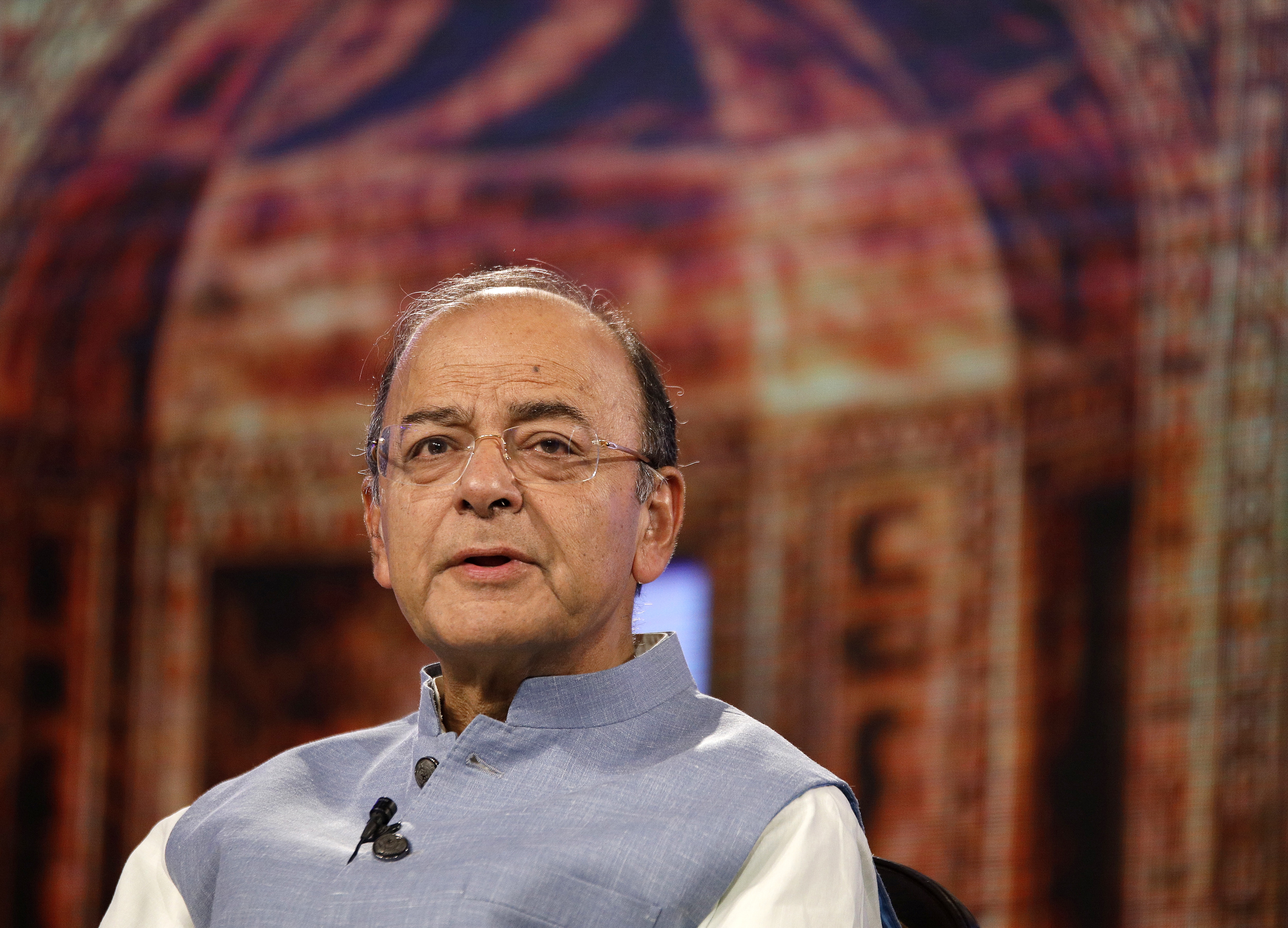
Drawing a parallel between German dictator Adolf Hitler and former Indian Prime Minister Indira Gandhi, Union Minister Arun Jaitley today said that both turned democracy into dictatorship.
In the second of the three-part series of an article The Emergency Revisited, Jaitley said unlike Hitler, Gandhi went a step ahead by endeavouring to transform India into a “dynastic democracy.”
In his Facebook post, the minister wondered whether the script of Emergency, which was imposed more than four decades ago on June 25, 1975, was inspired by what had happened in Nazi Germany in 1933.
"Both Hitler and Mrs. Gandhi never abrogated the Constitution. They used a republican Constitution to transform democracy into dictatorship," Jaitley wrote in the second post sub-titled as 'The Tyranny of Emergency'.
Prime Minister Narendra Modi shared Jaitley's blog on his Twitter handle.
Shri @arunjaitley writes about the dark days of the Emergency, the trampling of personal liberties, excesses committed and how the Emergency was a direct attack on our Constitutional ideals. Do read his blogs.
June 25, 2018
Part 1-https://t.co/0PPmNlLbc5
Part 2-https://t.co/50clvN4WxJJaitley said there were a few things which Hitler did not do which Gandhi did.
"She prohibited the publication of Parliamentary proceeding in the media. Unlike Hitler, Mrs Gandhi went ahead to transform India into a 'dynastic democracy'," Jaitley said.
"The press censorship laws imposed in India and in Germany were almost similar. You had effectively a one party system in play," Jaitley said. As regards the economic programme, the minister drew a similarity between the agenda of Hitler and Gandhi.
"Hitler had announced a 25 point economic programme. Mrs Gandhi had announced 20. To cover up the gap, Sanjay (Gandhi) announced his five point economic and social programme. Dissent became a sin and sycophancy the rule," Jaitley said.
Hitler continued to maintain that his actions were within the four corners of the Constitution, Jaitley said, adding “Mrs. Gandhi imposed the Emergency under Article 352, suspended fundamental rights under Article 359 and claimed that disorder was planned by the opposition in the country.”
The senior minister further said that the security forces were being asked to disobey illegal orders and, therefore, in the larger interest of the nation, India had to become a "disciplined democracy.”
Like Hitler, Gandhi arrested most opposition members of Parliament, and therefore procured, through their absence, a two-third majority of members present and voting and enabling the passage of several obnoxious provisions through Constitution amendments, he said.
"The 42nd amendment to the Constitution diluted the power of high courts to issue writ petitions, a power which Dr. Ambedkar had said was the very heart and soul of India's Constitution. They also amended Article 368 so that a Constitution amendment was beyond judicial review," Jaitley said.
A Nazi leader proclaimed that Germany had only one authority and that was the authority of "Fuhrer" ,Jaitley said, adding that similarly All India Congress Ccommittee president Devakanta Barua had proclaimed “Indira is India and India is Indira.”
Watch this discussion with Sudesh Verma of BJP, Muhammad Khan of Congress and Aditi Phadnis, political editor of the Business Standard.

-
Where You Live Shapes How You Get To Work | The Reason Why

Two-wheelers are the most popular way to get to work in India, accounting for nearly 43% of workplace commutes.
-
High US Salaries, No Green Card Certainty: The Financial Calculation Facing Indian H-1B Families
The suspension of PERM processing at eight technology employers does not cancel existing H-1B visas. What it does is force a question many Indian families have been avoiding: is the US salary worth tying your career and family plans to one employer?
-
Unhedged Position: Can India See An Indonesia-Style Time Correction?
The Nifty is trading below levels it first clocked in 2024. Is there, then, as I have suggested in the headline, potential that the current time correction drags on painfully for the next three-five, even ten years?
-
Navigating Friction And Energy Realities: An Analysis Of Marco Rubio's October Visit To India
Occurring at a critical juncture marked by stalled trade negotiations and escalating geopolitical pressures over global energy supplies, the visit offers a profound window into modern US-India relations.
-
India Exports Capital. Why Not Export Trusteeship?
The big question, then, is whether India can build an institution that global borrowers, investors, banks, and lawyers can trust, even without an Indian connection.
-
France's Economy & Politics Are In Crisis | The Reason Why
Let's look at how the French economy and politics evolved under Nicolas Sarkozy, Franois Hollande and Emmanuel Macron.
-
You May Inherit The Business. You Must Earn Its Credibility.
Succession tests the founder's ability to share authority as much as it tests the next generation's readiness to assume it.
-
Signing Deals Is One Thing; Making Them Work Is Another | The Week In Whys
Sometimes, things don't turn out as planned. Indian companies have lost some bids to rivals, some projects won't produce until 2030.
-
FOMC Wall, PERM Suspension, Hospital Stocks | Talking Points This Week
A PERM suspension would directly affect green-card sponsorship rather than H-1B visas, so the near-term earnings impact could remain relatively limited. The key question is whether this marks a new phase in US scrutiny of Indian IT.
-
Everything, Everywhere, All At Once: Dalal Street's Week To Forget | Joining The Dots
Visa curbs, a Starlink spat and cancer drug caps: what connects this week's shocks for Indian markets









