Akhilesh Yadav’s Rath Yatra: Indication Of Truce?
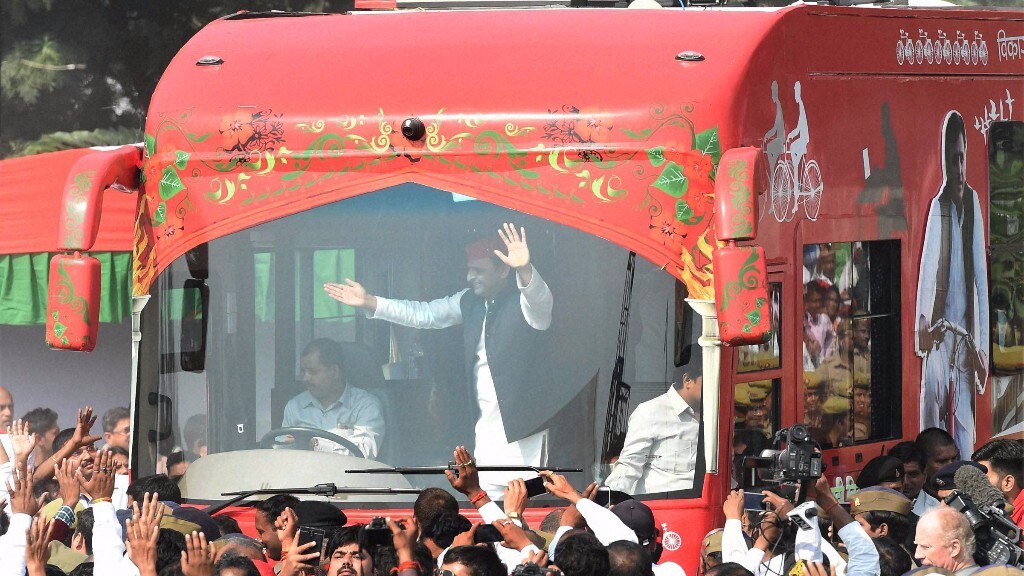
In an interview to a leading business daily, Uttar Pradesh Chief Minister Akhilesh Yadav said “ab rath jab chalega toh bahut saare sawaalon ke jawab mil jayenge (when the chariot rolls, many questions will automatically be answered).” The rath indeed has rolled and we got a few answers as well. If the inaugural function is any indication, we now have fair idea of the shape the ruling Samajwadi Party (SP) is going to take in the next few months.
Contrary to expectations, both Mulayam Singh Yadav and his brother Shivpal Yadav turned up to flag off the rath. And both wished the yatra a grand success. The Quint had reported on Wednesday evening itself that Mulayam Singh would flag off the yatra in Lucknow.
Also Read: UP Under Akhilesh Yadav: Is He Really a ‘Vikas' Mantri?
Shivpal, Mulayam Flagging Off the Yatra Indication of Truce
The presence of Mulayam and Shivpal at what was touted as Akhilesh's event is a clear indication that some sort of truce has been arrived at in the Yadav family. It is also becoming increasingly clear that the SP baton has been passed on to the generation next, with Akhilesh in the driver's seat.
Parties looking for a possible alliance with the SP for the forthcoming elections may have some sort of clarity on whom to talk to. Unnerved by the rising factions which might have resulted in a vertical division in the SP, parties like the Congress, the Rashtiya Lok Dal and the Janata Dal (United) were unwilling to commit to any alliance. A possible truce may hasten alliance talks in days to come.
Also Read: Akhilesh Yadav Emerging as the Clear Winner in SP's Family Feud
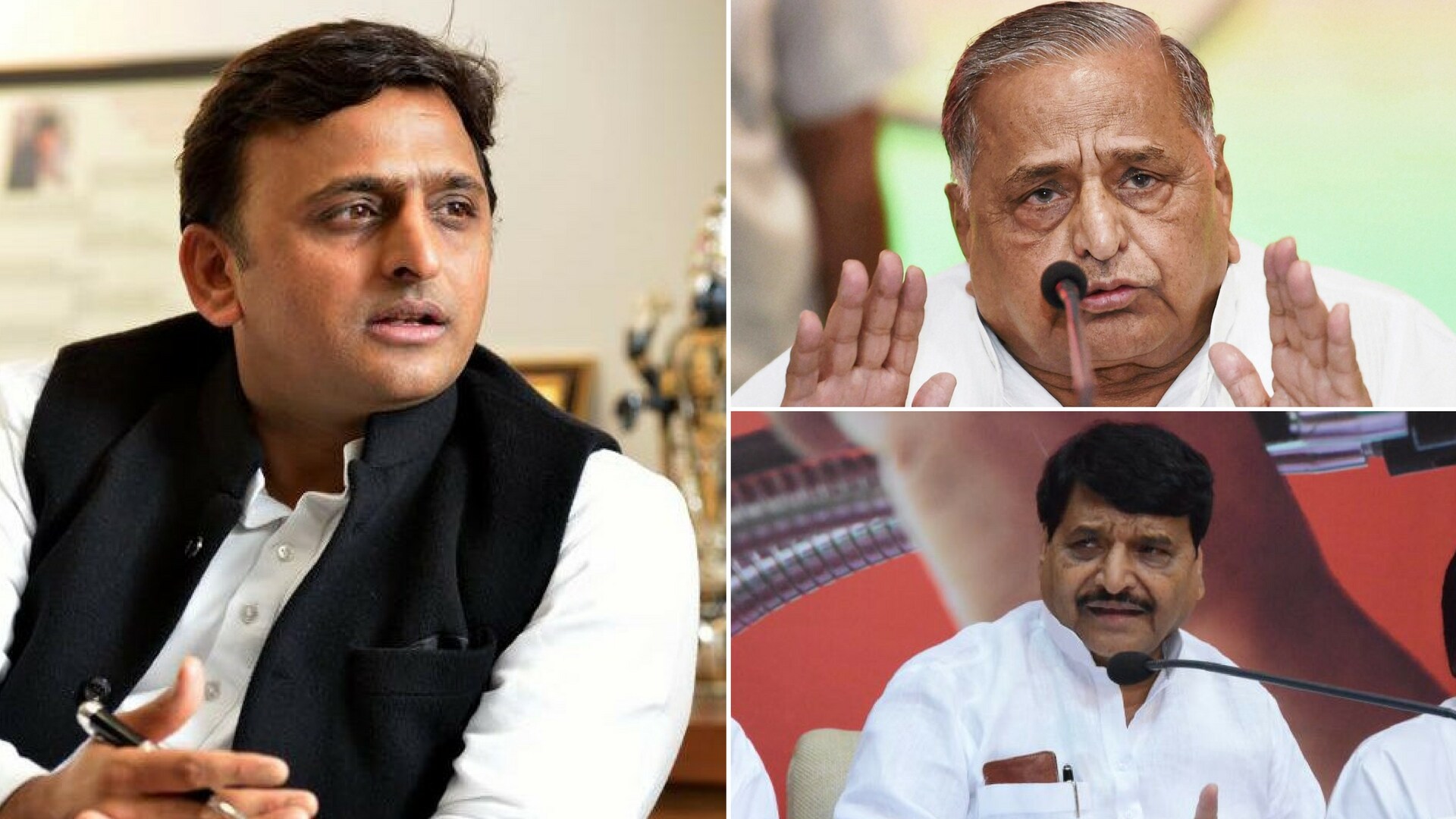
In the interview to the Economic Times, Akhilesh Yadav made three observations that need our attention. He said “in politics one should think ahead – there is no point in looking back.” He is perhaps trying to send a message to the people of Uttar Pradesh that if he gets another chance, he will try to get rid of the ‘four-and-a-half chief minister' tag.
Because of several power centres in the SP, Akhilesh was derisively referred to as one of the many chief ministers of Uttar Pradesh. Akhilesh is trying to send a message that this is not going to be the case henceforth. Recent events – the sacking of Shivpal from his cabinet and retaining his favourite as a minister despite opposition from others – have given enough hints of that.
Another point that is worth our attention is his description of himself as a “trainee” chief minister. “People said I was a trainee CM. I say that as a trainee if I have done so much, imagine what all I can do now that I have experience.” This statement is perhaps an announcement of his coming of age within his party. At the same time, it is perhaps also an admission that he may have erred in the past because of inexperience.
His term as the chief minister of the country's most populous state has had a fair share of gross missteps. Muzaffarnagar riots and Dadri lynching are certainly some of the dark spots. The deteriorating law and order situation is seen, at least in some quarters, as a sign that an SP regime always remains lax on crime and Akhilesh has proved to be no different.
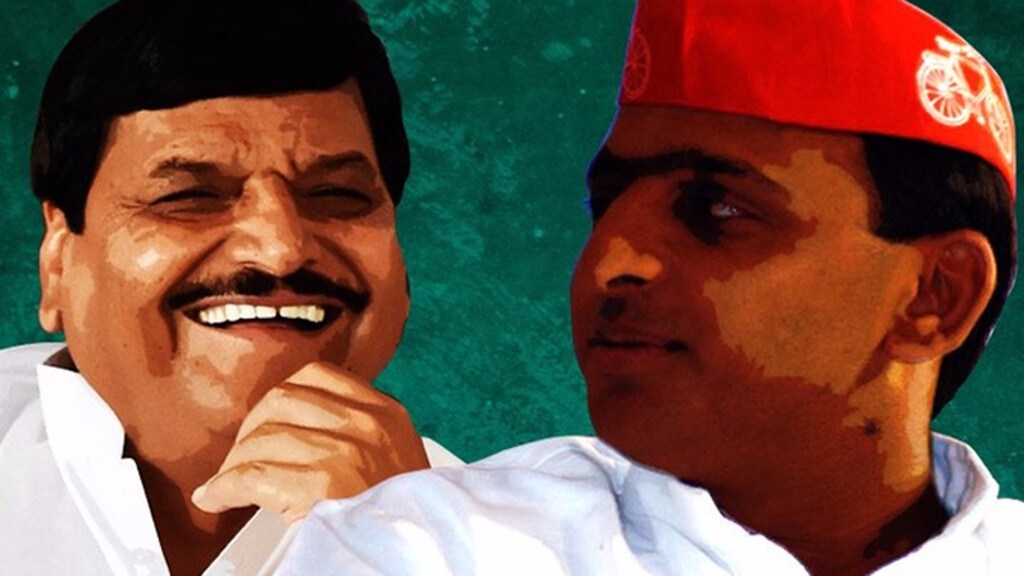
Akhilesh made yet another interesting observation in his interview. When asked about the family feud, he said “main beta hun, bhatija bhi (I am a son and a nephew too).” This is perhaps a clear indication of a truce in the family, of course on Akhilesh's terms. But there is no hint of Akhilesh going back on his words on Amar Singh. Referring to Amar Singh, he told the newspaper that “uncle wala rishta lagta hai bahut kam samay ke liye tha.”
Now the question we all need answer to is: will the people of UP give yet another chance to the “trainee” chief minister? It will depend a great deal on how alliance talks proceed henceforth. Akhilesh, on his part, has said that he has an open mind on the issue.

-
Navigating Friction And Energy Realities: An Analysis Of Marco Rubio's October Visit To India

Occurring at a critical juncture marked by stalled trade negotiations and escalating geopolitical pressures over global energy supplies, the visit offers a profound window into modern US-India relations.
-
India Exports Capital. Why Not Export Trusteeship?
The big question, then, is whether India can build an institution that global borrowers, investors, banks, and lawyers can trust, even without an Indian connection.
-
France's Economy & Politics Are In Crisis | The Reason Why
Let's look at how the French economy and politics evolved under Nicolas Sarkozy, Franois Hollande and Emmanuel Macron.
-
You May Inherit The Business. You Must Earn Its Credibility.
Succession tests the founder's ability to share authority as much as it tests the next generation's readiness to assume it.
-
Signing Deals Is One Thing; Making Them Work Is Another | The Week In Whys
Sometimes, things don't turn out as planned. Indian companies have lost some bids to rivals, some projects won't produce until 2030.
-
FOMC Wall, PERM Suspension, Hospital Stocks | Talking Points This Week
A PERM suspension would directly affect green-card sponsorship rather than H-1B visas, so the near-term earnings impact could remain relatively limited. The key question is whether this marks a new phase in US scrutiny of Indian IT.
-
Everything, Everywhere, All At Once: Dalal Street's Week To Forget | Joining The Dots
Visa curbs, a Starlink spat and cancer drug caps: what connects this week's shocks for Indian markets
-
India Is Going Abroad For Critical Minerals. But It May Take Years To Pay Off | The Reason Why
Although India's steps are in the right direction, they remain modest compared with India's growing dependence.
-
When Everyone Has AI, What Gives You An Edge?
India's young workforce is entering an uncertain world of work where powerful AI tools are becoming widely accessible. The advantage will belong to those who combine deep expertise with digital fluency, and the distinctly human capabilities that technology cannot manufacture.
-
Wrong Labels, High Pesticide Residues Holding Back Agri Exports | The Reason Why
India needs stronger domestic food-safety and labelling standards, with best practices becoming part of everyday business for farmers, traders and food companies.










