AGR Case: Supreme Court Dismisses Telecom Firms’ Plea On Calculation Of Dues
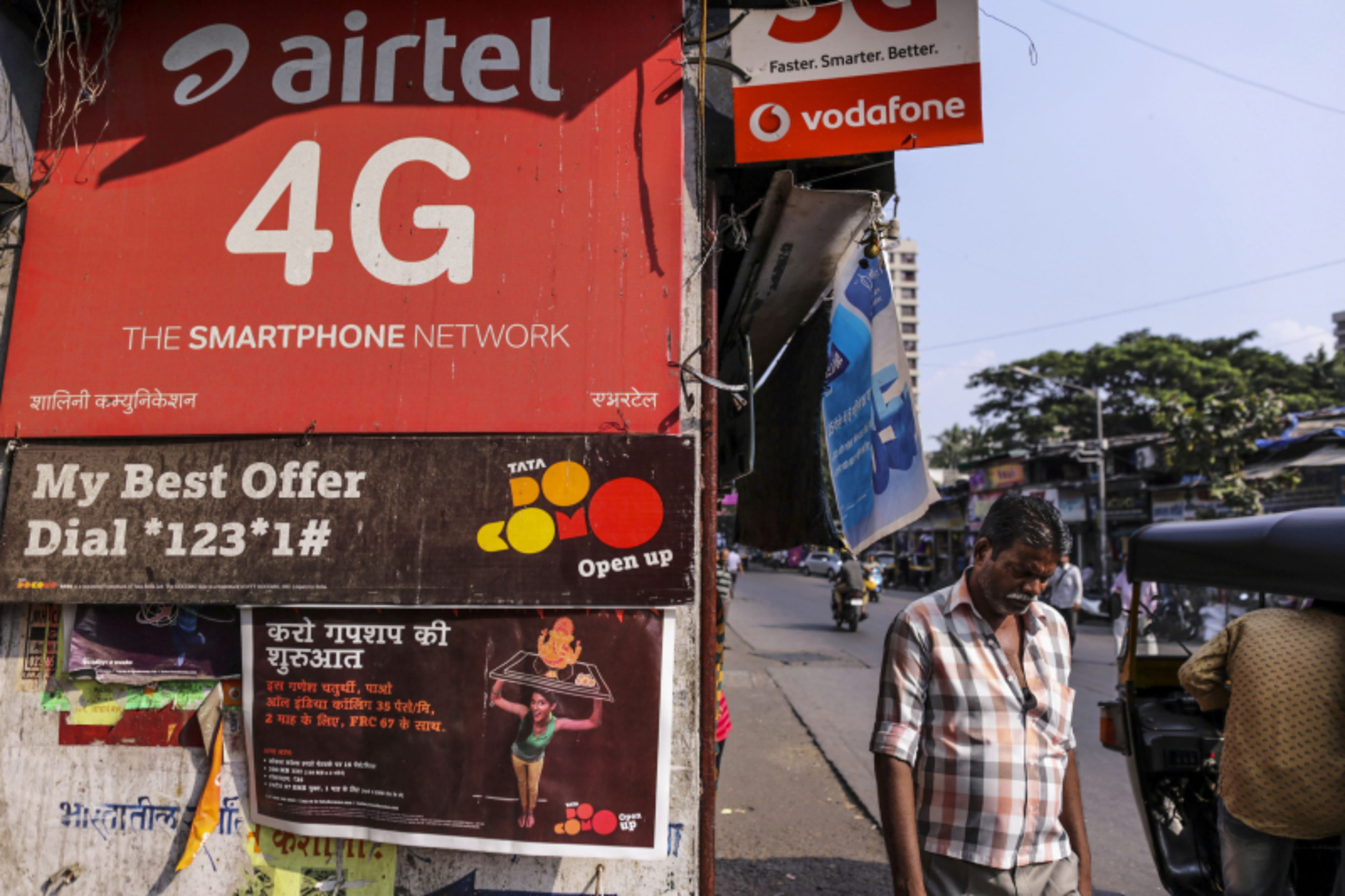
The Supreme Court of India has dismissed the applications by telecom companies seeking permission to approach the Department of Telecommunications on calculation of the dues in the adjusted gross revenue case.
The telecom companies had claimed arithmetic errors in the DoT's calculation of the dues and requested the court to allow them to seek a correction. The top court was not inclined to allow the request.
The request was heard by the top court bench of Justice L Nageswara Rao and Justice S Abdul Nazeer and Justice MR Shah, and the order was reserved on Monday.
Vodafone Idea Ltd., Tata Teleservices Ltd. and Bharti Airtel Ltd. were among the operators that informed the court that there were certain arithmetical errors in the DoT's assessment of the dues payable by the carriers.
In its application appeal, Vodafone said the errors in their case amount to around Rs 5,932 crore of the principal, which will have an impact of four times the amount after taking into account the interest, penalty and interest on penalty.
Bharti Airtel, Tata Tele and others made similar requests.
In its appeal, Bharti Airtel said the March application of the DoT itself mentioned that the dues were based on a preliminary assessment and were subject to further revisions.
In October 2019, the Supreme Court had ruled that non-core revenue must be included while calculating statutory levies, ending a 14-year-old legal battle between mobile operators and the government on the definition of AGR. That had increased the liabilities of Bharti Airtel and Vodafone Idea to more than Rs 90,000 crore.
Soon after, the companies had approached the court seeking more time for payment of dues. In September last year, the apex court had allowed for the payment of dues over 10 years.
Share Price Reaction
Shares of Vodafone Idea slumped as much as 14.9% to Rs 7.8 apiece, before paring losses.
Shares of Bharti Airtel, however, rose as much as 2.55% to Rs 560 apiece after the apex court delivered the verdict.

-
Where You Live Shapes How You Get To Work | The Reason Why

Two-wheelers are the most popular way to get to work in India, accounting for nearly 43% of workplace commutes.
-
High US Salaries, No Green Card Certainty: The Financial Calculation Facing Indian H-1B Families
The suspension of PERM processing at eight technology employers does not cancel existing H-1B visas. What it does is force a question many Indian families have been avoiding: is the US salary worth tying your career and family plans to one employer?
-
Unhedged Position: Can India See An Indonesia-Style Time Correction?
The Nifty is trading below levels it first clocked in 2024. Is there, then, as I have suggested in the headline, potential that the current time correction drags on painfully for the next three-five, even ten years?
-
Navigating Friction And Energy Realities: An Analysis Of Marco Rubio's October Visit To India
Occurring at a critical juncture marked by stalled trade negotiations and escalating geopolitical pressures over global energy supplies, the visit offers a profound window into modern US-India relations.
-
India Exports Capital. Why Not Export Trusteeship?
The big question, then, is whether India can build an institution that global borrowers, investors, banks, and lawyers can trust, even without an Indian connection.
-
France's Economy & Politics Are In Crisis | The Reason Why
Let's look at how the French economy and politics evolved under Nicolas Sarkozy, Franois Hollande and Emmanuel Macron.
-
You May Inherit The Business. You Must Earn Its Credibility.
Succession tests the founder's ability to share authority as much as it tests the next generation's readiness to assume it.
-
Signing Deals Is One Thing; Making Them Work Is Another | The Week In Whys
Sometimes, things don't turn out as planned. Indian companies have lost some bids to rivals, some projects won't produce until 2030.
-
FOMC Wall, PERM Suspension, Hospital Stocks | Talking Points This Week
A PERM suspension would directly affect green-card sponsorship rather than H-1B visas, so the near-term earnings impact could remain relatively limited. The key question is whether this marks a new phase in US scrutiny of Indian IT.
-
Everything, Everywhere, All At Once: Dalal Street's Week To Forget | Joining The Dots
Visa curbs, a Starlink spat and cancer drug caps: what connects this week's shocks for Indian markets









