Agatha Christie, The Grandson, And The Trademark Ask
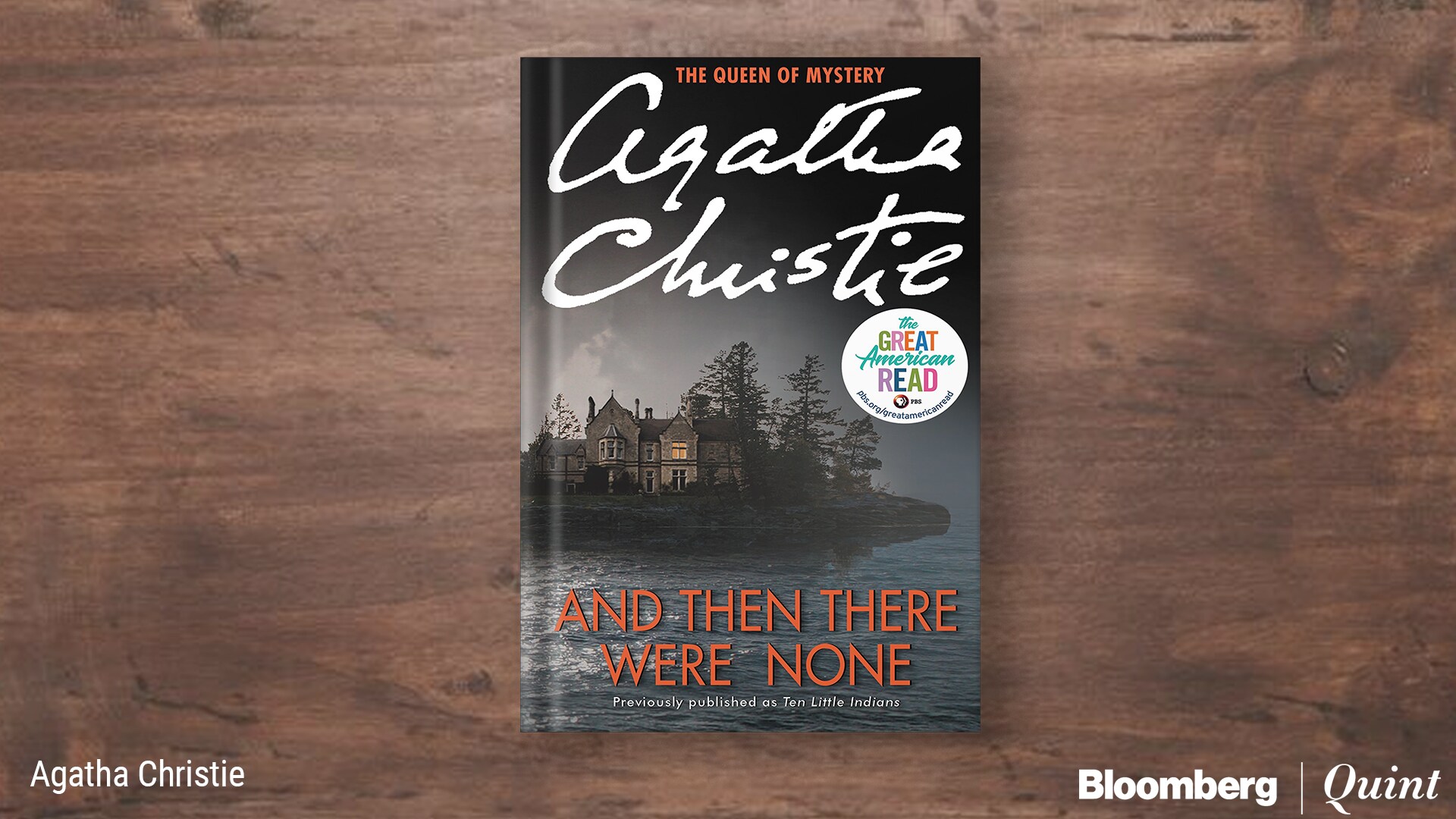
A television series and many movie adaptations later, Agatha Christie's best-selling murder mystery titled "And Then There Were None" is set to be a registered trademark in India.
The Delhi High Court last week set aside an order which refused to register the novel title as a registered mark. The trademark registry had refused to grant registration to Agatha Christie Ltd., a company chaired by Christie's grandson, stating that the mark was not "distinctive" in nature.
But the registry's order didn't find favour with the court. Concurring with the company, Justice C Hari Shankar held that the trademark registrar's order is unsustainable, both on facts and law.
The court noted that there was no finding in the registrar's order that the mark "And Then There Were None" is incapable of being represented graphically. Or, that the company's mark cannot be distinguished from its competitors.
The court also noted that the registrar had failed to provide reasons for declining to register the mark.
Any decision not to allow registration of a mark has, therefore, to be informed by reasons which should be apparent on the face of the decision. The impugned order, in my view, is bereft of sufficient reasons to justify the decision taken therein....Justice C Hari Shankar, Delhi High Court
These reasons prompted the court to set aside the registrar's order and remit the matter back to the registry. The court also added that if the company's new trademark application is proper as per law, then the mark "And Then There Were None" should be registered.
The law does not breakdown a trademark into various parts, Shailendra Bhandare, partner at Khaitan and Co., told BloombergQuint. People might look at different words in a mark and say it's generic. But under the trademark law, the mark has to be considered as a whole.
The question is, whether the combination of these words when taken together as a mark, is distinctive or not.Shailendra Bhandare, Partner, Khaitan and Co
Under the Trademarks Act, a distinctive mark is one where consumers are able to “identify and differentiate” goods or services of one business entity from its competitors. But, the law also stipulates that the desired mark should not contain words describing the goods or services.
So, for instance, a company manufacturing and selling edible oil based products cannot trademark terms such as "low absorb" or "fat-free" since these are descriptive of the products. In a plethora of judgments, courts have ruled that descriptive words cannot be trademarked by one business.
Trademark registries follow a "notorious" trend of not providing reasons while denying to register trademarks, Bhandare added. What happens is that, most of the time, people don't know why their desired marks were rejected, he said. "The high court's order is important since it directs the registry office to give reasons for rejecting the trademark application."
This order will pave way for many novelists, creative artists to apply their marks for trademark registration, Suraj Kumar, founding partner at SKS & Partners, told BloombergQuint.
When marks are constituted of generic words, sometimes, the registry is not too keen on accepting the registration applications. This order specifically mentions how a mark should be read a whole and not as independent words, he added.

-
Talking Points This Week: Tech Nerves, FII Buying, And A Faraway Banking Shock

The global markets are not shining this Diwali. The exception in the large markets is, India.
-
Midterm Rally Lasted A Day. The Hard Reality Of A Divided US May Last Two Years | Opinion
Between a contested AI boom, a debt ceiling that arrives in 2027 and a president with every incentive to act alone, the next two years may prove more volatile than the first day's rally suggests.
-
Blue Wave Will Derail the AI Trade but Won't Dismantle the AI Era | Unhedged Position
The Democrats' sweep of the US Congress will see politics collide with economic forces both over the long and short term.
-
It's Time To Take The GST Council's Bet On Trust Global
Payment records can prove India's services exports, and clear, proportionate rules can bring foreign digital sellers into the tax net.
-
Opinion | India at 38: From Innovation Overperformer to Innovation Powerhouse
India now has 453 VC-backed deep science startups, 18 of them late-stage, after 117 percent growth since 2020. Laurus Labs, at USD 9.3 billion, is the most valuable deep science company in any middle-income economy outside China.
-
Navigating Energy Crossroads: S Jaishankar's Call For Diversified Supply Chains At G20 Ministerial Meeting
As geopolitical fault lines continue to test maritime trade routes and commodity flows, Jaishankar's message remains pertinent: true economic resilience requires open markets, protected transit lines, and a genuine commitment to multilateral cooperation rather than coercion.
-
Indians Are Travelling, But Not Every Journey Is A Holiday | The Week In Whys
Pilgrims, patients and working women are the real travellers, and the system hasn't quite caught up with them.
-
Getting To Work Costs Women More | The Reason Why
It is not just about women paying more than men. It is about women paying much more in cities than in villages.
-
AI Bias In Investing Cannot Be Eliminated, But It Can Be Governed
Framing is a particularly important example as identical financial information presented in terms of gains rather than losses can lead an LLM to reach a different assessment.









