Aadhaar Case: Right Over Your Body Not Absolute, Government Argues In Supreme Court
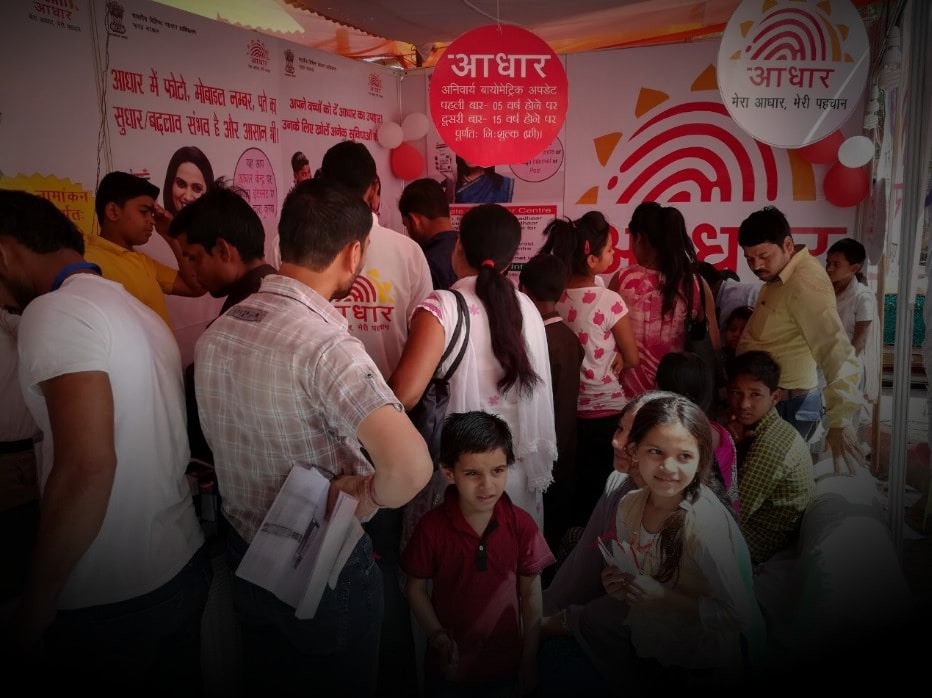
The government on Tuesday argued before the Supreme Court that the right over one's body is not absolute and called the arguments of bodily intrusion to take biometric data for Aadhaar as “bogus”.
Collecting biometrics does not mean “Uncle Sam is snooping on you”, Attorney General Mukul Rohatgi said, calling the arguments against Aadhaar “much ado about nothing”.
The Attorney General's arguments in the apex court came during a hearing of a batch of petitions against making Aadhaar mandatory for filing income tax returns and obtaining a Permanent Account Number (PAN).
Bodily integrity is not absolute. There are so many certifications we give our biometrics for such as driving licence, buying property, etc... Photo identity and fingerprints have been there for different services. Only change here is that now fingerprint is taken on an electronic device.Mukul Rohatgi, Attorney General
Also Read: In Defence Of Aadhaar - Nandan Nilekani
Lack of legislative competence and violation of the fundamental rights accorded by the Constitution are the only available grounds to challenge a statutory provision, he said.
The Attorney General said the aim behind Aadhaar-PAN linkage is to ensure tax compliance and prevention of tax fraud. The idea is to make a robust scheme out of Aadhaar on its seeding with PAN, he said.
Rohatgi argued that while there are multiple PAN cards for a single individual, such duplication is almost non-existent with Aadhaar. “People had multiple PAN cards; there were shell companies,” he said. He cited a case under investigation where “PAN mischief by one person was Rs 5,000 crore”. Rohatgi submitted the details in a sealed cover to the apex court.
The “purpose is checking of black money, terror financing, money laundering, ensuring proper tax collection, bringing transactions to book.” This entire issue is not of dealing with a demon but with someone who will give you more orderly life, he said.
There cannot be a ban on power of Parliament to use Aadhaar for better purposes. Right to your body is not absolute. It can be taken away by due process of law.Mukul Rohatgi, Attorney General
Also Read: Project Aadhaar Is All About Compulsion, Not Consent: Usha Ramanathan
“One cannot commit suicide or take drugs saying I can do whatever I want to do. One cannot pluck weed from the road and smoke it and say, I can do whatever I want with my body.”
Justifying the government's stand for the purpose of maintaining an orderly society, he said, “You might want to be forgotten, but the state will not forget you.”
In the last hearing on Thursday, Senior Advocate Shyam Divan had challenged the constitutionality of Section 139AA of the Income Tax Act, 1961 which was introduced by the Finance Act.
The government will continue its arguments on Wednesday.
Also Read: Mandatory Aadhaar For Tax Returns, PAN Is ‘Civil Death', Argues Arvind Datar

-
Medicine Pricing: Where Must Profit Stop?

India must confront excessive margins, hidden incentives and regulatory gaps that threaten the integrity of medicine.
-
Why Amazon And Flipkart Are Struggling To Beat Meesho In India's Smaller Cities
With 274 million users and lowest-cost logistics, Meesho is defending its value commerce crown against giants like Amazon and Flipkart.
-
High US Salaries, No Green Card Certainty: The Financial Calculation Facing Indian H-1B Families
The suspension of PERM processing at eight technology employers does not cancel existing H-1B visas. What it does is force a question many Indian families have been avoiding: is the US salary worth tying your career and family plans to one employer?
-
Swiggy vs Eternal: Food Delivery's Two Rivals Are No Longer In The Same Race
Eternal is building a private AI assistant, dark.ai. Swiggy is still working out how to make Instamart pay, with an operating loss of Rs 895 crore in the July-September quarter while Blinkit stayed profitable.
-
Where You Live Shapes How You Get To Work | The Reason Why
Two-wheelers are the most popular way to get to work in India, accounting for nearly 43% of workplace commutes.
-
Unhedged Position: Can India See An Indonesia-Style Time Correction?
The Nifty is trading below levels it first clocked in 2024. Is there, then, as I have suggested in the headline, potential that the current time correction drags on painfully for the next three-five, even ten years?
-
Navigating Friction And Energy Realities: An Analysis Of Marco Rubio's October Visit To India
Occurring at a critical juncture marked by stalled trade negotiations and escalating geopolitical pressures over global energy supplies, the visit offers a profound window into modern US-India relations.
-
India Exports Capital. Why Not Export Trusteeship?
The big question, then, is whether India can build an institution that global borrowers, investors, banks, and lawyers can trust, even without an Indian connection.
-
France's Economy & Politics Are In Crisis | The Reason Why
Let's look at how the French economy and politics evolved under Nicolas Sarkozy, Franois Hollande and Emmanuel Macron.
-
You May Inherit The Business. You Must Earn Its Credibility.
Succession tests the founder's ability to share authority as much as it tests the next generation's readiness to assume it.










