(Bloomberg) -- A key gauge of US inflation rose last month by less than expected and consumer spending stabilized, suggesting the Federal Reserve may be close to ending its most aggressive cycle of interest-rate hikes in decades.
Excluding food and energy, the Fed's preferred inflation gauge — the personal consumption expenditures price index — rose 0.3% in February after the prior month was revised down slightly. The overall PCE climbed by the same amount, Commerce Department data showed Friday.
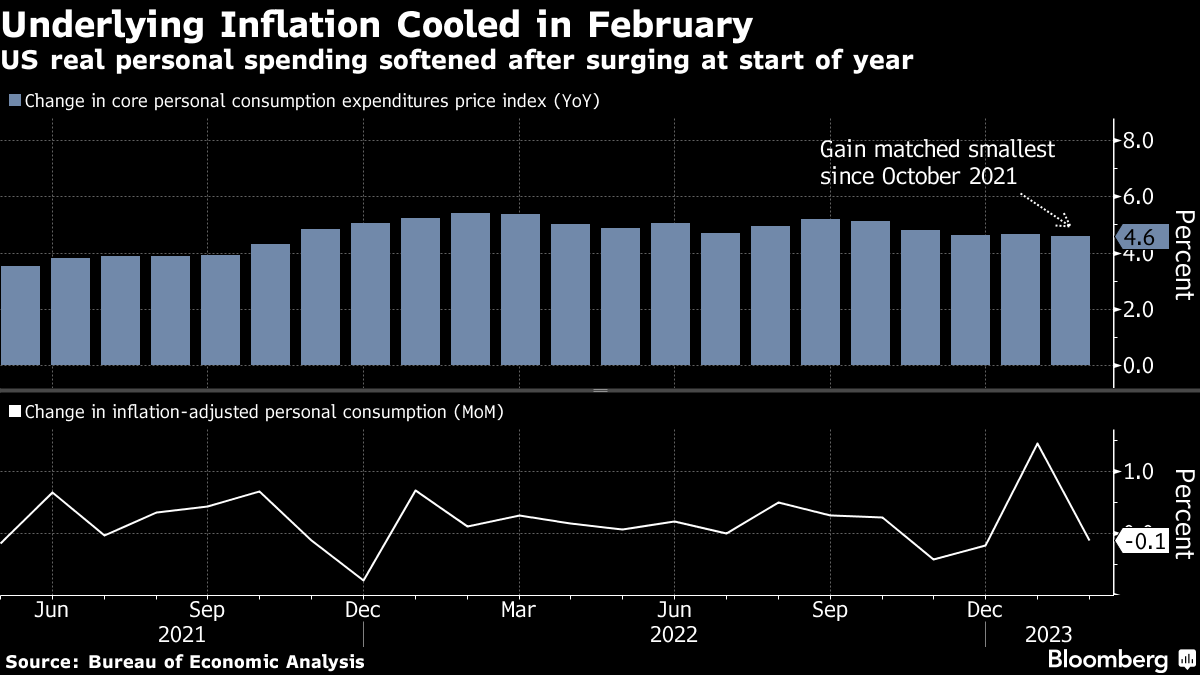
Consumer spending, adjusted for prices, fell 0.1% after surging an upwardly revised 1.5% at the start of the year. The decrease reflected a drop in outlays for both goods and services.
The PCE price index was up 5% from a year earlier, a deceleration from January and far higher than the central bank's 2% goal. Excluding food and energy, the core PCE price index climbed 4.6%, matching the smallest increase since October 2021.
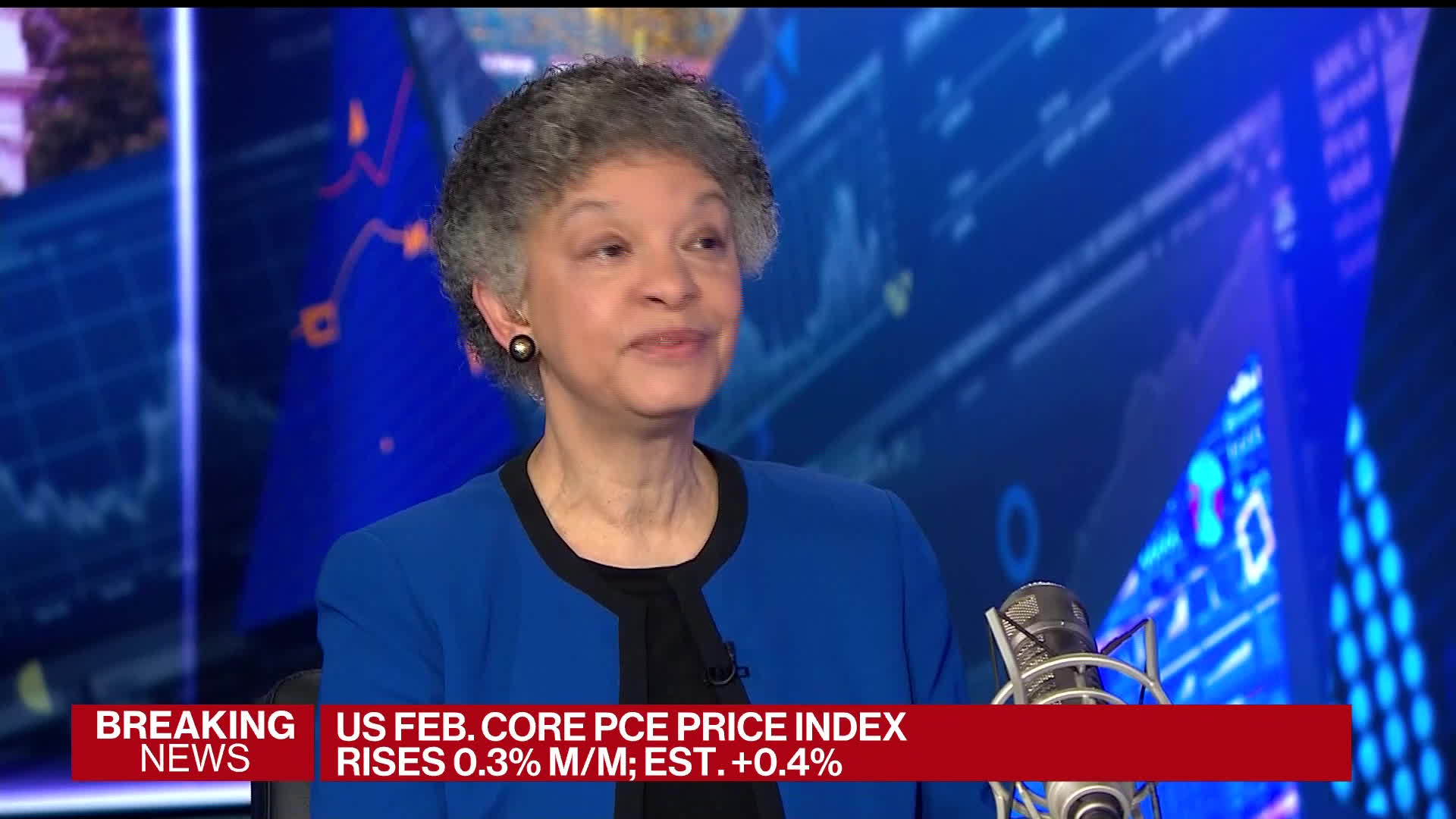
US stocks rose and Treasury yields dropped as traders wagered the Fed would be done hiking interest rates soon. The core PCE measure came in slightly below the median estimate of 0.4% in a Bloomberg survey of economists.
While the step down in inflation is welcome, price growth remains far too high for the Fed, and they must balance that with maintaining financial stability. Officials hiked rates by a quarter point last week and said some more tightening may be needed, making clear that inflation is their top priority while monitoring risks from a slew of bank collapses.
One month “in a more helpful direction is not something that really indicates a sustained change,” Boston Fed President Susan Collins said on Bloomberg Television. “We still do have more work to do and more to see to know that inflation is really on a sustained downward path.”
Read More: Collins Says History Shows Fed Must Stay Course on Inflation
What Bloomberg Economics Says...
“Together with our expectation of tighter financial conditions following Silicon Valley Bank's collapse, the PCE data showing a faster-than-expected pace of disinflation suggest the peak for the fed funds rate isn't far away.”
— Jonathan Church, Stuart Paul and Eliza Winger, economists
To read the full note, click here
The stickiness of service sector inflation in particular, in part due to strong wage growth in those industries, risks keeping price growth above the Fed's target for the foreseeable future.
That said, services inflation excluding housing and energy services increased 0.3% in February, a deceleration from the prior month, according to Bloomberg calculations.
Fed Chair Jerome Powell has emphasized the importance of looking at such a measure to assess the outlook for inflation. On a year-over-year basis, the metric ticked up to 4.6%.
Spending Details
On the spending side, the report suggests resilience in personal outlays in February after warm weather paired with a strong job market helped drive a surge in outlays in January. Spending, unadjusted for prices, gained 0.2%.
It also offers a benchmark for the economy's main driver in the weeks before the latest banking turmoil, which is anticipated to lead to further tightening of credit conditions and ultimately constrain household spending.
On an inflation-adjusted basis, outlays for goods fell 0.1%, largely constrained by motor vehicles and parts. Services, meanwhile, fell for the first time in over a year, reflecting a decline in dining out.
Unemployment remains historically low and inflation-adjusted disposable income, the main support to consumer spending, climbed 0.2% after surging 1.5% in January, when Social Security recipients received a historic cost-of-living adjustment.
Wages and salaries, unadjusted for prices, were up 0.3%. Nominal incomes rose by the same amount.
There are some signs that households may be getting more discerning with their spending. The saving rate climbed to 4.6%, the highest in over a year.
--With assistance from Augusta Saraiva, Chris Middleton, Craig Torres and Ana Monteiro.
(Adds comment from Boston Fed President in the seventh paragraph.)
More stories like this are available on bloomberg.com
©2023 Bloomberg L.P.
Essential Business Intelligence, Continuous LIVE TV, Sharp Market Insights, Practical Personal Finance Advice and Latest Stories — On NDTV Profit.