US Hits Southeast Asian Solar Imports With Duties Up To 271%
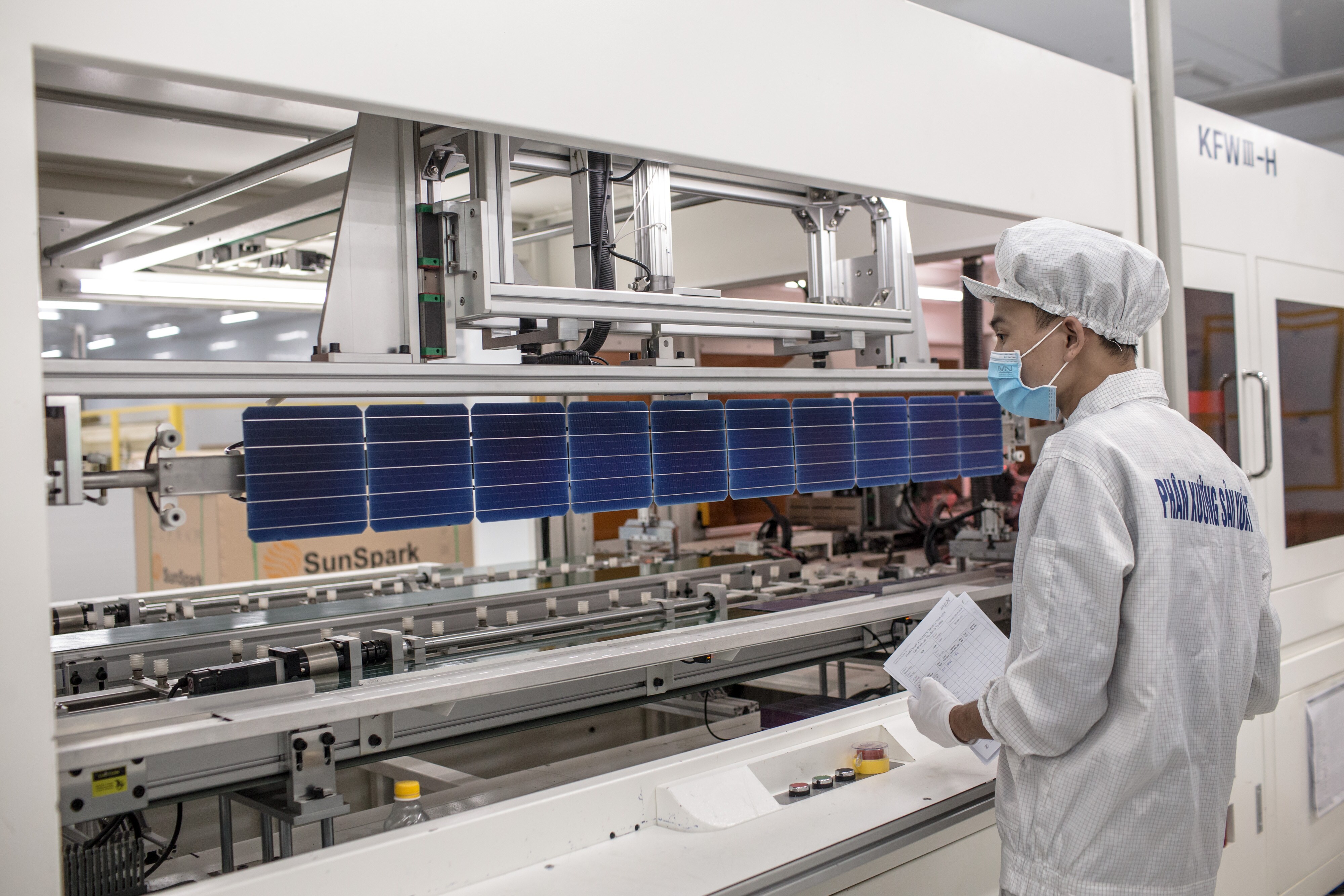
(Bloomberg) --Solar imports from Southeast Asia are being unfairly sold in the US below their production costs, according to initial findings of a Commerce Department review that laid out duties of as much as 271% to counteract the practice.
The preliminary determination released Friday marks another victory for US solar panel makers that argued those cheap imports are harming their business and undermining government investments meant to nurture a domestic supply chain.
At issue are imports of crystalline silicon photovoltaic cells — and modules made with them — from Cambodia, Malaysia, Thailand and Vietnam, countries which provide the bulk of US supply of that equipment today. Those nations provide the bulk of US solar cell and module imports. The announcement comes nearly two months after the US agency issued preliminary findings from a separate but related probe that the solar imports from Southeast Asia are unfairly benefiting from government aid.
The investigations represent the latest bid by US manufacturers to confront overseas rivals. After similar duties were imposed on solar imports from China roughly 12 years ago, Chinese manufacturers responded by setting up operations in other Asian nations that weren't affected by the tariffs. The US probes were triggered by an April petition from the American Alliance for Solar Manufacturing Trade Committee, which represents companies including First Solar Inc., Hanwha Qcells USA Inc. and Mission Solar Energy LLC.
“With these preliminary duties, we are moving closer to addressing years of harmful unfair trade and protecting billions of dollars of investment in new American solar manufacturing and supply chains,” Tim Brightbill, partner at
Wiley Rein and lead counsel to the petitioners, said in an emailed statement. “These initial rates are in line with our expectations of market conditions and how these four countries were engaging in unfair trade practices to undermine American manufacturing and jobs.”
Shares of First Solar rose as much as 3.8% after the announcement, while JinkoSolar's US depository receipts fell as much as 2.9%.
The cases have drawn opposition from some foreign manufacturers and domestic renewable power developers that argue tariffs give an unfair advantage to larger incumbent panel makers operating in the US while raising the cost of solar power projects.
New Rates
Under Friday's action, imports from Cambodia face a cash deposit rate of 117.12%.
For Malaysia, initial assessed rates range from 17.84% for Jinko Solar Technology Sdn. Bhd. to 81.24% for other suppliers. Hanwha Q Cells Malaysia Sdn. Bhd. was preliminarily assessed to have no dumping margin and therefore was assigned an initial cash deposit rate of 0%.
Imports from a host of exporters in Vietnam, including JA Solar Vietnam Co. Ltd., Jinko Solar (Vietnam) Industries Company Ltd., Boviet Solar Technology Co., Ltd. and Trina Solar Energy Development Company Ltd., face cash deposit rates ranging from 53.19% to 56.4%. Exporters in Vietnam not specified by the Commerce Department in Friday's action are subject to a rate of 271.28%.
Final decisions in both trade probes are expected next April and the preliminarily assessed duties could be raised, lowered or rejected altogether as a result of the investigations.
(Adds shares in sixth paragraph.)
© 2024 Bloomberg L.P.

-
Why Amazon And Flipkart Are Struggling To Beat Meesho In India's Smaller Cities

With 274 million users and lowest-cost logistics, Meesho is defending its value commerce crown against giants like Amazon and Flipkart.
-
High US Salaries, No Green Card Certainty: The Financial Calculation Facing Indian H-1B Families
The suspension of PERM processing at eight technology employers does not cancel existing H-1B visas. What it does is force a question many Indian families have been avoiding: is the US salary worth tying your career and family plans to one employer?
-
Swiggy vs Eternal: Food Delivery's Two Rivals Are No Longer In The Same Race
Eternal is building a private AI assistant, dark.ai. Swiggy is still working out how to make Instamart pay, with an operating loss of Rs 895 crore in the July-September quarter while Blinkit stayed profitable.
-
Where You Live Shapes How You Get To Work | The Reason Why
Two-wheelers are the most popular way to get to work in India, accounting for nearly 43% of workplace commutes.
-
Unhedged Position: Can India See An Indonesia-Style Time Correction?
The Nifty is trading below levels it first clocked in 2024. Is there, then, as I have suggested in the headline, potential that the current time correction drags on painfully for the next three-five, even ten years?
-
Navigating Friction And Energy Realities: An Analysis Of Marco Rubio's October Visit To India
Occurring at a critical juncture marked by stalled trade negotiations and escalating geopolitical pressures over global energy supplies, the visit offers a profound window into modern US-India relations.
-
India Exports Capital. Why Not Export Trusteeship?
The big question, then, is whether India can build an institution that global borrowers, investors, banks, and lawyers can trust, even without an Indian connection.
-
France's Economy & Politics Are In Crisis | The Reason Why
Let's look at how the French economy and politics evolved under Nicolas Sarkozy, Franois Hollande and Emmanuel Macron.
-
You May Inherit The Business. You Must Earn Its Credibility.
Succession tests the founder's ability to share authority as much as it tests the next generation's readiness to assume it.
-
Signing Deals Is One Thing; Making Them Work Is Another | The Week In Whys
Sometimes, things don't turn out as planned. Indian companies have lost some bids to rivals, some projects won't produce until 2030.










