Undaunted Retail Investors Bruised By S&P 500’s Big Reversal
Individual investors are proving to be relentless when it comes to pouring money into a turbulent US stock market that's been rocked by President Donald Trump's tariff salvos.
Emboldened by Wednesday's big rally in the S&P 500, retail traders kept buying even as stocks slid Thursday. They ended the session with $4 billion in net purchases, the fourth time they've broken that threshold this year, according to data from JPMorgan Chase & Co.'s Emma Wu.
“Retail traders remained undaunted by the market plummet,” said Wu, the bank's global quantitative and derivatives strategist. “Despite the selloff, they continued to buy aggressively.”
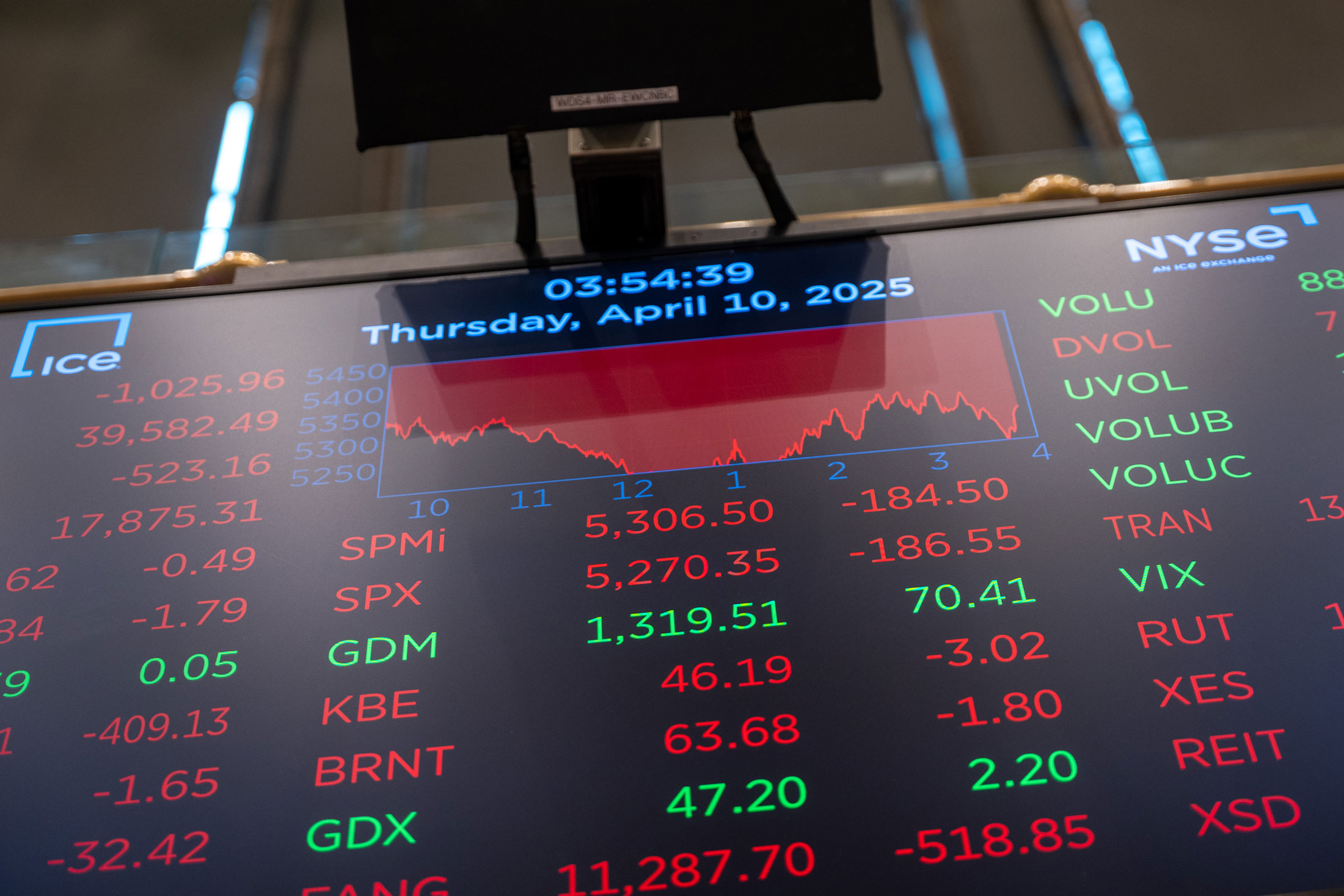
However, the market reversal shows the downside to their unceasing confidence. After logging a 17% gain Wednesday and drawing nearly even on the year, the latest equities selloff pushed them further away from recouping their 2025 losses.

“Given their persistent dip-buying throughout the crash, we estimate their portfolios are still far from breakeven,” said Wu.
Granted, individual investors sticking to their buy-the-dip approach amid escalating trade tensions have been doing better than the broad market. The S&P 500 is down 10% for the year as economic worries have mounted.
All told, retail investors pumped $11 billion in equities since April 2, the day Trump unleashed sweeping reciprocal levies on trading partners, data through Wednesday's close show. That is a significantly higher level than the 12-month average, and has been surpassed only about 1% of the time.
Retail traders' interest in buying single stocks also remained strong on Thursday, especially in long-time favorites such as Tesla Inc. and Palantir Technologies Inc., the JPMorgan data showed.
As the S&P 500 whipsaws, individual investors — who rose to prominence during the Covid-19 pandemic for using social media to swap trading advice — are still diving into stocks, while larger institutional investors rotate into international markets and less risky assets such as Treasuries.
“There has been a paradigm shift among retail investors, particularly younger investors, to buy in periods of stress dating back to the pandemic,” said Mark Hackett, chief market strategist at Nationwide. “Wednesday was another reinforcing data point for this group, accelerated by the short covering by institutions, causing the massive rally.”

-
Talking Points This Week: Tech Nerves, FII Buying, And A Faraway Banking Shock

The global markets are not shining this Diwali. The exception in the large markets is, India.
-
Midterm Rally Lasted A Day. The Hard Reality Of A Divided US May Last Two Years | Opinion
Between a contested AI boom, a debt ceiling that arrives in 2027 and a president with every incentive to act alone, the next two years may prove more volatile than the first day's rally suggests.
-
Blue Wave Will Derail the AI Trade but Won't Dismantle the AI Era | Unhedged Position
The Democrats' sweep of the US Congress will see politics collide with economic forces both over the long and short term.
-
It's Time To Take The GST Council's Bet On Trust Global
Payment records can prove India's services exports, and clear, proportionate rules can bring foreign digital sellers into the tax net.
-
Opinion | India at 38: From Innovation Overperformer to Innovation Powerhouse
India now has 453 VC-backed deep science startups, 18 of them late-stage, after 117 percent growth since 2020. Laurus Labs, at USD 9.3 billion, is the most valuable deep science company in any middle-income economy outside China.
-
Navigating Energy Crossroads: S Jaishankar's Call For Diversified Supply Chains At G20 Ministerial Meeting
As geopolitical fault lines continue to test maritime trade routes and commodity flows, Jaishankar's message remains pertinent: true economic resilience requires open markets, protected transit lines, and a genuine commitment to multilateral cooperation rather than coercion.
-
Indians Are Travelling, But Not Every Journey Is A Holiday | The Week In Whys
Pilgrims, patients and working women are the real travellers, and the system hasn't quite caught up with them.
-
Getting To Work Costs Women More | The Reason Why
It is not just about women paying more than men. It is about women paying much more in cities than in villages.
-
AI Bias In Investing Cannot Be Eliminated, But It Can Be Governed
Framing is a particularly important example as identical financial information presented in terms of gains rather than losses can lead an LLM to reach a different assessment.