Single Time Zone Costs India Rs 29,000 Crore, Impairs Education, Wages: Study
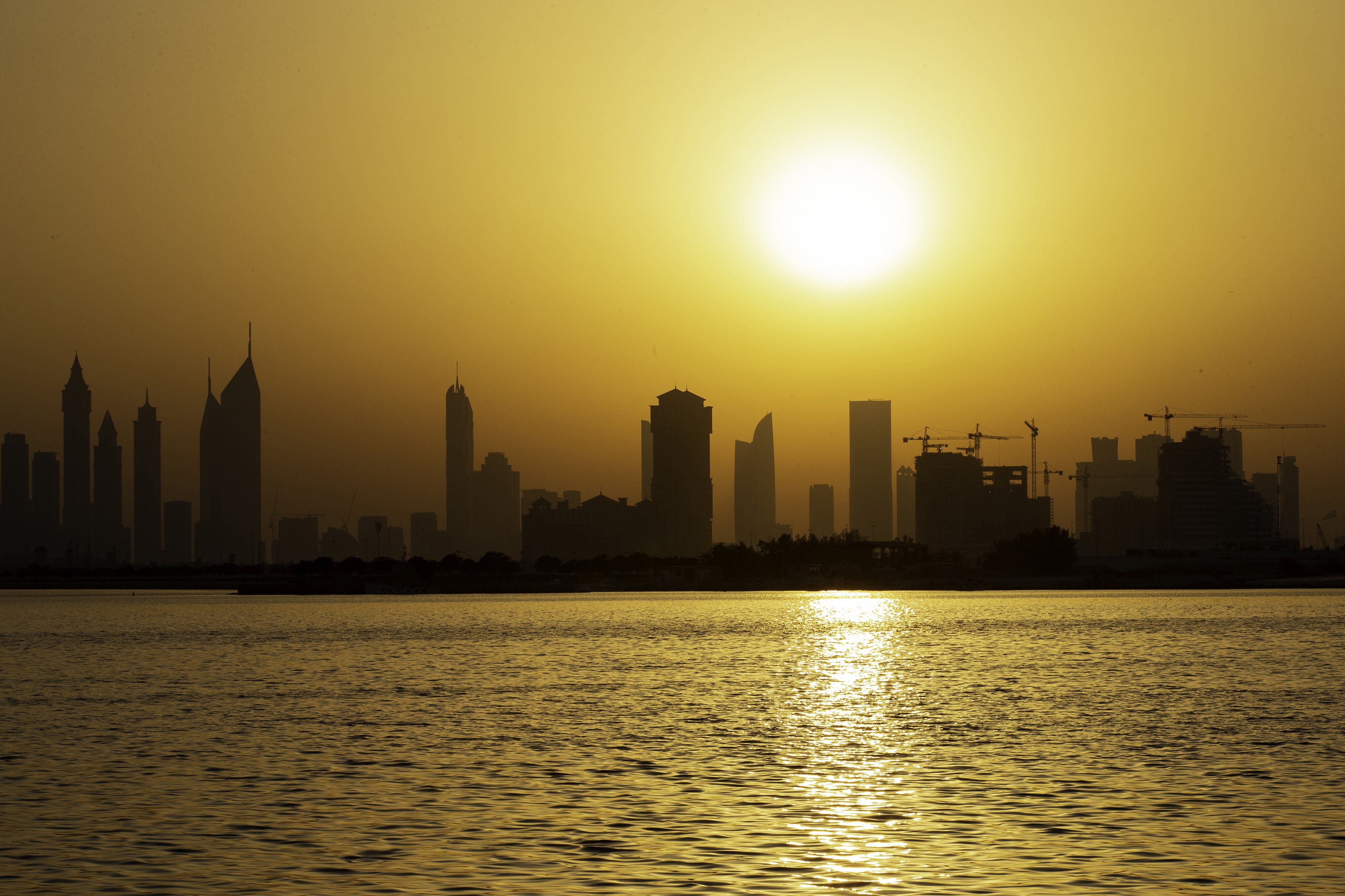
Each evening, the sun sets more than 90 minutes later in western India than in the east of the country, yet the entire country follows the same time zone. Later sunset means people stay awake longer, which induces sleep deprivation among children and negatively affects their study efforts, a new study by a research scholar at Cornell University has found.
As a result of sleeping late, children are less likely to complete primary and middle school, and this effect is most pronounced among poor households, says the study, ‘Poor Sleep: Sunset Time and Human Capital Production', which analysed the consequences India faces by operating under a single time zone.
“Back-of-the-envelope estimates suggest that India incurs annual human capital costs of roughly $4.1 billion (nearly Rs 29,000 crore) or 0.2 percent of nominal GDP [gross domestic product] due to the existing policy regulating time zone boundaries,” Maulik Jagnani, the author of the study, told IndiaSpend in an email interview.
How Time Zones Work
As per convention, each time zone is spaced by 15 degrees' longitude, which divides countries around the globe into 24 time zones to enable coordination—for railway and flight services, for example.
Many countries such as Australia, the United Kingdom, France, Russia, New Zealand, Mexico and Brazil use multiple time zones across their territories. As many as 70 countries in Africa and North and South America use daylight saving time—by setting their clocks forward, usually by an hour, from the standard in summer and back in winter—to make better use of daylight.
Some countries such as the US and France have multiple time zones and DST.
Some 70 countries use neither DST nor multiple time zones, and India is among them.
Early Sunrise, Late Sunset
Geographically, there is a 30-degree longitudinal difference between Arunachal Pradesh in the east and Gujarat in the west of India. This qualifies for a twin time-zones setup.
Before Independence, India had two time zones—Bombay Time and Calcutta Time—in large part to help traders make use of daylight.
However, when policies were made for independent India, the government decided to go with a single time zone, at longitude 82.5º east and 5.5 hours ahead of Greenwich Mean Time.
All institutions across the country follow a single Indian Standard Time, even though sunrise and sunset times vary widely. For instance, the sun rises as late as 8 a.m. in Gujarat, where schools start functioning as early as 8.30 a.m., when children's body clocks are not aligned to the daily solar cycle. At the same time, the sun is out until 8 p.m. (depending on the time of year), yet schools and offices close by 5.00-6.00 p.m.
Much natural light and people's ability to stay awake are wasted and compromised to follow the country-wide standard time.

When the clock says it is time to sleep while there is still daylight, the body's natural signals based on its circadian clock—which coordinates the body's rhythms with the sun--are contradicted. This can lead to sleep deprivation in children and adults, Jagnani quoted previous research to explain.
Using 24-hour time-use data for 1998-99 from the India Time Use Survey, Jagnani found that sleep deprivation due to later sunset could amount to 30 minutes. This implies that when sunsets are late and daylight is more, people will experience sleep deprivation.
Costs Of Daylight Lost
The effects are clearly visible in educational outcomes at school, Jagnani said.
“When the sun sets later, children go to bed later; by contrast, wake-up times are not regulated by solar cues. Sleep-deprived students decrease study effort, consistent with a model where sleep is productivity-enhancing and increases the marginal returns of effort,” he said. Sleep makes study effort more productive, but as later sunset reduces sleep duration, it makes studying less effective, decreasing children's study time.
Other findings of the study state that an hour's delay in sunset time reduces children's sleep by roughly 30 minutes, and by reducing the likelihood of children completing primary and middle school education, reduces their time in school by 0.8 years on average. It reduces school enrolment by 11 percent, and significantly decreases students' mathematics test scores, he found.
Further, among adults, later sunsets are also associated with fewer hours of sleep and lower wages, an effect more visible among the poor, Jagnani said. “[T]he non-poor adjust their sleep schedules when the sun sets later; the negative effects of later sunset on sleep are most pronounced among the poor, especially in periods when households face severe financial constraints.”
Setting school start times later could enable children to compensate for later bedtimes, and reduce the sleep deprivation-cognition relationship, the study suggests. Starting schools after 8.30 a.m., as recommended by the American Academy of Pediatrics, may reduce the effects of later sunset on test scores by roughly 50 percent, Jagnani said.
Advancing IST by just half-an-hour would result in annual savings of 2.7 billion units of electricity in all Indian states together, an earlier research by professors D.P. Sengupta and Dilip Ahuja of the National Institute of Advanced Studies had established, Jagnani said, adding that his own study does not recommend an optimal time zone or DST.
(GV Neelambari is a Master's student of Journalism and Communication at the University of Madras, and an intern with IndiaSpend.)
This copy was published in a special arrangement with IndiaSpend.

-
Unhedged Position: Can India See An Indonesia-Style Time Correction?

The Nifty is trading below levels it first clocked in 2024. Is there, then, as I have suggested in the headline, potential that the current time correction drags on painfully for the next three-five, even ten years?
-
Navigating Friction And Energy Realities: An Analysis Of Marco Rubio's October Visit To India
Occurring at a critical juncture marked by stalled trade negotiations and escalating geopolitical pressures over global energy supplies, the visit offers a profound window into modern US-India relations.
-
India Exports Capital. Why Not Export Trusteeship?
The big question, then, is whether India can build an institution that global borrowers, investors, banks, and lawyers can trust, even without an Indian connection.
-
France's Economy & Politics Are In Crisis | The Reason Why
Let's look at how the French economy and politics evolved under Nicolas Sarkozy, Franois Hollande and Emmanuel Macron.
-
You May Inherit The Business. You Must Earn Its Credibility.
Succession tests the founder's ability to share authority as much as it tests the next generation's readiness to assume it.
-
Signing Deals Is One Thing; Making Them Work Is Another | The Week In Whys
Sometimes, things don't turn out as planned. Indian companies have lost some bids to rivals, some projects won't produce until 2030.
-
FOMC Wall, PERM Suspension, Hospital Stocks | Talking Points This Week
A PERM suspension would directly affect green-card sponsorship rather than H-1B visas, so the near-term earnings impact could remain relatively limited. The key question is whether this marks a new phase in US scrutiny of Indian IT.
-
Everything, Everywhere, All At Once: Dalal Street's Week To Forget | Joining The Dots
Visa curbs, a Starlink spat and cancer drug caps: what connects this week's shocks for Indian markets
-
India Is Going Abroad For Critical Minerals. But It May Take Years To Pay Off | The Reason Why
Although India's steps are in the right direction, they remain modest compared with India's growing dependence.
-
When Everyone Has AI, What Gives You An Edge?
India's young workforce is entering an uncertain world of work where powerful AI tools are becoming widely accessible. The advantage will belong to those who combine deep expertise with digital fluency, and the distinctly human capabilities that technology cannot manufacture.









