FOMC Minutes: Federal Reserve Well-Positioned To Wait For Clarity On Outlook
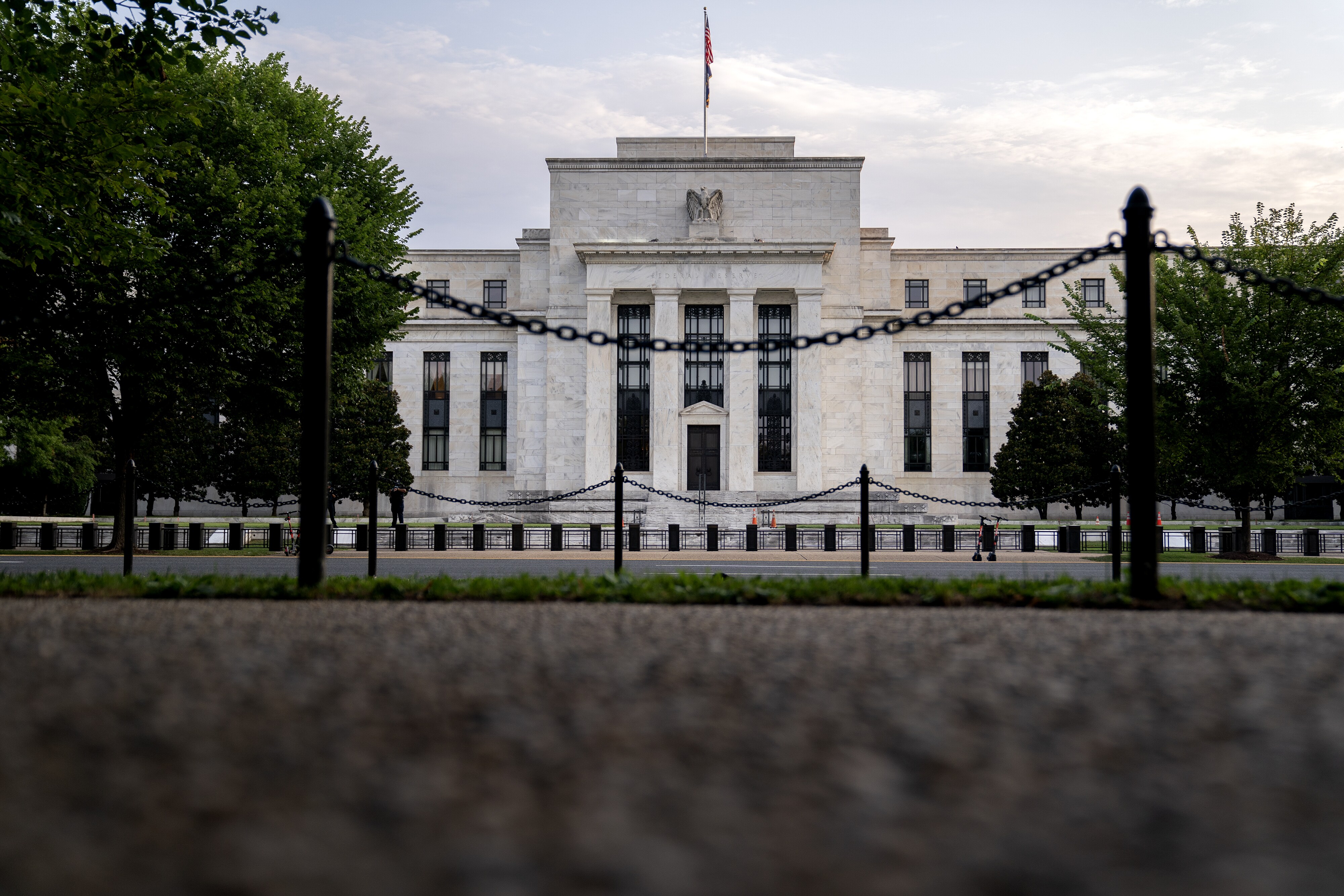
Federal Reserve officials broadly agreed heightened economic uncertainty justified their patient approach to interest-rate adjustments, minutes from their latest policy meeting showed Wednesday.
Policymakers judged the risks of both higher unemployment and inflation had risen since their previous meeting in March, primarily due to the potential impact of tariffs. Such a scenario could pit the Fed's goals of stable prices and maximum employment against one another.
“Participants agreed that with economic growth and the labor market still solid and current monetary policy moderately restrictive, the committee was well positioned to wait for more clarity on the outlooks for inflation and economic activity,” the minutes of the Federal Open Market Committee's meeting ended May 7 said.
“Participants agreed that uncertainty about the economic outlook had increased further, making it appropriate to take a cautious approach until the net economic effects of the array of changes to government policies become clearer,” the minutes said.
The minutes underscored Fed officials' willingness to keep interest rates on hold for some time, as policy shifts in Washington cloud the economic outlook. Policymakers held the central bank's benchmark interest rate in a range of 4.25%-4.5% at the May meeting for a third consecutive time.
President Donald Trump's volatile trade policies are chief among the factors driving the uncertain outlook. The Fed's meeting this month took place just days before the US and China announced a temporary deal to lower levies on each other's products.
Even with the latest tariff reprieve, duties on imports remain historically elevated, and many businesses have put hiring and investment decisions on ice.
Economists broadly expect tariffs will boost inflation and weigh on economic growth, though several forecasters have reduced their expectations for a recession this year following the de-escalation with China.
Fed staff marked down their expectations for economic growth in 2025 and 2026, reflecting the announced trade policies, the minutes showed.
“The staff viewed the possibility that the economy would enter a recession to be almost as likely as the baseline forecast,” the minutes said.
The staff forecasted the labor market to weaken “substantially,” with the unemployment rate rising above its so-called natural rate this year and remaining elevated through 2027. Tariffs were seen boosting inflation “markedly” this year.
Inflation Expectations
The minutes also reflected officials' heightened attention to Americans' expectations for long-term inflation, as they seek to guard against the possibility that any rise in prices related to tariffs could lead to lasting inflation.
“Almost all” participants noted the risk that inflation could prove more persistent than expected.
A University of Michigan measure of consumers' inflation expectations over the next five to 10 years has surged this year, largely due to tariffs. Fed officials have mostly downplayed that development and, citing market-based measures, argued inflation expectations remain well anchored.
“Participants noted that the committee might face difficult tradeoffs if inflation proves to be more persistent while the outlooks for growth and employment weaken,” the minutes said, adding “that the ultimate extent of changes to government policy and their effects on the economy was highly uncertain.”

-
Midterm Rally Lasted A Day. The Hard Reality Of A Divided US May Last Two Years | Opinion

Between a contested AI boom, a debt ceiling that arrives in 2027 and a president with every incentive to act alone, the next two years may prove more volatile than the first day's rally suggests.
-
Blue Wave Will Derail the AI Trade but Won't Dismantle the AI Era | Unhedged Position
The Democrats' sweep of the US Congress will see politics collide with economic forces both over the long and short term.
-
It's Time To Take The GST Council's Bet On Trust Global
Payment records can prove India's services exports, and clear, proportionate rules can bring foreign digital sellers into the tax net.
-
Opinion | India at 38: From Innovation Overperformer to Innovation Powerhouse
India now has 453 VC-backed deep science startups, 18 of them late-stage, after 117 percent growth since 2020. Laurus Labs, at USD 9.3 billion, is the most valuable deep science company in any middle-income economy outside China.
-
Navigating Energy Crossroads: S Jaishankar's Call For Diversified Supply Chains At G20 Ministerial Meeting
As geopolitical fault lines continue to test maritime trade routes and commodity flows, Jaishankar's message remains pertinent: true economic resilience requires open markets, protected transit lines, and a genuine commitment to multilateral cooperation rather than coercion.
-
Indians Are Travelling, But Not Every Journey Is A Holiday | The Week In Whys
Pilgrims, patients and working women are the real travellers, and the system hasn't quite caught up with them.
-
Getting To Work Costs Women More | The Reason Why
It is not just about women paying more than men. It is about women paying much more in cities than in villages.
-
AI Bias In Investing Cannot Be Eliminated, But It Can Be Governed
Framing is a particularly important example as identical financial information presented in terms of gains rather than losses can lead an LLM to reach a different assessment.
-
Joining The Dots | Dark Skies, Steady Diya: Why Hope Holds This Diwali
With war, a weak rupee and foreign outflows weighing on sentiment, policymakers at the NDTV World Summit and market veterans at NDTV Profit Ignite: Diwali Edition offered the same advice: stay invested and filter out the noise.









