U.S. Fed’s Philip Jefferson Sees Steady Rate Helping To Push Down Inflation
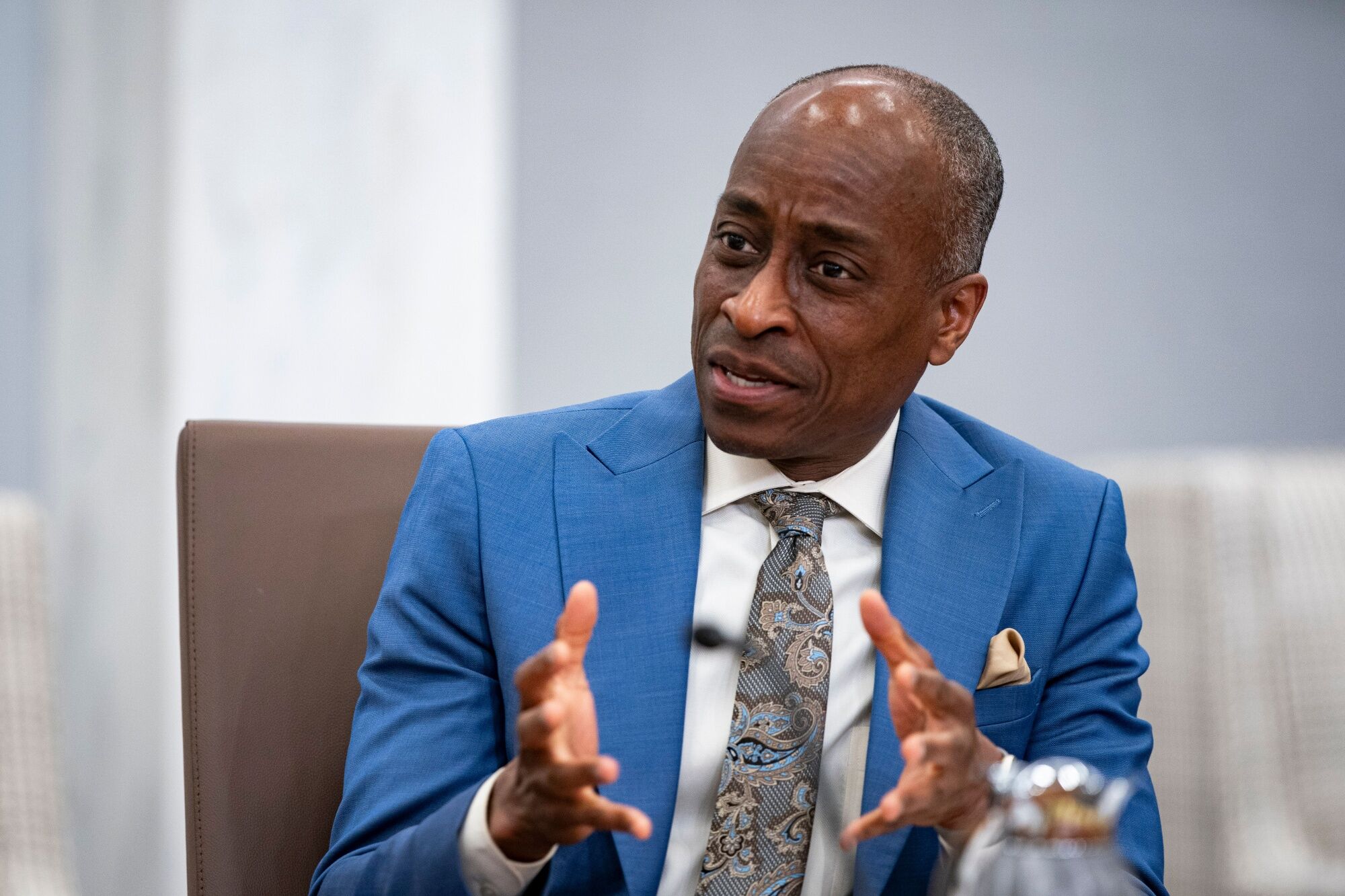
(Bloomberg) -- Federal Reserve Vice Chair Philip Jefferson said he expects inflation will continue to moderate with interest rates at their current level but persistent price pressures would warrant holding borrowing costs high for longer.
Jefferson said Tuesday that while there has been considerable progress in lowering inflation, the Fed's task of sustainably restoring 2% inflation is “not yet done.”

The comments, when paired with those of his colleagues in recent days, reinforce policymakers' lack of urgency to lower interest rates in the near term. Jefferson did not directly reference the timing or prospect of rate cuts this year in his prepared remarks.
“My baseline outlook continues to be that inflation will decline further, with the policy rate held steady at its current level, and that the labor market will remain strong, with labor demand and supply continuing to rebalance,” Jefferson said in a speech in Washington.
“Of course, the outlook is still quite uncertain, and if incoming data suggest that inflation is more persistent than I currently expect it to be, it will be appropriate to hold in place the current restrictive stance of policy for longer,” he said.
Chair Jerome Powell is also scheduled to speak later Tuesday.

Fed Projections
Projections released last month showed Fed officials narrowly penciled in three rate cuts for this year. Nearly half saw two or fewer. Since then, data on the labor market, consumer spending and inflation has reinforced a patient approach.
The Fed vice chair noted the strength of recent job gains and that inflation over the past three months was above the low readings in the second half of last year. He anticipates first quarter economic growth to moderate from the prior period but remain solid.
In an otherwise mostly academic speech, Jefferson outlined that the Federal Open Market Committee needs to look at a wide range of data to understand changes in the economy, particularly during times of heightened uncertainty.
“It is clearly beneficial to look at the totality of the data to identify changes in the economy in real time, to embrace the risk-management considerations associated with uncertainty that factor into FOMC decisions, and to adapt policy to the evolution of the economy,” he said.
(Adds additional context in third paragraph.)
More stories like this are available on bloomberg.com
©2024 Bloomberg L.P.

-
Love, Sex Aur Dhokha: The Audacious Plot To Spy On Jensen Huang

A Taipei dinner, a Singapore chip buyer and a suspected Chinese asset: inside the alleged spy operation that got close to NVIDIA's Jensen Huang.
-
Ten Things I Learnt This Samvat
Patience can be a trap. Cheap stocks can stay cheap. Leverage can wipe you out. What did Samvat 2082 teach us? Niraj Shah writes on 10 lessons from the year gone by.
-
Talking Points This Week: Tech Nerves, FII Buying, And A Faraway Banking Shock
The global markets are not shining this Diwali. The exception in the large markets is, India.
-
Midterm Rally Lasted A Day. The Hard Reality Of A Divided US May Last Two Years | Opinion
Between a contested AI boom, a debt ceiling that arrives in 2027 and a president with every incentive to act alone, the next two years may prove more volatile than the first day's rally suggests.
-
Blue Wave Will Derail the AI Trade but Won't Dismantle the AI Era | Unhedged Position
The Democrats' sweep of the US Congress will see politics collide with economic forces both over the long and short term.
-
It's Time To Take The GST Council's Bet On Trust Global
Payment records can prove India's services exports, and clear, proportionate rules can bring foreign digital sellers into the tax net.
-
Opinion | India at 38: From Innovation Overperformer to Innovation Powerhouse
India now has 453 VC-backed deep science startups, 18 of them late-stage, after 117 percent growth since 2020. Laurus Labs, at USD 9.3 billion, is the most valuable deep science company in any middle-income economy outside China.
-
Navigating Energy Crossroads: S Jaishankar's Call For Diversified Supply Chains At G20 Ministerial Meeting
As geopolitical fault lines continue to test maritime trade routes and commodity flows, Jaishankar's message remains pertinent: true economic resilience requires open markets, protected transit lines, and a genuine commitment to multilateral cooperation rather than coercion.
-
Indians Are Travelling, But Not Every Journey Is A Holiday | The Week In Whys
Pilgrims, patients and working women are the real travellers, and the system hasn't quite caught up with them.









