Fed Meeting Highlights: Rates Held, Just Two Cuts Likely In 2025; Powell Says Tariffs Delay Lowering Inflation
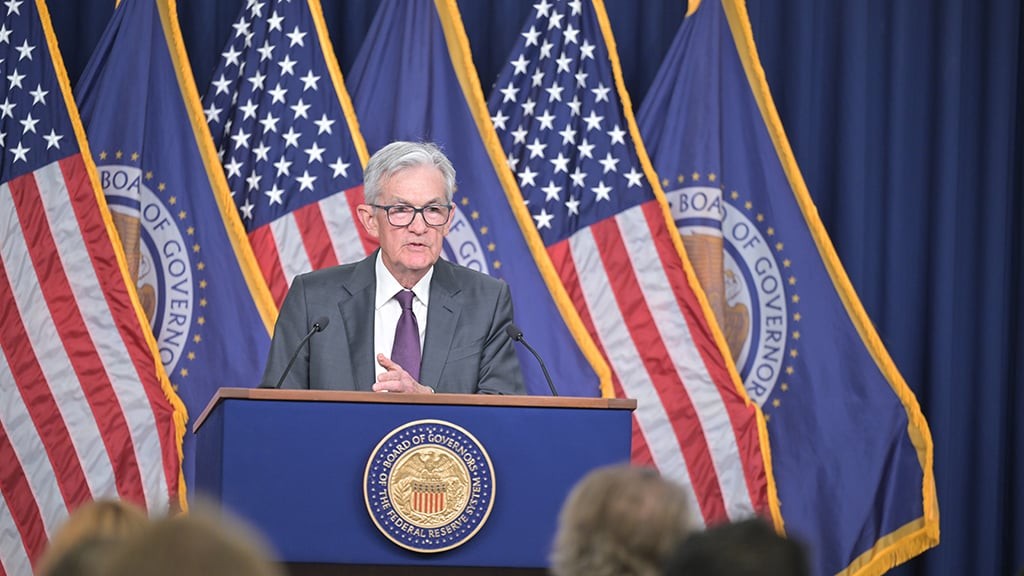
The US Federal Reserve kept interest rates unchanged on Wednesday in its latest policy meeting, maintaining the benchmark rate in a target range of 4.25–4.50%.
The decision comes as policymakers signalled only two rate cuts this year, in line with their December projections, while acknowledging increased uncertainty in the economic outlook.
The Fed remains prepared to adjust policy if risks emerge that could impede its goals, as trade tensions rise under US President Donald Trump's administration. Trump has floated new tariffs on major trading partners, adding to concerns over growth and inflation.
The Fed Chair noted that a "good part" of the higher inflation expectations was due to the tariffs imposed by Trump. "Clearly some of it, a good part of it, is coming from tariffs,” Powell said.
The Fed downgraded its economic growth outlook while raising its inflation projection.
When asked about the potential for any DOGE-derived saving to be sent to households in check form, Powell declined to comment.
Rate Projections
The Fed's "dot plot", which charts policymakers' rate expectations, showed the median official expects to lower rates by just 50 basis points in 2025, implying two quarter-point cuts. This is unchanged from their December forecast.
Powell emphasised the central bank's commitment to its dual mandate of maximum employment and price stability, saying: "The economy is strong overall and has made significant progress toward our goals over the past two years."
Uncertainty In Outlook Rises
The policy statement introduced new language noting that "uncertainty around the economic outlook has increased" and removed a previous reference that risks to employment and inflation "are roughly in balance".
Powell acknowledged the ongoing risks, stating: "Surveys of households and businesses point to heightened uncertainty about the economic outlook. It remains to be seen how these developments might affect future spending and investment."
Fed Slows Balance-Sheet Reduction
In a technical policy shift, the Fed announced it would slow the pace of its balance sheet runoff starting in April. The monthly cap on Treasury securities redemption will be reduced from $25 billion to $5 billion, while the $35-billion cap on agency debt and mortgage-backed securities will remain unchanged.
Waller Dissents On Balance Sheet Policy
Fed Governor Christopher Waller voted against the decision, marking the third such dissent since the Fed began lowering rates in September. While he supported holding rates steady, he preferred to continue the current pace of balance-sheet reduction.
Growth Outlook Downgraded, Inflation Estimates Raised
The Fed revised down its gross-domestic-product growth estimate for 2025 to 1.7%, from 2.1% previously. At the same time, the median official raised their forecast for core inflation at the end of 2025 to 2.8%, up from 2.5% in December.
"Inflation has eased significantly over the past two years but remains elevated relative to our 2% longer-run goal," Powell said.
He also pointed out that some inflation expectations have ticked higher, with "survey-based respondents, both consumers and businesses, mentioning tariffs as a driving factor".
Policy Path Remains Uncertain
Looking ahead, Powell stressed that the Fed would continue monitoring incoming data and remain flexible in adjusting policy as needed. "We are focused on separating the signal from the noise as the outlook evolves," he said, adding that new administration policies on trade, immigration and fiscal policy could also influence the economic landscape.

-
High US Salaries, No Green Card Certainty: The Financial Calculation Facing Indian H-1B Families

The suspension of PERM processing at eight technology employers does not cancel existing H-1B visas. What it does is force a question many Indian families have been avoiding: is the US salary worth tying your career and family plans to one employer?
-
Swiggy vs Eternal: Food Delivery's Two Rivals Are No Longer In The Same Race
Eternal is building a private AI assistant, dark.ai. Swiggy is still working out how to make Instamart pay, with an operating loss of Rs 895 crore in the July-September quarter while Blinkit stayed profitable.
-
Where You Live Shapes How You Get To Work | The Reason Why
Two-wheelers are the most popular way to get to work in India, accounting for nearly 43% of workplace commutes.
-
Unhedged Position: Can India See An Indonesia-Style Time Correction?
The Nifty is trading below levels it first clocked in 2024. Is there, then, as I have suggested in the headline, potential that the current time correction drags on painfully for the next three-five, even ten years?
-
Navigating Friction And Energy Realities: An Analysis Of Marco Rubio's October Visit To India
Occurring at a critical juncture marked by stalled trade negotiations and escalating geopolitical pressures over global energy supplies, the visit offers a profound window into modern US-India relations.
-
India Exports Capital. Why Not Export Trusteeship?
The big question, then, is whether India can build an institution that global borrowers, investors, banks, and lawyers can trust, even without an Indian connection.
-
France's Economy & Politics Are In Crisis | The Reason Why
Let's look at how the French economy and politics evolved under Nicolas Sarkozy, Franois Hollande and Emmanuel Macron.
-
You May Inherit The Business. You Must Earn Its Credibility.
Succession tests the founder's ability to share authority as much as it tests the next generation's readiness to assume it.
-
Signing Deals Is One Thing; Making Them Work Is Another | The Week In Whys
Sometimes, things don't turn out as planned. Indian companies have lost some bids to rivals, some projects won't produce until 2030.
-
FOMC Wall, PERM Suspension, Hospital Stocks | Talking Points This Week
A PERM suspension would directly affect green-card sponsorship rather than H-1B visas, so the near-term earnings impact could remain relatively limited. The key question is whether this marks a new phase in US scrutiny of Indian IT.









