ECB Cuts Rates For Fifth Time As Euro-Zone Economy Flatlines
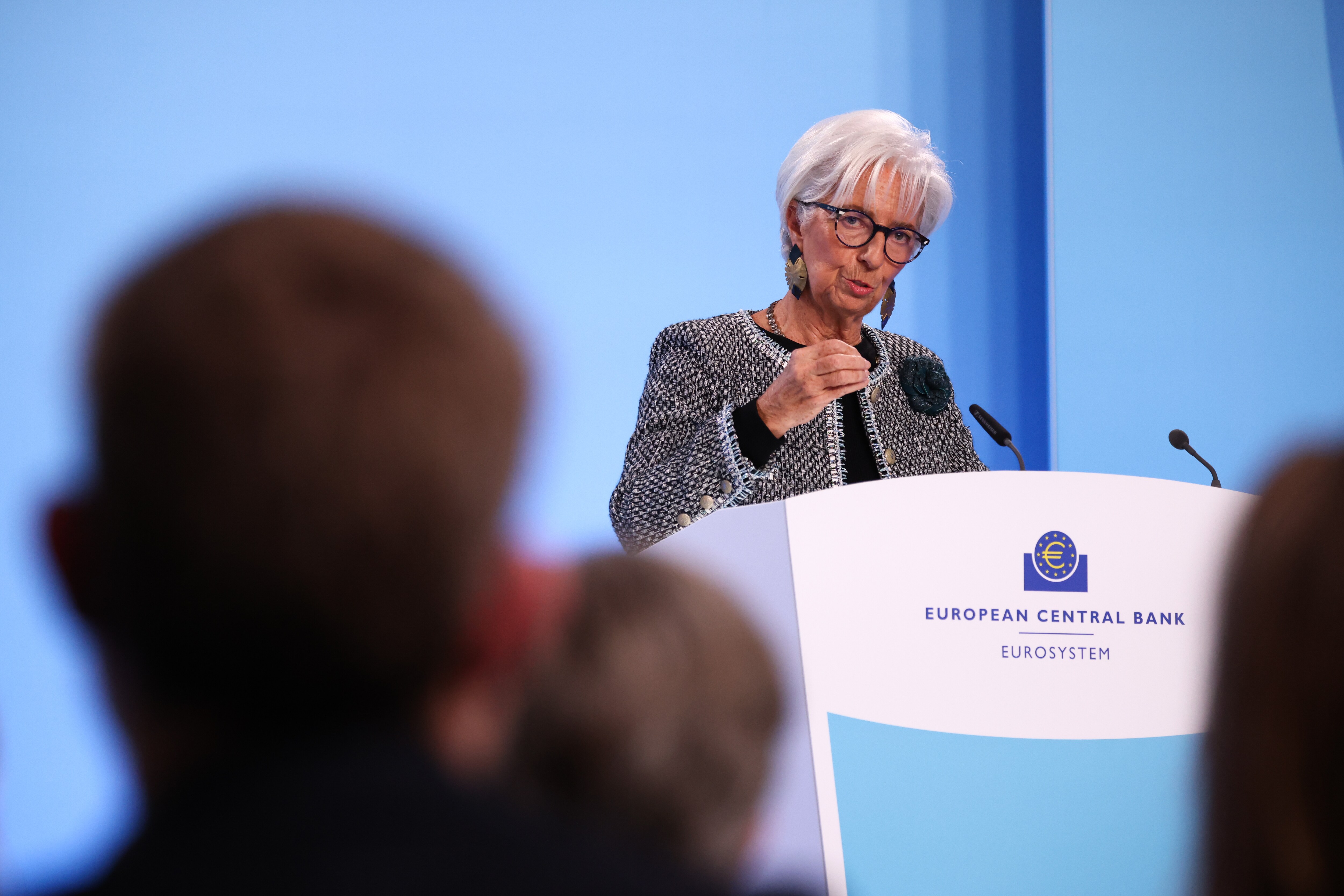
The European Central Bank lowered borrowing costs for a fifth time since June, with the region's economy stalling and the 2% inflation target in reach.
Officials reduced the deposit rate by a quarter-point to 2.75% — as predicted by all analysts in a Bloomberg poll. They continued to describe their current monetary-policy stance as “restrictive,” signaling more loosening is in the pipeline, while reiterating that they're not pre-committing to a particular rate path.
“The disinflation process is well on track,” the ECB said in a statement. “The economy is still facing headwinds but rising real incomes and the gradually fading effects of restrictive monetary policy should support a pick-up in demand over time.”

Investors maintained bets for further easing, pricing an additional 70 basis points of cuts during the rest of 2025. The euro held earlier losses, trading down 0.2% at about $1.0405. European bonds continued to trade higher.
Policymakers have been looking past a recent uptick in inflation, confident that their goal will be met this year and instead fretting about the sputtering performance of the euro zone's 20-nation economy, which unexpectedly stagnated at the end of 2024.
There's also the specter of US trade tariffs, depending on how President Donald Trump's policy plans take shape. His return is already limiting rate cuts by the Federal Reserve.
President Christine Lagarde will answer questions on the ECB's decision at a 2:45 p.m. press conference in Frankfurt.
Trump's threat to raise tariffs on European goods remains a major source of uncertainty. But officials have lately emphasized the negative impact such a move could have on economic activity, with few signaling it could reignite prices.
Fed Chair Jerome Powell, on the other hand, said Wednesday that the US central bank is in no hurry to lower rates further as it waits for the Trump administration to enact its economic policies.
For now, the prospects for Europe's economy are dim. While business surveys by S&P Global showed improvement in January, the Composite Purchasing Managers' Index only just crossed into territory signaling private-sector expansion.
The region's failure to grow in the fourth quarter will disappoint the ECB, which projected 0.2% expansion. The weakness is largely down to Germany and France, where political turmoil contributed to contractions in output.
Such data have fed calls from some policymakers to trim rates to a level where they cease being a drag on the economy. Most analysts see this threshold at 2% to 2.25%, suggesting the need for at least two more cuts. Loosening is likely to get more controversial as the neutral level, which is hard to observe in real time, draws closer.
Inflation, meanwhile, hasn't unduly rattled officials — despite edging up to 2.4% in December. The rocky road back to 2% that they've repeatedly warned about is mostly down to volatile energy costs.
One lingering concern is the services sector, where prices are still advancing at an elevated clip. The ECB has argued that more moderate wage gains should allow for inflation pressures there to abate, too.
Policymakers have recently signaled confidence that their mission will soon be fulfilled. Speaking last week on the sidelines of the World Economic Forum in Davos, Bank of France Governor Francois Villeroy de Galhau said he's “vigilant but not worried” about inflation. The official forecast sees it close to 2% from the second quarter.

-
Navigating Energy Crossroads: S Jaishankar's Call For Diversified Supply Chains At G20 Ministerial Meeting

As geopolitical fault lines continue to test maritime trade routes and commodity flows, Jaishankar's message remains pertinent: true economic resilience requires open markets, protected transit lines, and a genuine commitment to multilateral cooperation rather than coercion.
-
Indians Are Travelling, But Not Every Journey Is A Holiday | The Week In Whys
Pilgrims, patients and working women are the real travellers, and the system hasn't quite caught up with them.
-
Getting To Work Costs Women More | The Reason Why
It is not just about women paying more than men. It is about women paying much more in cities than in villages.
-
AI Bias In Investing Cannot Be Eliminated, But It Can Be Governed
Framing is a particularly important example as identical financial information presented in terms of gains rather than losses can lead an LLM to reach a different assessment.
-
Joining The Dots | Dark Skies, Steady Diya: Why Hope Holds This Diwali
With war, a weak rupee and foreign outflows weighing on sentiment, policymakers at the NDTV World Summit and market veterans at NDTV Profit Ignite: Diwali Edition offered the same advice: stay invested and filter out the noise.
-
The Curious Case of Equitas Small Finance Bank And A CEO Who Quit For Stock
PN Vasudevan believes persistent investor concerns over a perceived conflict of interest had become a governance overhang on Equitas Small Finance Bank's stock, even as the lender improved profitability and asset quality.
-
Talking Points This Week: AI Cash Burn, A Tiger Comeback And An India That Still Finds Its Own Path
India is not immune to higher oil or tighter global liquidity, yet its earnings base is broader, its domestic policy levers are still available.
-
Foreign Investors Own Half Of HDFC Bank and ICICI Bank. An LTCG Cut Could Matter Most Here
Foreign portfolio investors have US$115 billion parked in HDFC Bank, ICICI Bank. If the government cuts long-term capital gains tax, Jefferies says returning foreign money could land here first.
-
'Never Seen This Level Of Negativity': Sandeep Tandon Says The Next Rally May Be Closer Than You Think
Veteran investor Sandeep Tandon says foreign selling is easing, large-caps are due a comeback and mid-caps are crowded, while he turns positive on gold, power and pharma this Diwali.
-
Indians Stay With Family, Not In Hotels | The Reason Why
India still lacks enough clean, reliable and affordable hotels for budget-conscious travellers.










