ECB Cuts Interest Rates Again as Trump Tariff Fears Threaten Recovery
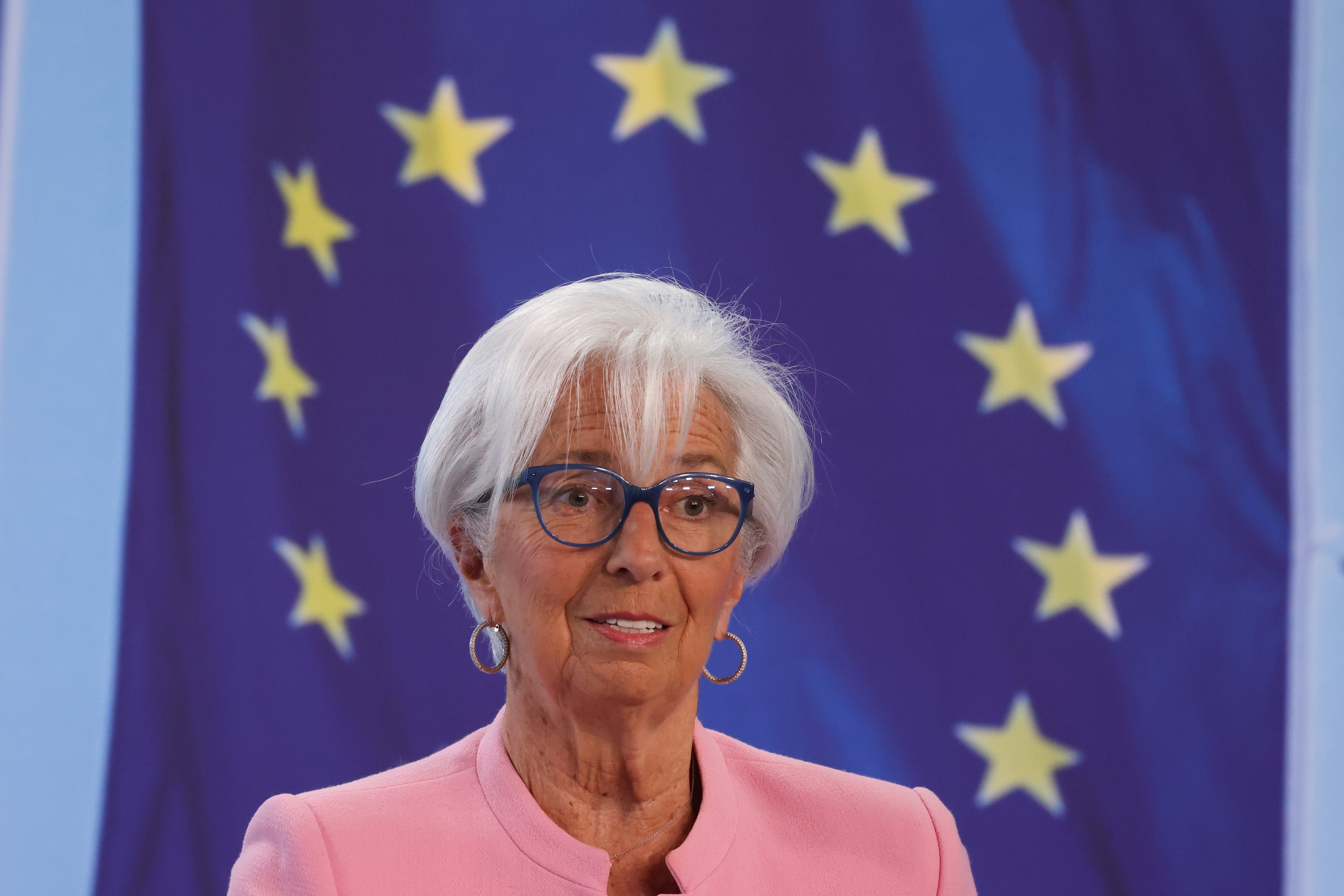
The European Central Bank lowered interest rates for the seventh time since last June as global trade tensions threaten to derail the region's economic recovery.
The deposit rate was decreased by a quarter-point to 2.25%, as predicted by almost all analysts polled by Bloomberg. Officials dropped the word “restrictive” from their statement in relation to the monetary-policy stance but stressed the headwinds Europe faces.
“The outlook for growth has deteriorated owing to rising trade tensions,” the ECB said Thursday in a statement. “Increased uncertainty is likely to reduce confidence among households and firms, and the adverse and volatile market response to the trade tensions is likely to have a tightening impact on financing conditions. These factors may further weigh on the economic outlook.”

German short-dated bonds pared losses after the ECB tweaked its statement language. The yield on two-year notes was up three basis points at 1.78% after rising to as high as 1.81% earlier. The euro held losses and traded at about $1.1352.
Having just weeks ago been pondering a pause in its easing campaign, this month's announcement by President Donald Trump of sweeping tariffs on the US's trading partners tilted support within the ECB back toward a further cut.
The prospect of another move became more attractive to policymakers as inflation continued to retreat towards the ECB's 2% goal, and was bolstered by falling energy costs and a plunge in confidence indicators. A surprise move in the euro, meanwhile, has elevated the common currency to a three-year high against the dollar.
Investors foresee two or three more reductions in borrowing costs before the year is out. But amid such choppy geopolitical waters, President Christine Lagarde is unlikely to offer any clear signals when she speaks to reporters at 2:45 p.m. in Frankfurt.
The new language indicates that the ECB now considers policy to be within the range of estimates for neutral — a level that neither stimulates nor restricts economic activity. It remains unclear whether officials see the need to cut borrowing costs beyond that territory.
With inflation already on the back foot, the fear now is that US levies will extinguish hopes for a revival in the euro zone's 20-nation economy — potentially dragging consumer-price growth below the target.
Despite some backtracking by Trump, European Union products face 10% tariffs for 90 days, with no firm indication on what happens beyond that. His standoff with China, meanwhile, has spiraled — raising the risk that some of its goods are diverted to Europe at discounted prices.
The Federal Reserve finds itself in a trickier bind and may be forced to stand pat until there's greater clarity. Chair Jerome Powell warned on Wednesday that a weakening economy and elevated inflation could bring its dual goals of price stability and maximum employment into conflict.
In contrast, March data from the euro area confirmed frequent statements by ECB officials that disinflation is on track. Prices rose by just 2.2% from a year ago, while the closely watched services component eased to 3.5% from 3.7% as wage pressures abated.
Economists polled by Bloomberg before Thursday's decision predict another cut in borrowing costs at the ECB's next policy meeting, in June, after which they'll be held at 2% at least through the end of next year.
The volatile backdrop, however, has left Goldman Sachs, Deutsche Bank and Bank of America forecasting deeper reductions.
Most policymakers are cagey on their outlook for rates. Besides the trade chaos, they're still trying to compute the effects of massive infrastructure spending in Germany and heftier military outlays across the continent in the years ahead.

-
Talking Points This Week: Tech Nerves, FII Buying, And A Faraway Banking Shock

The global markets are not shining this Diwali. The exception in the large markets is, India.
-
Midterm Rally Lasted A Day. The Hard Reality Of A Divided US May Last Two Years | Opinion
Between a contested AI boom, a debt ceiling that arrives in 2027 and a president with every incentive to act alone, the next two years may prove more volatile than the first day's rally suggests.
-
Blue Wave Will Derail the AI Trade but Won't Dismantle the AI Era | Unhedged Position
The Democrats' sweep of the US Congress will see politics collide with economic forces both over the long and short term.
-
It's Time To Take The GST Council's Bet On Trust Global
Payment records can prove India's services exports, and clear, proportionate rules can bring foreign digital sellers into the tax net.
-
Opinion | India at 38: From Innovation Overperformer to Innovation Powerhouse
India now has 453 VC-backed deep science startups, 18 of them late-stage, after 117 percent growth since 2020. Laurus Labs, at USD 9.3 billion, is the most valuable deep science company in any middle-income economy outside China.
-
Navigating Energy Crossroads: S Jaishankar's Call For Diversified Supply Chains At G20 Ministerial Meeting
As geopolitical fault lines continue to test maritime trade routes and commodity flows, Jaishankar's message remains pertinent: true economic resilience requires open markets, protected transit lines, and a genuine commitment to multilateral cooperation rather than coercion.
-
Indians Are Travelling, But Not Every Journey Is A Holiday | The Week In Whys
Pilgrims, patients and working women are the real travellers, and the system hasn't quite caught up with them.
-
Getting To Work Costs Women More | The Reason Why
It is not just about women paying more than men. It is about women paying much more in cities than in villages.
-
AI Bias In Investing Cannot Be Eliminated, But It Can Be Governed
Framing is a particularly important example as identical financial information presented in terms of gains rather than losses can lead an LLM to reach a different assessment.









