Davos 2023: Ease Geopolitical Risk, Trade Can Tackle Slow Growth: WEF Chief Børge Brende
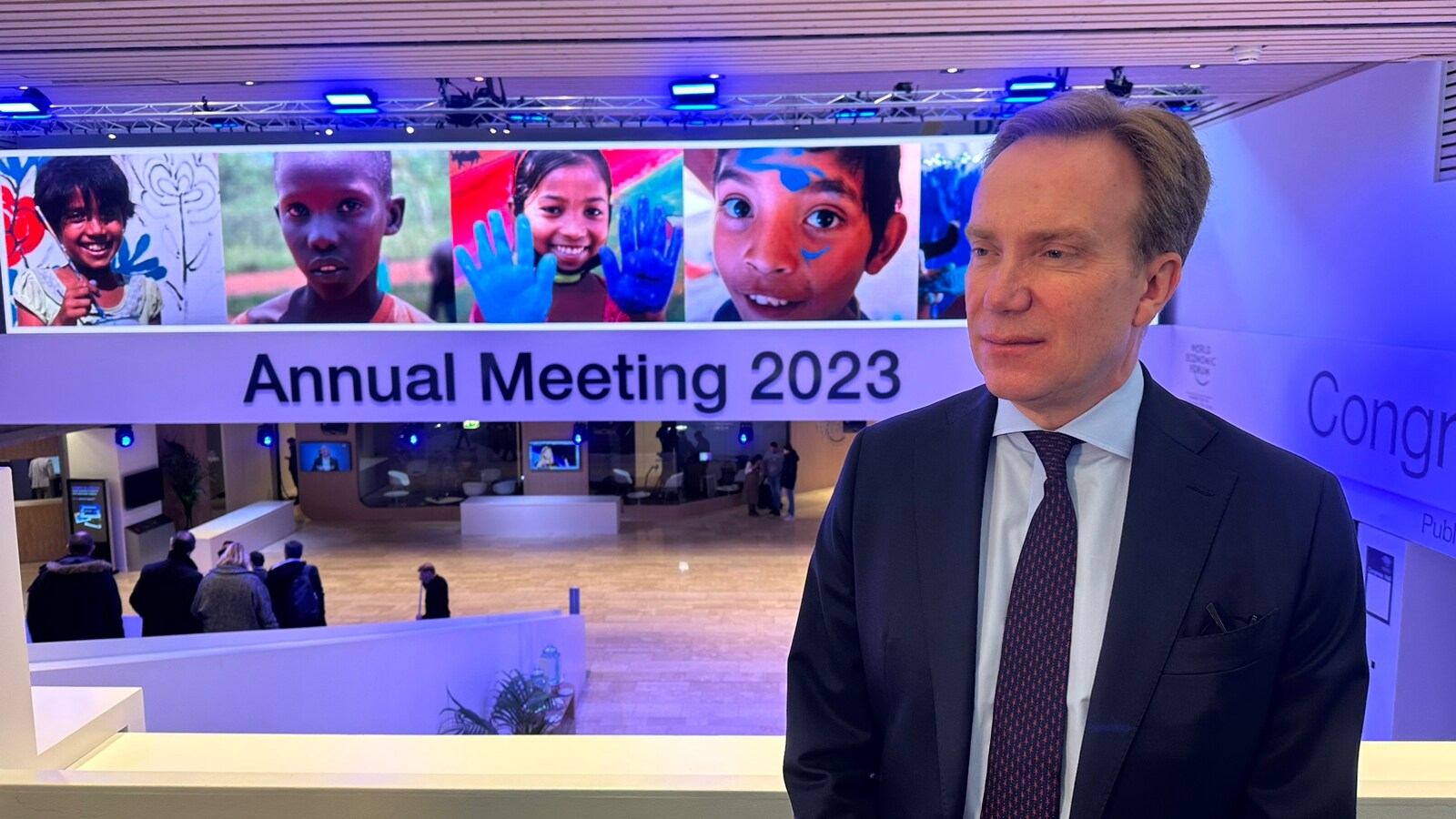
India will be the fastest-growing economy among the large ones of the world this year, with focus on manufacturing, World Economic Forum President Børge Brende said.
But the complications on the global stage need to be fixed or the world economy would be stuck in a slow-growth period, Brende told BQ Prime on the sidelines of WEF's annual summit in Davos on Monday.
Slow growth, high debt and high inflation is a toxic cocktail, Brende said.
"If we don't mitigate the geopolitical risks, if we don't start to collaborate and if we don't get to recovery when it comes to trade and investment, there will be no recovery out of this slow-growth period," he said.
"And then, we can easily end up like in the '70s (when) we had a decade of low growth. That has to be avoided," the WEF chief said.
Brende stressed on the need to curtail tariffs and protectionism, saying that the countries have to trade with each other.
"Fair that some nations want to be near-shore and friend-shore, but that will really apply for only 5% or 10% of the production... and also services," he said.
"We'll need to make sure that we continue to trade and invest with each other."
Brende said he expects the dignitaries present in Davos to agree on a growth policy in days to come, which will be the stand-out development from this year's WEF Summit.
"I hope we can agree on global growth path, how to revive growth. We never had this many finance ministers in Davos. We have more than 50 global finance ministers, more than 20 central bank governors, more than 30 prime ministers. In the nexus between investment, trade and a business-friendly growth policy, if we can deliver that, we can increase growth, increase prosperity and eradicate poverty," he said.
'Manufacturing Investments To Rise In India'
Based on inputs from state heads and business, manufacturing investments in India will grow in the coming year, Brende said. There is bullishness on investing in manufacturing in India, more than it was in the past.
"India was seen as the back office of the world, with a lot of services. Now, you are seeing more manufacturing being based in India. The government is also working on getting rid of red tape, and making it more predictable and conducive for foreign companies to set up business," said the WEF President.
He said more young and tech-savvy people are emerging in India.
"Competition in the future will be among the nations who are on the top of the new technology... And India is pretty well prepared for this," he said.
Watch the full conversation here:

-
Midterm Rally Lasted A Day. The Hard Reality Of A Divided US May Last Two Years | Opinion

Between a contested AI boom, a debt ceiling that arrives in 2027 and a president with every incentive to act alone, the next two years may prove more volatile than the first day's rally suggests.
-
Blue Wave Will Derail the AI Trade but Won't Dismantle the AI Era | Unhedged Position
The Democrats' sweep of the US Congress will see politics collide with economic forces both over the long and short term.
-
It's Time To Take The GST Council's Bet On Trust Global
Payment records can prove India's services exports, and clear, proportionate rules can bring foreign digital sellers into the tax net.
-
Opinion | India at 38: From Innovation Overperformer to Innovation Powerhouse
India now has 453 VC-backed deep science startups, 18 of them late-stage, after 117 percent growth since 2020. Laurus Labs, at USD 9.3 billion, is the most valuable deep science company in any middle-income economy outside China.
-
Navigating Energy Crossroads: S Jaishankar's Call For Diversified Supply Chains At G20 Ministerial Meeting
As geopolitical fault lines continue to test maritime trade routes and commodity flows, Jaishankar's message remains pertinent: true economic resilience requires open markets, protected transit lines, and a genuine commitment to multilateral cooperation rather than coercion.
-
Indians Are Travelling, But Not Every Journey Is A Holiday | The Week In Whys
Pilgrims, patients and working women are the real travellers, and the system hasn't quite caught up with them.
-
Getting To Work Costs Women More | The Reason Why
It is not just about women paying more than men. It is about women paying much more in cities than in villages.
-
AI Bias In Investing Cannot Be Eliminated, But It Can Be Governed
Framing is a particularly important example as identical financial information presented in terms of gains rather than losses can lead an LLM to reach a different assessment.
-
Joining The Dots | Dark Skies, Steady Diya: Why Hope Holds This Diwali
With war, a weak rupee and foreign outflows weighing on sentiment, policymakers at the NDTV World Summit and market veterans at NDTV Profit Ignite: Diwali Edition offered the same advice: stay invested and filter out the noise.









