What’s New In The Senate Version Of Trump’s Tax And Spending Bill
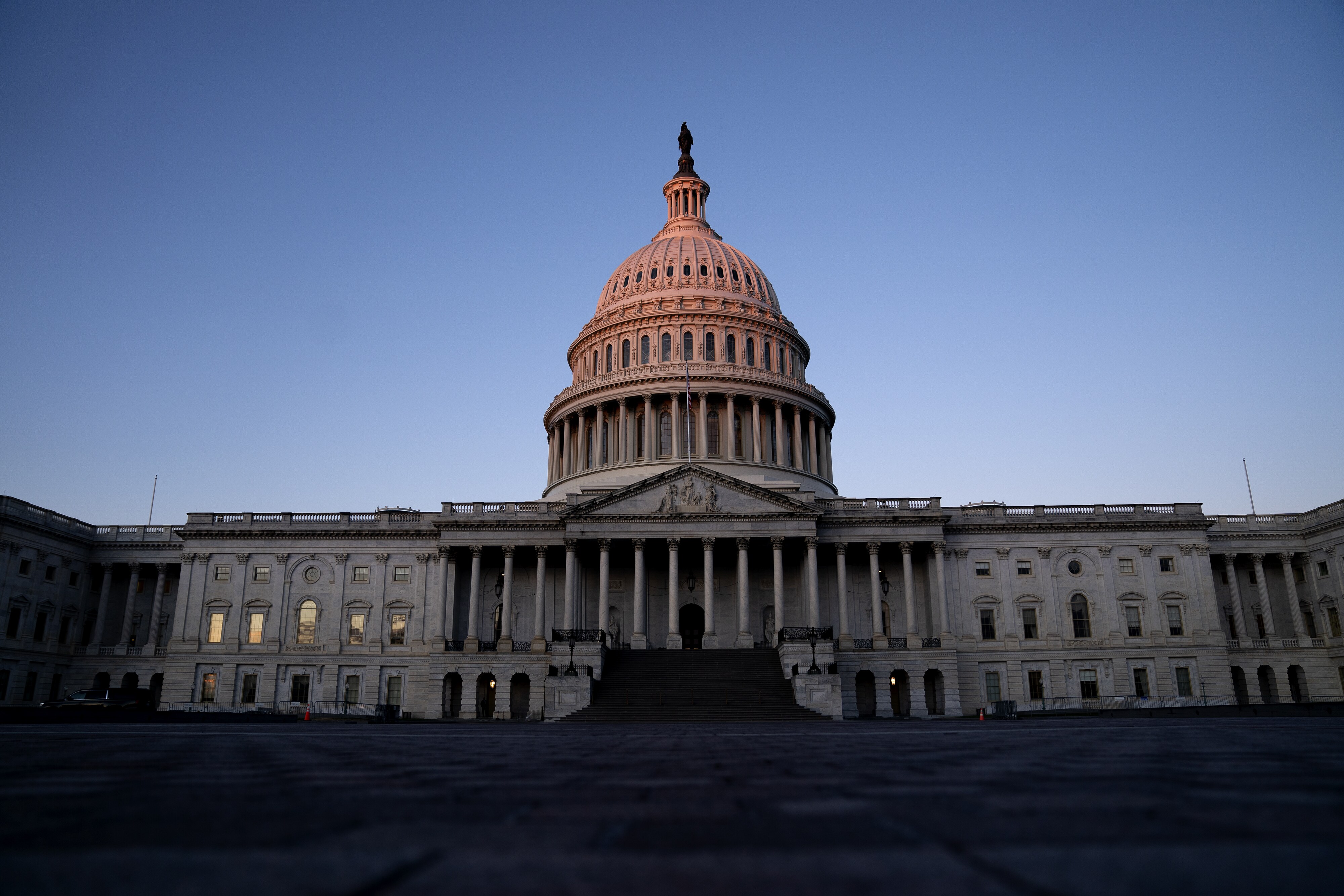
Senate Republicans plan to modify President Donald Trump's massive fiscal package to lower maximum deductions for state and local taxes and limit the impact of a “revenge” tax on foreign investors.
Senate GOP leaders also plan to cut deeper into Medicaid health insurance for the poor and disabled than House Republicans did in their version of the legislation to help pay for Trump's tax cuts.
Republicans on the Senate Finance Committee released their version of the legislation, which also would make permanent some business tax breaks that would only run through 2029 in the version the House passed last month by a single vote.
Here are some of the key differences between the Senate and House tax bills.
‘Revenge' Tax
The House bill's Section 899 “revenge” tax has alarmed Wall Street analysts who warn it would create another disincentive for foreign investors already rattled by Trump's erratic trade policies and the nation's deteriorating fiscal accounts.
Senate Republicans responded by delaying and watering down the levy, which would increase tax rates for individuals and companies from countries whose tax policies the government deems “discriminatory.”
The Senate version would postpone that new tax until 2027 for calendar-year filers and raise it by 5 percentage points a year until it hits a 15% cap. The House version of the tax would take effect sooner and rise to 20% over four years on individuals and firms from targeted countries.
State and Local Tax Deduction
Senate Republicans want to significantly scale back the House bill's $40,000 limit on state and local tax deductions, a move House Republicans from high-tax states such as New York, New Jersey and California are fighting.
The Senate's version of the tax bill calls for a $10,000 SALT cap, which leaders acknowledge is merely a placeholder figure as they try to hash out a compromise. There are no Senate Republicans from those high-tax states, and they've made no bones about the fact that it's not a priority for them.
Car Loans
Senators want to restrict to new cars a House-passed provision allowing car buyers to deduct up to $10,000 a year in interest on their auto loans through 2028 for vehicles built in the US. Ohio Republican Senator Bernie Moreno, a former car dealer, pushed for the language.
Moreno had also sought to make the tax break permanent, but the draft keeps it a temporary benefit.

Electric Vehicles
The Senate bill would eliminate a popular $7,500 credit for the purchase of electric vehicles 180 days after the bill becomes law, as opposed to expiring at the end of the year for most vehicles in the House version. That could be a difference of a few days, or longer, depending on the timing of the bill.
Child Tax Credit
Both the House and Senate bills seek to boost the child tax credit but they do so in different ways. The Senate legislation would increase the maximum per-child credit from $2,000 to $2,200, making it permanent and adjust it for inflation in later years.
The House bill would boost the tax break to $2,500, but it would decrease after 2028.

Tipped Workers
The Senate bill contains new limits on Trump's campaign promises to exempt tips and overtime from taxation. It caps the amount of tipped wages that can be exempt at $25,000 per individual and overtime at $12,500 per individual and $25,000 per couple. The breaks phase out above $150,000 in income for individuals and $300,000 for couples, and, like the House bill, they expire after 2028.
Seniors
The Senate bill expands a maximum $4,000 bonus standard deduction for seniors to $6,000 in an effort to better offset all Social Security taxes paid, a promise by Trump.
Medicaid Cuts
The Senate bill makes more aggressive cuts to the Medicaid program for low-income and disabled people than the reductions in the House bill, favoring states like Texas and Florida that did not expand Medicaid under the Affordable Care Act.
The Senate bill also would require parents with children 15 and older to work or do community service for 80 hours per month to qualify for health insurance through Medicaid. The House plan exempted all people with dependents from the work requirements.

University Endowment Tax
The Senate bill significantly pares back the House's plans to increase taxes on investment income generated by private university endowments. While the House proposed a levy as high as 21% on institutions with the largest endowments, the Senate version would cap the tax hike at 8%.
The bill does not include a tax on private foundations found in the House bill.
Permanent Business Tax Breaks
The panel also plans to permanently extend three business-friendly tax breaks that end after 2029 in the House version. Those provisions include the research and development deduction, the ability to use depreciation and amortization as the basis for interest expensing and 100% bonus depreciation of certain property, including most machinery and factories.
Gun Tax Breaks
The Senate version would eliminate taxes and other regulations on many guns and silencers subject to the National Firearms Act of 1934 in a win for gun-rights advocates.

-
Navigating Energy Crossroads: S Jaishankar's Call For Diversified Supply Chains At G20 Ministerial Meeting

As geopolitical fault lines continue to test maritime trade routes and commodity flows, Jaishankar's message remains pertinent: true economic resilience requires open markets, protected transit lines, and a genuine commitment to multilateral cooperation rather than coercion.
-
Indians Are Travelling, But Not Every Journey Is A Holiday | The Week In Whys
Pilgrims, patients and working women are the real travellers, and the system hasn't quite caught up with them.
-
Getting To Work Costs Women More | The Reason Why
It is not just about women paying more than men. It is about women paying much more in cities than in villages.
-
AI Bias In Investing Cannot Be Eliminated, But It Can Be Governed
Framing is a particularly important example as identical financial information presented in terms of gains rather than losses can lead an LLM to reach a different assessment.
-
Joining The Dots | Dark Skies, Steady Diya: Why Hope Holds This Diwali
With war, a weak rupee and foreign outflows weighing on sentiment, policymakers at the NDTV World Summit and market veterans at NDTV Profit Ignite: Diwali Edition offered the same advice: stay invested and filter out the noise.
-
The Curious Case of Equitas Small Finance Bank And A CEO Who Quit For Stock
PN Vasudevan believes persistent investor concerns over a perceived conflict of interest had become a governance overhang on Equitas Small Finance Bank's stock, even as the lender improved profitability and asset quality.
-
Talking Points This Week: AI Cash Burn, A Tiger Comeback And An India That Still Finds Its Own Path
India is not immune to higher oil or tighter global liquidity, yet its earnings base is broader, its domestic policy levers are still available.
-
Foreign Investors Own Half Of HDFC Bank and ICICI Bank. An LTCG Cut Could Matter Most Here
Foreign portfolio investors have US$115 billion parked in HDFC Bank, ICICI Bank. If the government cuts long-term capital gains tax, Jefferies says returning foreign money could land here first.
-
'Never Seen This Level Of Negativity': Sandeep Tandon Says The Next Rally May Be Closer Than You Think
Veteran investor Sandeep Tandon says foreign selling is easing, large-caps are due a comeback and mid-caps are crowded, while he turns positive on gold, power and pharma this Diwali.
-
Indians Stay With Family, Not In Hotels | The Reason Why
India still lacks enough clean, reliable and affordable hotels for budget-conscious travellers.










