What Budget 2020 Does For Women – Where’s The Money Going?
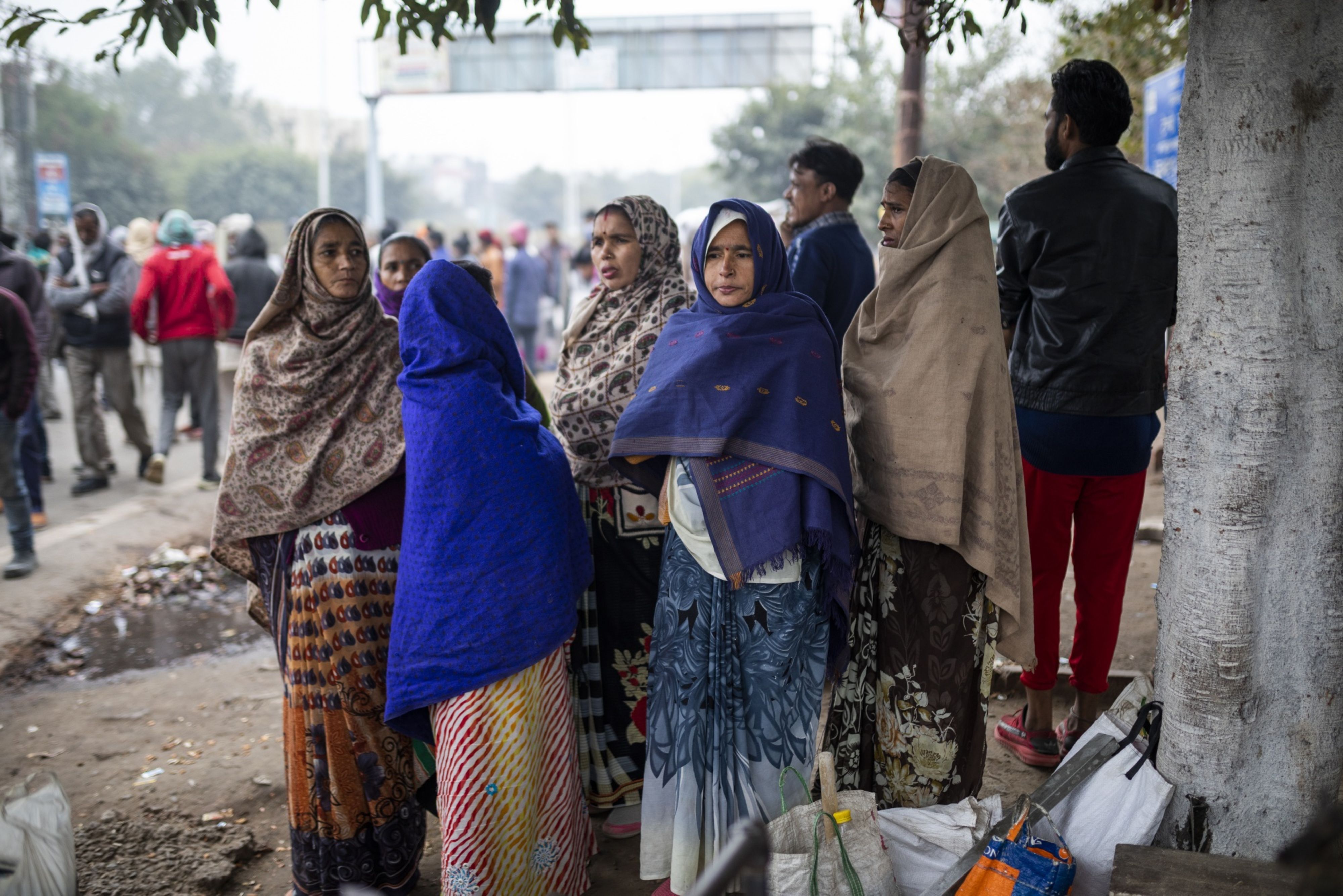
Dubbed as the “jan-jan ka budget” or budget for the people, Finance Minister Nirmala Sitharaman presented Budget 2020 on Feb. 1 centred around three prominent themes: ‘Aspirational India', ‘Economic Development', and ‘Caring Society'.
While questions of rural development, wellness, education, industry, and infrastructure were key sectors of focus under the first two themes, women, children, environment, culture and tourism were categorised under ‘Caring Society'. In what has been touted as the longest budget speech in history, the Finance Minister spoke of her plan to elevate Indian women to the position of the Dhaanya Lakshmi, a goddess who is responsible for material wealth and abundance of grain and food. Does Budget 2020 demonstrate fiscal accountability to women through equitable budgetary allocations?
Budgetary apportionments towards gender-just ends may be of two types:
- Schemes which are entirely women-specific, where the beneficiaries are women, like the Nirbhaya Fund; and
- Schemes that have a generic social focus but will also benefit women if differential needs are included in its vision and sums are set aside for women, like the sanitation and water budgets.
The Finance Minister announced Rs 28,600 crore for women-specific schemes. Currently, the Ministry of Women and Child Development lists 14 central government schemes directly aimed at benefitting women. These include schemes such as Beti Bachao, Beti Padhao, costs towards running the women's helpline 181, the Swadhar Greh scheme for economic self-sufficiency of women in difficult situations, the Nirbhaya Fund dedicated to women's safety and security, amongst others. The table below provides a comparison of budgetary allocations—with respect to schemes that are apportioned for women—between the presented budgets of 2019 and 2020.

Modalities Of Key Schemes
Budgetary allocations towards the creation of a national platform for unorganised workers as well as increases in accident insurance cover is a welcome initiative since women comprise more than 90 percent of the unorganised workforce. However, the nature of this platform and what it intends to achieve is still unclear. The effectiveness and operationalisation of these initiatives targeted at the informal sector also need to be seen. Further, the government is working on an incentive scheme that provides 26-weeks of maternity benefits to their women employees as provided for in the Maternity Benefit (Amendment) Act,2017. In order to avail this incentive, women employees must draw a monthly salary that is less than Rs 15,000 and be a member of the Employees' Provident Fund Organisation for at least one year and not covered by Employees' State Insurance Corporation.
The Finance Minister further announced Rs 35,000 crore for nutrition-related programmes correctly identifying the issues of maternal mortality and nutrition deprivation plaguing women in the country today. As per the data released by the NITI Aayog, the maternal mortality rate has dropped from 167 per 100,000 live births in 2011-2013 to 130 per 100,000 live births in 2014-2016. The Prime Minister's ‘Poshan Abhiyan' scheme that was launched in 2017-2018, aimed at improving the status of adolescent girls, pregnant and lactating mothers, is expected to get a boost through this allocation.
Studying The Use Of Funds
While budgetary allocations have either increased or have remained the same overall—with a few exceptions—the question of efficient utilisation, to achieve the goals that the schemes were formulated to achieve, requires strong bureaucratic will.
In a written reply to the 16th Lok Sabha, Virendra Kumar Khatik, the then Minister of State for Women and Child Development provided details of year-wise fund allocation and scheme-related disbursements.
The data revealed that for the year ending March 31, 2018, out of the allocated funds of Rs 280 crore for Beti Bachao Beti Padhao, Rs 155.71 crore was spent on media-related activities, Rs 54 crore was yet to be disbursed while only Rs 70 crore was spent on the scheme.
This means that 56 percent of the scheme's funds was spent on advertising while a mere 25 percent was released to the target districts.
The Nirbhaya Fund lies unutilised too. Data released by the government reveals that 89 percent of funds allocated to states and union territories have not been utilised. Without effectual utilisation and competent operationalisation towards achieving specific goals, mere budgetary allocations will not bring in results.
Need Formal Workforce Push
The budget remains silent on special sanitation needs of women, upskilling the female workforce to move into formal labour sector, technological skill advancement for women, schemes for women engaged in manual scavenging as well as adult education aimed at women.
For the salaried woman in the formal sector, in banks and media houses, in IT companies, textile companies and employment in front-desk and other forms of customer service, there is not much to look forward to.
New Income Tax Regime
Tax exemptions and deductions that translate into a form of compulsory savings are usually seen as the savings net of the middle class, and women's roles in enabling household savings are often touted as the reason for the economic security of the family. It remains to be seen how these new tax slabs pan out.
The new tax slabs do away with almost 70 tax exemptions.
- Income between Rs 5 lakh and Rs 7.5 lakh will be taxed at 10 percent (previously 20 percent),
- income between Rs 7.5 lakh and Rs 10 lakh will be taxed at 15 percent (previously 20 percent),
- Income between Rs 10 lakh and Rs 12.5 lakh will be taxed at 20 percent (previously 30 percent),
- Income between Rs 12.5 lakh and Rs 15 lakh will be taxed at 25 percent (previously 30 percent),
- Incomes above Rs 15 lakh in a financial year will continue to be taxed at 30 percent.
Although the option of continuing with the old tax slabs remain, the intent of these newer slabs seems to aim more for short-term liquidity than long-term reserves.
Slow Progress On Gender Budgeting
In order to ensure that women enjoy the benefits of development, it is critical to incorporate a gender perspective to welfare programmes and policy planning. This process, known as gender budgeting, is not a separate accounting process but one that necessitates the scrutiny of government budgets to establish differential impacts of budgetary allocations on women.
Over the years, economic activism by feminist economists have enabled governments to carry out gender budgeting. In 2004, instructions were issued by the Ministry of Finance to all ministries and departments to establish a ‘Gender Budgeting Cell' by Jan. 1, 2005. As recently as September 2019, the 15th Finance Commission has requested for minimum allocations of 25-40 percent for gender schemes and programmes. Despite these measures, women's socio-economic development in India has a long way to go.
Overall, Budget 2020 offers India's women a marginal improvement in the allocation of funding for schemes, while leaving open questions over the effective utilisation of those funds.
Lavanya Shanbhogue Arvind teaches at the Centre of Disasters and Development at the Tata Institute of Social Sciences, Mumbai. She is an author, TEDx Speaker and a feminist research scholar.
The views expressed here are those of the author, and do not necessarily represent the views of BloombergQuint or its editorial team.

-
High US Salaries, No Green Card Certainty: The Financial Calculation Facing Indian H-1B Families

The suspension of PERM processing at eight technology employers does not cancel existing H-1B visas. What it does is force a question many Indian families have been avoiding: is the US salary worth tying your career and family plans to one employer?
-
Unhedged Position: Can India See An Indonesia-Style Time Correction?
The Nifty is trading below levels it first clocked in 2024. Is there, then, as I have suggested in the headline, potential that the current time correction drags on painfully for the next three-five, even ten years?
-
Navigating Friction And Energy Realities: An Analysis Of Marco Rubio's October Visit To India
Occurring at a critical juncture marked by stalled trade negotiations and escalating geopolitical pressures over global energy supplies, the visit offers a profound window into modern US-India relations.
-
India Exports Capital. Why Not Export Trusteeship?
The big question, then, is whether India can build an institution that global borrowers, investors, banks, and lawyers can trust, even without an Indian connection.
-
France's Economy & Politics Are In Crisis | The Reason Why
Let's look at how the French economy and politics evolved under Nicolas Sarkozy, Franois Hollande and Emmanuel Macron.
-
You May Inherit The Business. You Must Earn Its Credibility.
Succession tests the founder's ability to share authority as much as it tests the next generation's readiness to assume it.
-
Signing Deals Is One Thing; Making Them Work Is Another | The Week In Whys
Sometimes, things don't turn out as planned. Indian companies have lost some bids to rivals, some projects won't produce until 2030.
-
FOMC Wall, PERM Suspension, Hospital Stocks | Talking Points This Week
A PERM suspension would directly affect green-card sponsorship rather than H-1B visas, so the near-term earnings impact could remain relatively limited. The key question is whether this marks a new phase in US scrutiny of Indian IT.
-
Everything, Everywhere, All At Once: Dalal Street's Week To Forget | Joining The Dots
Visa curbs, a Starlink spat and cancer drug caps: what connects this week's shocks for Indian markets
-
India Is Going Abroad For Critical Minerals. But It May Take Years To Pay Off | The Reason Why
Although India's steps are in the right direction, they remain modest compared with India's growing dependence.









