US Set To Impose 93.5% Duty On China Battery Material
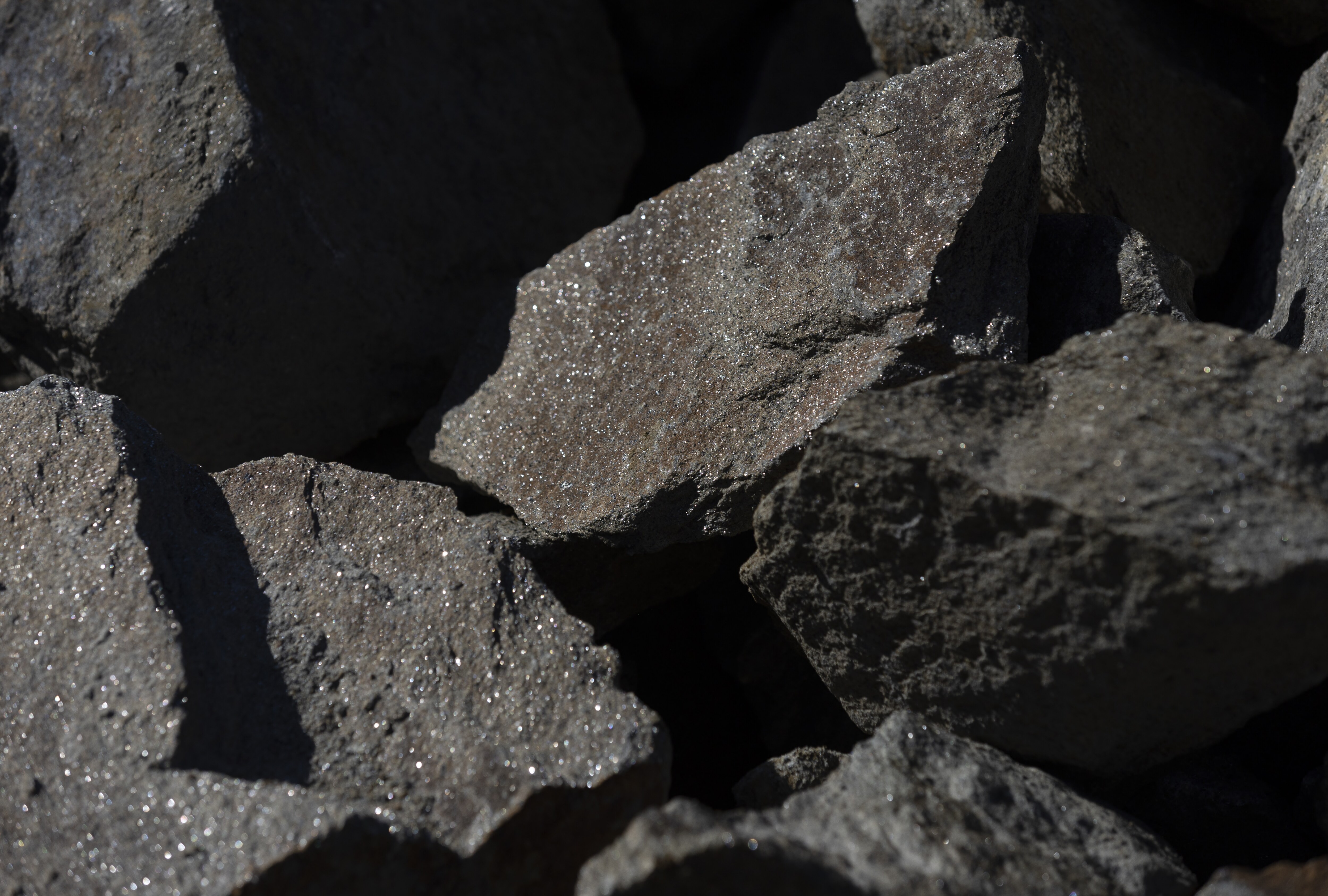
The US Commerce Department imposed preliminary anti-dumping duties of 93.5% on Chinese imports of graphite, a key battery component, after concluding the materials had been unfairly subsidized.
A trade association representing US graphite producers in December filed petitions with two federal agencies, asking for investigations into whether Chinese companies were violating anti-dumping laws. The new duties will add to existing rates making the effective tariff 160%, according to the American Active Anode Material Producers, the trade group that filed the complaint.
The anti-dumping duty on graphite is set to increase tensions along the global electric-vehicle supply chain that's already facing Beijing's export controls of some critical minerals and battery technology. Battery supplier shares slipped while North American graphite producers soared.
“Commerce's determination proves that China is selling AAM at less than fair value into the domestic market,” Erik Olson, a spokesperson for the anode producers trade group, said in a statement.
The tariff would be a blow to battery manufacturers, said Sam Adham, head of battery materials at consultancy CRU Group. A 160% tariff equates to $7 per kilowatt-hour added cost to an average EV battery cell, or one fifth of the battery manufacturing tax credits that originated in the Inflation Reduction Act and survived President Trump's budget bill, he said.
“That basically wipes out profits for one or two entire quarters for the Korean battery makers,” Adham said.
Tesla Inc. and its key battery supplier, Japan's Panasonic Inc., were among companies pushing to block the new tariffs, arguing that they rely on Chinese graphite imports because the domestic industry hasn't developed enough to meet the quality standards and volume that the carmaker requires. Tesla shares fell as much as 0.7% Thursday.
Graphite is a key raw material used to make anodes of the batteries, and nearly 180,000 metric tons of graphite products were imported into the US last year, with about two-thirds of these deliveries coming from China, according to BloombergNEF.
China dominates the processing capacity of graphite, with the International Energy Agency calling the material one of the most exposed to potential supply risks and “requiring urgent efforts for diversification,” according to a report in May.
Graphite is expected to remain the most common anode material for all types of lithium-ion batteries in the medium term, according to the IEA, with silicon only expected to begin eating into its market share from 2030.
The Commerce Department issued the preliminary determination affirming the anti-dumping duties in a document Thursday, and said the final determination should be announced by Dec. 5.
The tariff ruling “provides the policy clarity and market signals needed to accelerate domestic graphite production,” said Jon Jacobs, chief commercial officer at Westwater Resources Inc., which is building a graphite plant in Alabama. Westwater, which has agreements with Jeep-owner Stellantis NV and South Korea's SK On Co., will have 12,500 metric tons of production capacity when its first phase comes online next year, with plans to expand capacity to 50,000 tons annually by 2028, Jacobs said.
Westwater rose 15% on Thursday. Canadian graphite firms Nouveau Monde Graphite Inc. and Northern Graphite Corp. also surged on the tariff news.
The anti-dumping rate determination “could impact the cost structure for battery suppliers” like Fluence Energy Inc. and Enphase Energy Inc., analysts at Roth Capital Partners said in a note Wednesday. Fluence shares closed lower by 0.4% while Enphase dropped 0.7%.
Additional duties on batteries will add to pressures facing the renewable industry. While energy storage retained key tax incentives in President Donald Trump's budget bill, Treasury Department rules restricting the use of Chinese cells complicates compliance for many developers. Supply chain risks and costs will slow the pace of storage growth on the US grid, according to Wood Mackenzie.

-
Navigating Friction And Energy Realities: An Analysis Of Marco Rubio's October Visit To India

Occurring at a critical juncture marked by stalled trade negotiations and escalating geopolitical pressures over global energy supplies, the visit offers a profound window into modern Washington-New Delhi relations.
-
India Exports Capital. Why Not Export Trusteeship?
The big question, then, is whether India can build an institution that global borrowers, investors, banks, and lawyers can trust, even without an Indian connection.
-
France's Economy & Politics Are In Crisis | The Reason Why
Let's look at how the French economy and politics evolved under Nicolas Sarkozy, Franois Hollande and Emmanuel Macron.
-
You May Inherit The Business. You Must Earn Its Credibility.
Succession tests the founder's ability to share authority as much as it tests the next generation's readiness to assume it.
-
Signing Deals Is One Thing; Making Them Work Is Another | The Week In Whys
Sometimes, things don't turn out as planned. Indian companies have lost some bids to rivals, some projects won't produce until 2030.
-
FOMC Wall, PERM Suspension, Hospital Stocks | Talking Points This Week
A PERM suspension would directly affect green-card sponsorship rather than H-1B visas, so the near-term earnings impact could remain relatively limited. The key question is whether this marks a new phase in US scrutiny of Indian IT.
-
Everything, Everywhere, All At Once: Dalal Street's Week To Forget | Joining The Dots
Visa curbs, a Starlink spat and cancer drug caps: what connects this week's shocks for Indian markets
-
India Is Going Abroad For Critical Minerals. But It May Take Years To Pay Off | The Reason Why
Although India's steps are in the right direction, they remain modest compared with India's growing dependence.
-
When Everyone Has AI, What Gives You An Edge?
India's young workforce is entering an uncertain world of work where powerful AI tools are becoming widely accessible. The advantage will belong to those who combine deep expertise with digital fluency, and the distinctly human capabilities that technology cannot manufacture.
-
Wrong Labels, High Pesticide Residues Holding Back Agri Exports | The Reason Why
India needs stronger domestic food-safety and labelling standards, with best practices becoming part of everyday business for farmers, traders and food companies.










