US, China Cite ‘Substantial Progress’ In Geneva Trade Talks
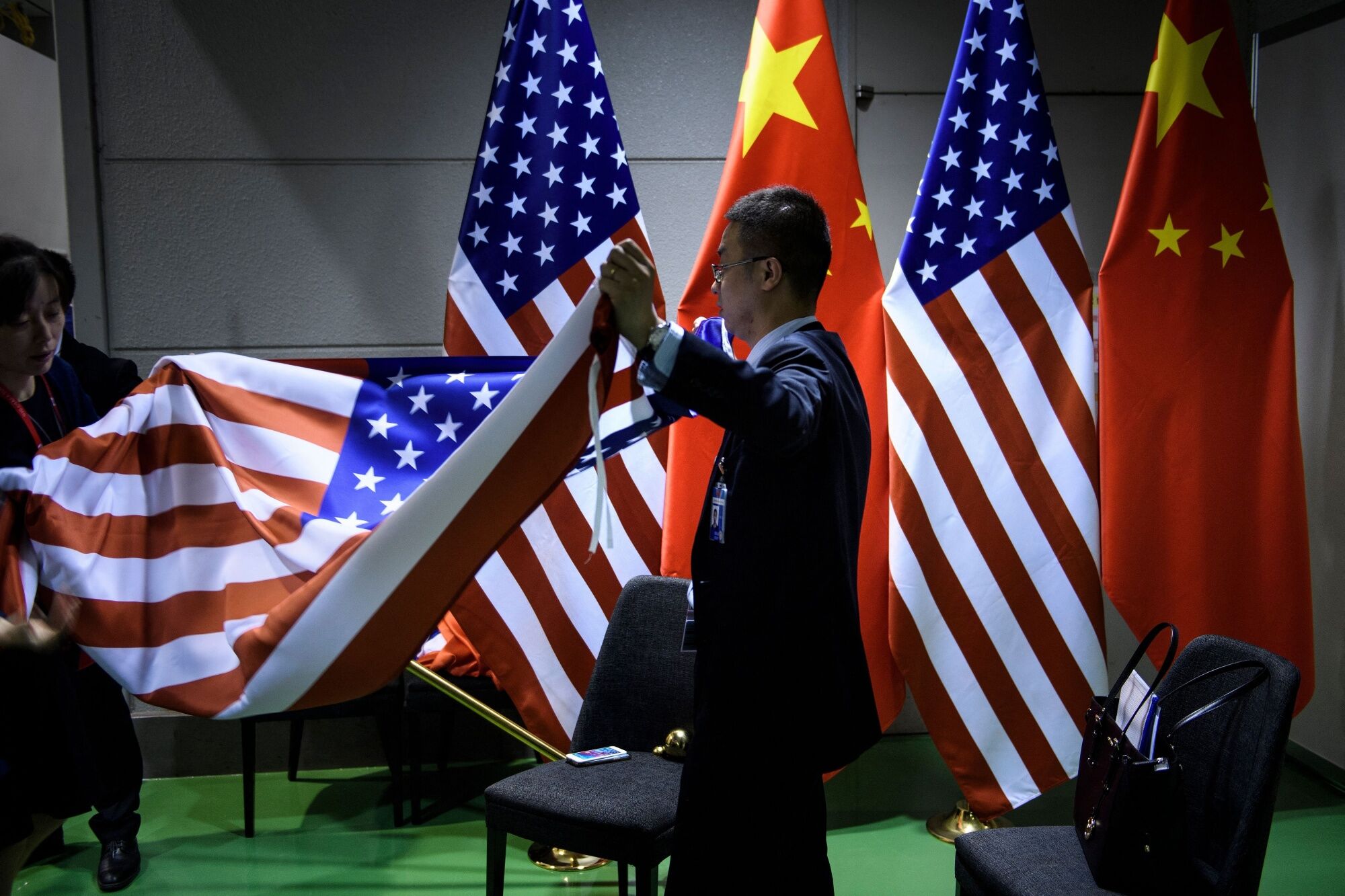
The US and China both reported “substantial progress” after two days of talks in Switzerland aimed at de-escalating a trade war, marking what Chinese Vice Premier He Lifeng called “an important first step” toward resolving differences.
While neither side immediately announced specific measures on Sunday, He said the world's two biggest economies agreed to create a mechanism for further talks, led by US Treasury Secretary Scott Bessent and himself. Bessent said the US would share details on Monday and He promised a joint statement.
“As we say back in China, if the dishes are delicious, the timing doesn't matter,” Chinese Vice Commerce Minister Li Chenggang told reporters in Geneva. “Whenever it gets released, it will be good news for the world.”
Negotiators sought to convey a positive tone in separate comments to reporters, with He complimenting the US side's professionalism and US Trade Representative Jamieson Greer suggesting that trade clashes between the two sides may be overrated.
“It's important to understand how quickly we were able to come to an agreement, which reflects that perhaps the differences were not as large as maybe thought,” Greer said. “That being said, there was a lot of groundwork that went into these two days.”
As the trading week got underway in Asia, the dollar climbed against most major currencies including the euro, yen and Swiss franc. The Australian dollar, seen as a proxy for sentiment toward China, edged higher along with the offshore Chinese yuan.
“While we remain skeptical that anything of substance could be agreed upon after only two days of talks, it's clear that both sides are looking to de-escalate the situation,” Win Thin, global head of markets strategy at Brown Brothers Harriman & Co., wrote in a note.
The announcements followed hours of meetings between Bessent, Greer and He, hosted by the Swiss ambassador to the United Nations, who residence served as the venue. Bessent and He both said the two sides made “substantial progress.”
Tensions between the world's two biggest economies reached a new high point after President Donald Trump steadily increased tariffs on Beijing to 145%. The duties are supposed to address China's role in the fentanyl trade, its massive trade surplus with the US, and respond to Beijing's retaliatory measures imposed after Trump's opening salvo. China in response increased its tariffs on US goods to 125%.
The tariff tit-for-tat led to a standoff with neither side wanting to budge and no off-ramp in sight.

Eventually, both sides acknowledged a reduction in tensions and tariffs is necessary and public talks were announced.
Fears of empty shelves may have contributed to the urgency for the meetings. Trump and his economic team have gotten pleas from retail executives who explained in meetings with senior officials that the result of sustained high tariffs would be pandemic-level shortages and supply-chain shocks.
Chinese President Xi Jinping, for his part, sought to fortify his nation's economy ahead of the talks, but data show signs of weakness.
The US team went into the first day of talks somewhat hemmed in by their boss. Trump posted on Truth Social before the meetings even started: “80% Tariff on China seems right!” He added that it was “up to” his Treasury chief, without elaborating.
After the first day of meetings concluded, Trump chimed in, again on Truth Social, to hail “great progress” and said “much” was agreed to, while negotiators stayed mum and continued to hammer out details late into the night.
”A total reset negotiated in a friendly, but constructive, manner,” Trump said Saturday. “We want to see, for the good of both China and the U.S., an opening up of China to American business.”
Trump told reporters Friday he might speak to his Chinese counterpart after the Switzerland meetings, depending on what Bessent advised him.
The US and China already have a trade deal on the books, which was signed at the end of Trump's first term in January 2020. At the time, the president called it “historic” and said it was “righting the wrongs of the past.”
As part of that agreement, Beijing committed to purchase more than $200 billion in additional US goods and services and open up its market to America's agriculture and financial services sectors.
Trump repeatedly faulted the Biden administration for not enforcing the deal after China failed to live up to its promises.

-
Talking Points This Week: Tech Nerves, FII Buying, And A Faraway Banking Shock

The global markets are not shining this Diwali. The exception in the large markets is, India.
-
Midterm Rally Lasted A Day. The Hard Reality Of A Divided US May Last Two Years | Opinion
Between a contested AI boom, a debt ceiling that arrives in 2027 and a president with every incentive to act alone, the next two years may prove more volatile than the first day's rally suggests.
-
Blue Wave Will Derail the AI Trade but Won't Dismantle the AI Era | Unhedged Position
The Democrats' sweep of the US Congress will see politics collide with economic forces both over the long and short term.
-
It's Time To Take The GST Council's Bet On Trust Global
Payment records can prove India's services exports, and clear, proportionate rules can bring foreign digital sellers into the tax net.
-
Opinion | India at 38: From Innovation Overperformer to Innovation Powerhouse
India now has 453 VC-backed deep science startups, 18 of them late-stage, after 117 percent growth since 2020. Laurus Labs, at USD 9.3 billion, is the most valuable deep science company in any middle-income economy outside China.
-
Navigating Energy Crossroads: S Jaishankar's Call For Diversified Supply Chains At G20 Ministerial Meeting
As geopolitical fault lines continue to test maritime trade routes and commodity flows, Jaishankar's message remains pertinent: true economic resilience requires open markets, protected transit lines, and a genuine commitment to multilateral cooperation rather than coercion.
-
Indians Are Travelling, But Not Every Journey Is A Holiday | The Week In Whys
Pilgrims, patients and working women are the real travellers, and the system hasn't quite caught up with them.
-
Getting To Work Costs Women More | The Reason Why
It is not just about women paying more than men. It is about women paying much more in cities than in villages.
-
AI Bias In Investing Cannot Be Eliminated, But It Can Be Governed
Framing is a particularly important example as identical financial information presented in terms of gains rather than losses can lead an LLM to reach a different assessment.









