India-UK Trade Deal In Focus As Rishi Sunak Gives Way To Keir Starmer At Downing Street
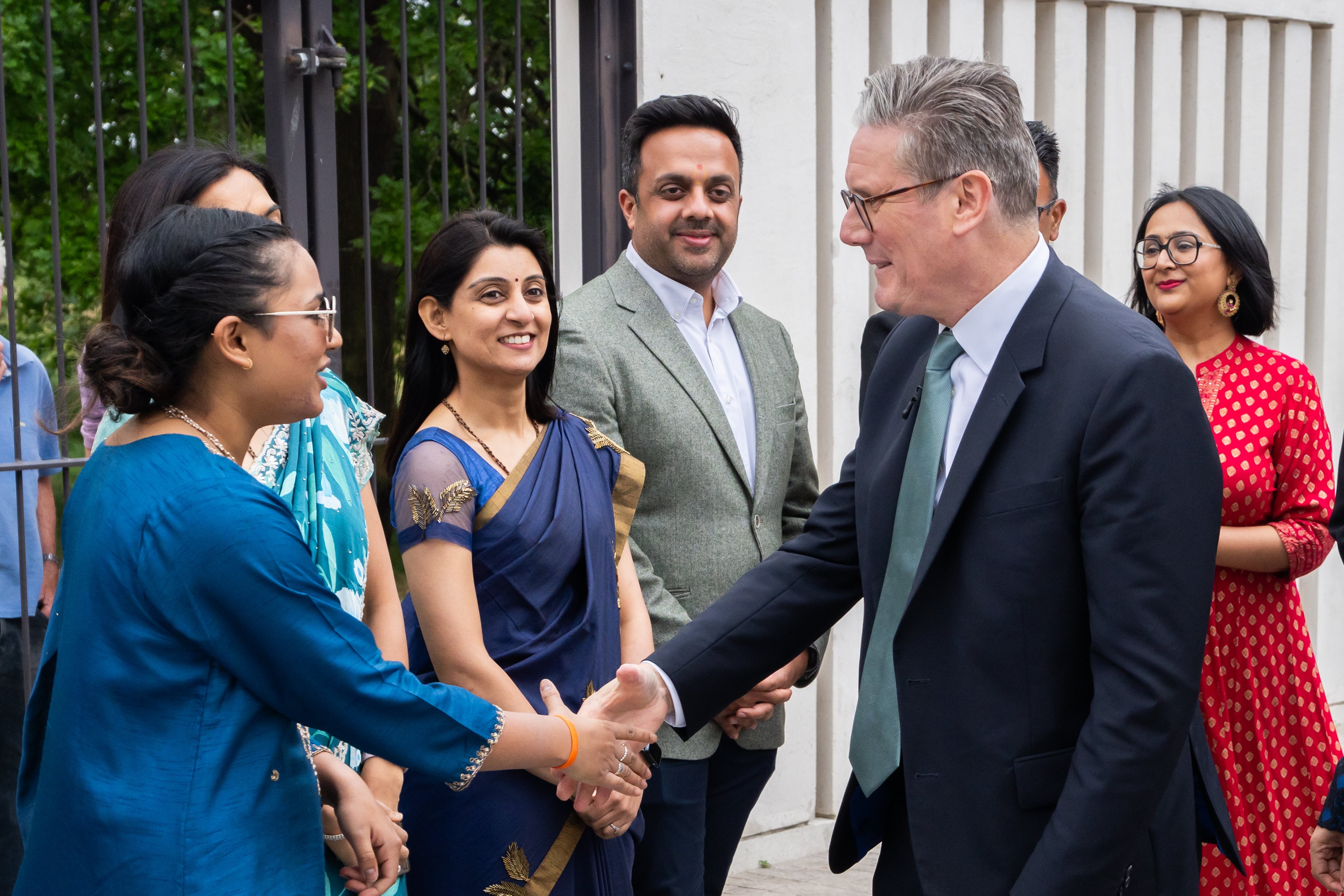
With 10 Downing Street getting a new resident, the impact to bilateral relations, particularly the long-awaited India-UK Free Trade Agreement, is expected to be minimal, albeit with some tweaks.
Newly elected Prime Minister, Keir Starmer, could weigh-in differently on issues like visa access for skilled professionals. But he would likely proceed with the FTA, as the Labour party could see that market access to India and tariff relief to exporters has significant advantages, according to trade experts.
To be sure, in its manifesto the Labour party had mentioned strengthening partnerships with allies and regional powers, including a strategic partnership with India on the FTA and deepening cooperation in areas like security, education, technology and climate change.
NDTV Profit had previously reported that irrespective of the electoral outcome, trade talks are expected to continue. Officials of the Ministry of Commerce had indicated that outstanding issues to seal the deal will be resolved once the general elections in the UK are over.
Ajay Srivastava, founder of Global Trade Research Initiative and former Indian Trade Service officer, anticipates that the agreement could be signed as early as October this year.
Negotiations between India and UK started in January 2022, with the 14th round still underway. There are 26 chapters in the agreement, which include chapters on goods, services, investments, and intellectual property rights.
"It (the newly formed government) will notice that the FTA with India offers a significant price advantage to UK exporters, potentially boosting their exports to India almost immediately. For the proof, it can look at the historical precedents, such as the steady improvement in ASEAN, Japanese, and South Korean exports to India following their respective FTAs with India," Srivastava said.
The UK is hoping to seek tariff reductions on items like whiskies and automobiles, which attract duties in the range of 100-150%, along with chocolates and dairy products. Britain is also looking to increase its services export footprint into Indian telecommunications, legal and financial services, including the banking and insurance sectors.
For India, apart from UK visas to Indian professionals who travel for short-term assignments, duty cuts could benefit textiles, apparel and footwear. India is also said to be seeking a mutual exemption on the social security contributions paid during short-term work visits.
Sticky Points
While Starmer's political views are different from former Labour party leader Jeremy Corbyn's, who in 2019 had called for international intervention in Kashmir, public perception that immigration should be curtailed can pose a challenge to India, which is seeking greater mobility for skilled workers for short-term assignments.
"Issues relating to that of immigration and environment have persisted even under the leadership of the Conservative Party," said Biswajit Dhar, professor at the Centre for Economic Studies and Planning, Jawaharlal Nehru University. However, the new government's mandate to revive the British economy would make market access to India a factor that would help the deal move forward, according to him.
Dhar also expects that discussions on environmental issues, particularly emissions-related and labour standards, could be topics that could be revisited.
The Labour Party is also expected to take a tougher stand on climate action than the Conservative Party, which may prove to be challenging for emerging economies like India, when it comes to implementation of the Carbon Border Adjustment Mechanism. This raises concern that non-traditional subjects and other trade barriers like environmental and sustainability standards could undermine the market access gained through tariff elimination.
India must seek clarity on how CBAM will impact its exports, as India's benefits from the trade deal could be negated from high carbon taxes, according to Srivastava.
The UK's proposed CBAM poses a significant concern for Indian exports. CBAM would result in the UK gradually imposing higher taxes on imports, based on their carbon footprint, potentially far exceeding its current average tariff rates of less than 2%, Srivastava said. "...while the FTA might reduce or eliminate tariffs, Indian exports could still face hefty carbon taxes, unlike UK exports to India."

-
Talking Points This Week: Tech Nerves, FII Buying, And A Faraway Banking Shock

The global markets are not shining this Diwali. The exception in the large markets is, India.
-
Midterm Rally Lasted A Day. The Hard Reality Of A Divided US May Last Two Years | Opinion
Between a contested AI boom, a debt ceiling that arrives in 2027 and a president with every incentive to act alone, the next two years may prove more volatile than the first day's rally suggests.
-
Blue Wave Will Derail the AI Trade but Won't Dismantle the AI Era | Unhedged Position
The Democrats' sweep of the US Congress will see politics collide with economic forces both over the long and short term.
-
It's Time To Take The GST Council's Bet On Trust Global
Payment records can prove India's services exports, and clear, proportionate rules can bring foreign digital sellers into the tax net.
-
Opinion | India at 38: From Innovation Overperformer to Innovation Powerhouse
India now has 453 VC-backed deep science startups, 18 of them late-stage, after 117 percent growth since 2020. Laurus Labs, at USD 9.3 billion, is the most valuable deep science company in any middle-income economy outside China.
-
Navigating Energy Crossroads: S Jaishankar's Call For Diversified Supply Chains At G20 Ministerial Meeting
As geopolitical fault lines continue to test maritime trade routes and commodity flows, Jaishankar's message remains pertinent: true economic resilience requires open markets, protected transit lines, and a genuine commitment to multilateral cooperation rather than coercion.
-
Indians Are Travelling, But Not Every Journey Is A Holiday | The Week In Whys
Pilgrims, patients and working women are the real travellers, and the system hasn't quite caught up with them.
-
Getting To Work Costs Women More | The Reason Why
It is not just about women paying more than men. It is about women paying much more in cities than in villages.
-
AI Bias In Investing Cannot Be Eliminated, But It Can Be Governed
Framing is a particularly important example as identical financial information presented in terms of gains rather than losses can lead an LLM to reach a different assessment.









