UCO Bank IMPS Glitch: Here's What To Do When Your Account Is Wrongly Credited
Out of nowhere, when one receives a message stating your bank account has been credited with a considerable amount of money, the first reaction could be that of joy.
Seeing that big balance may even tempt some into using it. But, maybe, temper that feeling a little.
Experts who spoke to NDTV Profit said the account holder must inform their bank branch immediately or knock on the doors of the cyber cell.
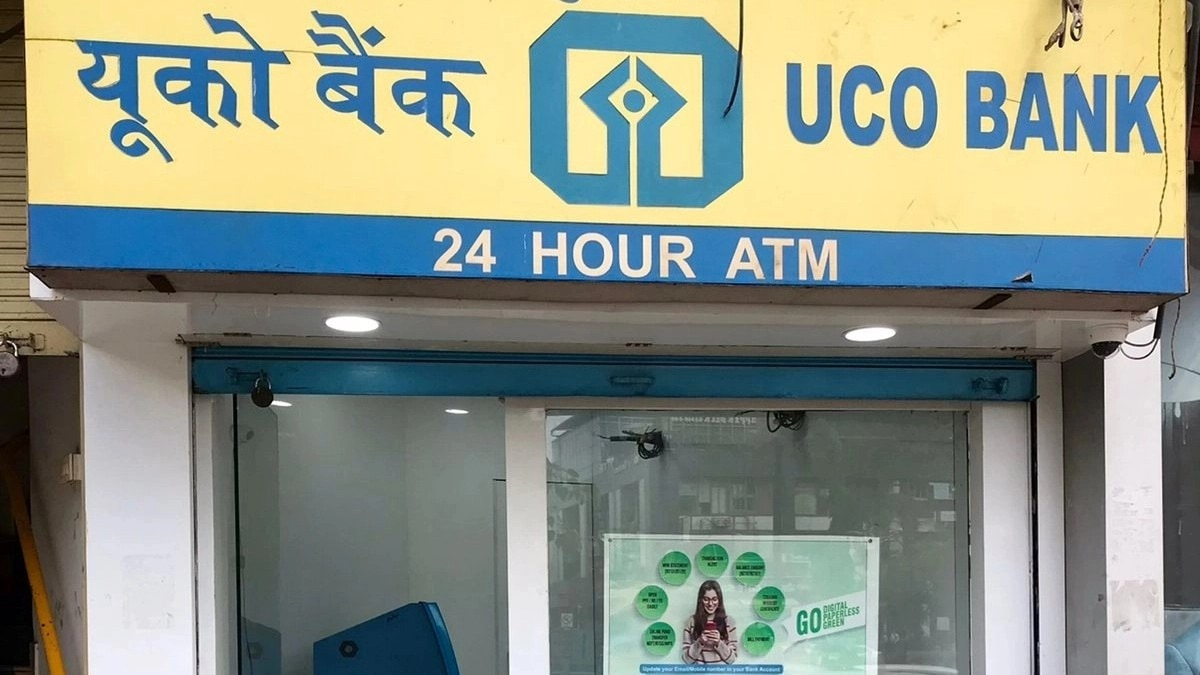
The surprise transfer of Rs 820 crore to UCO Bank's 41,000 accounts for three days from Nov. 10 is one such example. The credit in these bank accounts was apparently a result of a technical glitch, according to the bank.
"The transactions observed by bank were due to internal technical issue as a result of which certain account holders of our bank have received some erroneous credits via IMPS (immediate payment services)," UCO Bank said in a statement on Nov. 15. The bank clarified that there was no issue with the IMPS platform as such.
Since the IMPS is a digital payments channel, customers are advised to register a complaint with the cyber cell. In case the money credited has been transferred to another account or withdrawn, there is little a lender can do to recover the funds, according to experts.
Soon after the glitch was reported, UCO Bank said it recovered Rs 649 crore or 79% of the total amount erroneously credited to the account holders via IMPS.
The Central Bureau of Investigation has registered an FIR on Dec. 5 and began investigating the case, in which money landed in UCO Bank's accounts through 8.53 lakh IMPS transactions from 14,000 account holders of private banks in three days. Surprisingly, no corresponding amount was debited from the originating bank accounts. Several account holders also withdrew the funds credited into their accounts, the officials said.
This could brew trouble for such bank account holders.
The person who may have used those funds can get into trouble when the law enforcement agencies start investigating, according to Harshvardhan Roongta, a certified financial planner at Roongta Securities Pvt.
"The first and foremost thing that people must do is inform their bank about the random credit of money," Roongta said. "To prove one's own credibility as an honest customer, it is a must because this money could have come from fraudulent transactions."
This would help banks to do a thorough check on where the money has come from, he said.
Incidentally, the IMPS suffered an unscheduled outage for 20 minutes in November, which was the highest duration of downtime since June 2022, according to data available with the National Payments Corp.
RBI's Guidelines On Customer Service
The Interbank Mobile or the Immediate Payment System provides round-the-clock instant domestic-fund-transfer facility, accessible via internet banking, mobile banking apps, bank branches, ATMs and more.
With the ability to send or receive Rs 5 lakh per transfer through the IMPS, the payment cannot be stopped or cancelled, the NPCI explained.
In a circular in 2014, the Reserve Bank of India has listed down a few additional measures to ensure safety and security of customers' funds when making electronic payments. Following are the measures:
Additional authorisation may be insisted upon for customers looking to transfer money beyond a cap on the value.
A limit on the number of beneficiaries that may be added in a day per account can be considered.
A system of alert may be introduced when a beneficiary is added.
Banks may put in place mechanism for velocity check on the number of transactions effected per day, per beneficiary and any suspicious operations should be subjected to alert within the bank and to the customer.
Introduction of an additional factor of authentication for such payment transactions.
The banks may consider implementation of digital signature for large-value payments for all customers, to start with for the real-time-gross-settlement transactions.
Capturing of internet-protocol address as an additional validation check.
Transactions worth Rs 5.38 lakh crore were made using the IMPS facility in October compared with Rs 4.86 lakh crore at the beginning of 2023, according to the latest available data, A decade ago, transactions worth a mere Rs 552.8 crore were channeled through the IMPS system.
For disputed transactions, the NPCI directed beneficiary banks to follow their internal process for recovery of funds. On May 26, the payments regulatory body revised the turnaround time for banks to investigate and raise a dispute to 90 calendar days from the date of transaction instead of 60 calendar days earlier. The revision came into effect on June 1.
What Can One Do In Case Of Wrongful Payment?
In case of a wrongful transaction, customers can file a complaint directly to the branch manager through the bank's website. If the complaint is not satisfactorily resolved within seven days, it will be escalated to the respective zonal office and, subsequently, to the circle office and the head office.
All efforts will be made to resolve the complaint within 21 days of receipt, UCO Bank's customer grievance resolution policy states.
If no response is satisfactory, an aggrieved person may appeal to the RBI's banking ombudsman, under whose jurisdiction the branch operates, within 30 days of the filing of complaint.
While alerting the bank and registering a complaint of the wrongful credit is the only way for account holders, the banks need to strengthen their customer-awareness campaigns. They should check whether these campaigns are effective or not, according to Sumita Kale, chief executive officer of Indicus Foundation.
Usually, banks with prompt technological manpower and infrastructure confirm with the customer when a large transaction is involved, either through the Unified Payments Interface or credit cards.
However, a credit transaction in one's bank account is not confirmed because of the narrow bandwidth and privacy concerns.
"You don't want to incur the cost of checking credit transactions because there is no cost benefit for the bank," Vivek Iyer, partner-financial services advisory at Grant Thornton Bharat, said. Increasing the deposit pool through sustainable means makes more sense for the bank, Iyer said.
"Large credits happen for large accounts, which belong to corporate customers, and the benefits there outweigh the costs. But the same is not true for deposit-only customers," he said.
This also points out the need for an unerring early warning system at banks to alert any anomaly in transactions.
More mature banks have the early warning systems, a banking industry expert said. However, banks grappling with asset quality and capital adequacy troubles do not have enough room to invest in technology for safeguarding customers, he said.
The banks must furnish more details of a transaction in the message sent to account holders when a credit or debit transaction happens, according to Kale.

-
Navigating Energy Crossroads: S Jaishankar's Call For Diversified Supply Chains At G20 Ministerial Meeting

As geopolitical fault lines continue to test maritime trade routes and commodity flows, Jaishankar's message remains pertinent: true economic resilience requires open markets, protected transit lines, and a genuine commitment to multilateral cooperation rather than coercion.
-
Indians Are Travelling, But Not Every Journey Is A Holiday | The Week In Whys
Pilgrims, patients and working women are the real travellers, and the system hasn't quite caught up with them.
-
Getting To Work Costs Women More | The Reason Why
It is not just about women paying more than men. It is about women paying much more in cities than in villages.
-
AI Bias In Investing Cannot Be Eliminated, But It Can Be Governed
Framing is a particularly important example as identical financial information presented in terms of gains rather than losses can lead an LLM to reach a different assessment.
-
Joining The Dots | Dark Skies, Steady Diya: Why Hope Holds This Diwali
With war, a weak rupee and foreign outflows weighing on sentiment, policymakers at the NDTV World Summit and market veterans at NDTV Profit Ignite: Diwali Edition offered the same advice: stay invested and filter out the noise.
-
The Curious Case of Equitas Small Finance Bank And A CEO Who Quit For Stock
PN Vasudevan believes persistent investor concerns over a perceived conflict of interest had become a governance overhang on Equitas Small Finance Bank's stock, even as the lender improved profitability and asset quality.
-
Talking Points This Week: AI Cash Burn, A Tiger Comeback And An India That Still Finds Its Own Path
India is not immune to higher oil or tighter global liquidity, yet its earnings base is broader, its domestic policy levers are still available.
-
Foreign Investors Own Half Of HDFC Bank and ICICI Bank. An LTCG Cut Could Matter Most Here
Foreign portfolio investors have US$115 billion parked in HDFC Bank, ICICI Bank. If the government cuts long-term capital gains tax, Jefferies says returning foreign money could land here first.
-
'Never Seen This Level Of Negativity': Sandeep Tandon Says The Next Rally May Be Closer Than You Think
Veteran investor Sandeep Tandon says foreign selling is easing, large-caps are due a comeback and mid-caps are crowded, while he turns positive on gold, power and pharma this Diwali.
-
Indians Stay With Family, Not In Hotels | The Reason Why
India still lacks enough clean, reliable and affordable hotels for budget-conscious travellers.










