Tobacco Products May Face Additional Levy As Government Weighs Post-Cess Tax Options | Profit Exclusive
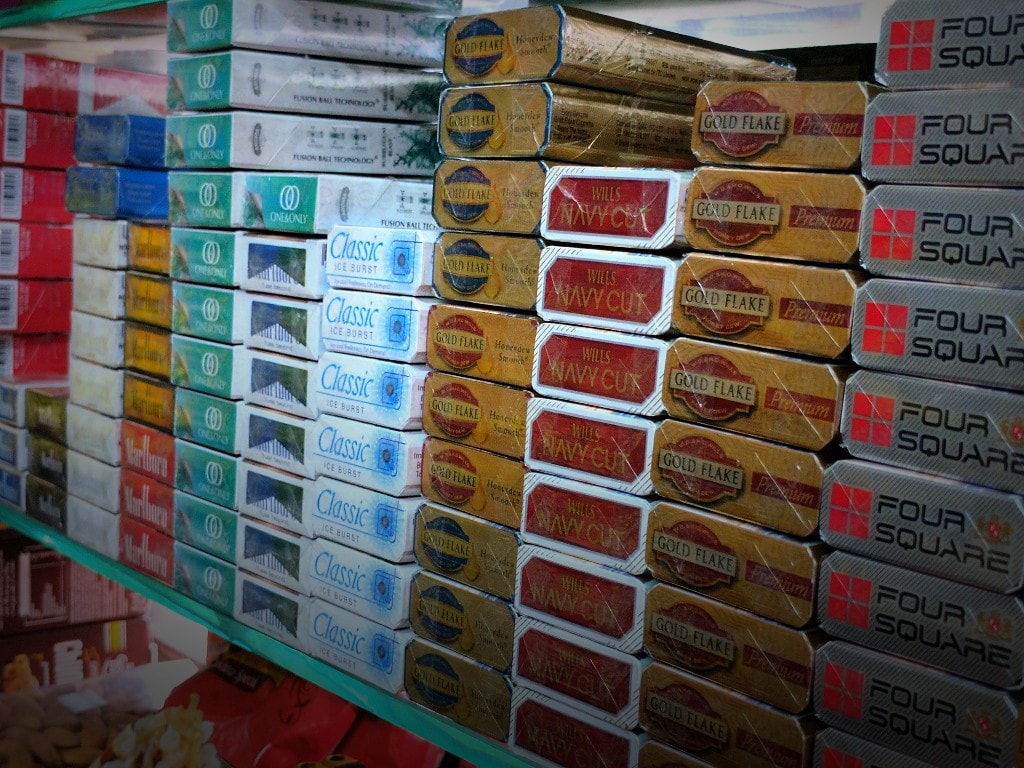
The government is actively considering the imposition of an additional levy on tobacco and related products, including cigarettes, cigars, chewing tobacco and gutka. The move comes as part of ongoing deliberations to fine-tune taxation mechanisms on sin goods while keeping the overall tax incidence unchanged.
According to official sources, two options are being examined. The first involves tweaking the central excise duty, a structure similar to that used in the pre-GST era for different forms of tobacco consumption. The second option is the introduction of a new health levy, which would require an amendment to the GST Act through parliamentary approval.
At present, the combined tax incidence, including GST and compensation cess on sin goods like tobacco, varies widely, ranging from 60–80% for some products to 160–200% for items like gutkha. Additionally, under the Central Excise laws, excise duty and the National Calamity Contingent Duty (NCCD) are also levied on these goods.
The proposed additional levy is expected to be rolled out in the fourth quarter (Q4) of the current fiscal, sources indicated. The government has maintained that the total tax incidence on tobacco items will remain unchanged, suggesting a restructuring of how the tax is collected rather than an increase in burden.
Importantly, the additional levy will apply only to tobacco products. Other goods falling under the new special 40% GST rate, such as luxury cars, high-end motorcycles, and carbonated beverages, will be excluded from any additional levy at this time.
While the new GST rates are set to take effect on Sept. 22, tobacco-related changes will be deferred until the conclusion of the compensation cess regime, which is expected to end by December 2025.
Finance Minister Nirmala Sitharaman stated last Wednesday that tobacco products and related items will continue to attract the current GST rate along with the compensation cess until the central government repays the loans it took during the pandemic to offset state revenue losses.
She clarified that items such as pan masala, cigarettes, gutkha, zarda, unmanufactured tobacco, and beedis will remain under the existing tax and cess structure until all associated loan and interest obligations are cleared. After repayment, the cess will be removed, and these products will instead be taxed at a uniform 40% GST rate.
While Sitharaman did not specify a precise timeline for the loan repayment, she mentioned it would be completed “well within this calendar year.” The GST Council has authorised her to immediately end cess collections once the loans are fully repaid.
To compensate for the shortfall in cess collections during the pandemic, the Centre had borrowed Rs 1.1 lakh crore in 2020–21 and Rs 1.59 lakh crore in 2021–22. As per the 2025–26 Union Budget, the government aims to collect Rs 1.67 lakh crore through compensation cess this fiscal, with Rs 67,500 crore allocated for loan repayments. In previous years, repayments included Rs 78,104 crore in 2023–24 and Rs 1.24 lakh crore in 2024–25.

-
High US Salaries, No Green Card Certainty: The Financial Calculation Facing Indian H-1B Families

The suspension of PERM processing at eight technology employers does not cancel existing H-1B visas. What it does is force a question many Indian families have been avoiding: is the US salary worth tying your career and family plans to one employer?
-
Unhedged Position: Can India See An Indonesia-Style Time Correction?
The Nifty is trading below levels it first clocked in 2024. Is there, then, as I have suggested in the headline, potential that the current time correction drags on painfully for the next three-five, even ten years?
-
Navigating Friction And Energy Realities: An Analysis Of Marco Rubio's October Visit To India
Occurring at a critical juncture marked by stalled trade negotiations and escalating geopolitical pressures over global energy supplies, the visit offers a profound window into modern US-India relations.
-
India Exports Capital. Why Not Export Trusteeship?
The big question, then, is whether India can build an institution that global borrowers, investors, banks, and lawyers can trust, even without an Indian connection.
-
France's Economy & Politics Are In Crisis | The Reason Why
Let's look at how the French economy and politics evolved under Nicolas Sarkozy, Franois Hollande and Emmanuel Macron.
-
You May Inherit The Business. You Must Earn Its Credibility.
Succession tests the founder's ability to share authority as much as it tests the next generation's readiness to assume it.
-
Signing Deals Is One Thing; Making Them Work Is Another | The Week In Whys
Sometimes, things don't turn out as planned. Indian companies have lost some bids to rivals, some projects won't produce until 2030.
-
FOMC Wall, PERM Suspension, Hospital Stocks | Talking Points This Week
A PERM suspension would directly affect green-card sponsorship rather than H-1B visas, so the near-term earnings impact could remain relatively limited. The key question is whether this marks a new phase in US scrutiny of Indian IT.
-
Everything, Everywhere, All At Once: Dalal Street's Week To Forget | Joining The Dots
Visa curbs, a Starlink spat and cancer drug caps: what connects this week's shocks for Indian markets
-
India Is Going Abroad For Critical Minerals. But It May Take Years To Pay Off | The Reason Why
Although India's steps are in the right direction, they remain modest compared with India's growing dependence.









