‘These Are Extraordinary Times’: Nirmala Sitharaman On Petroleum Export Duty Hike
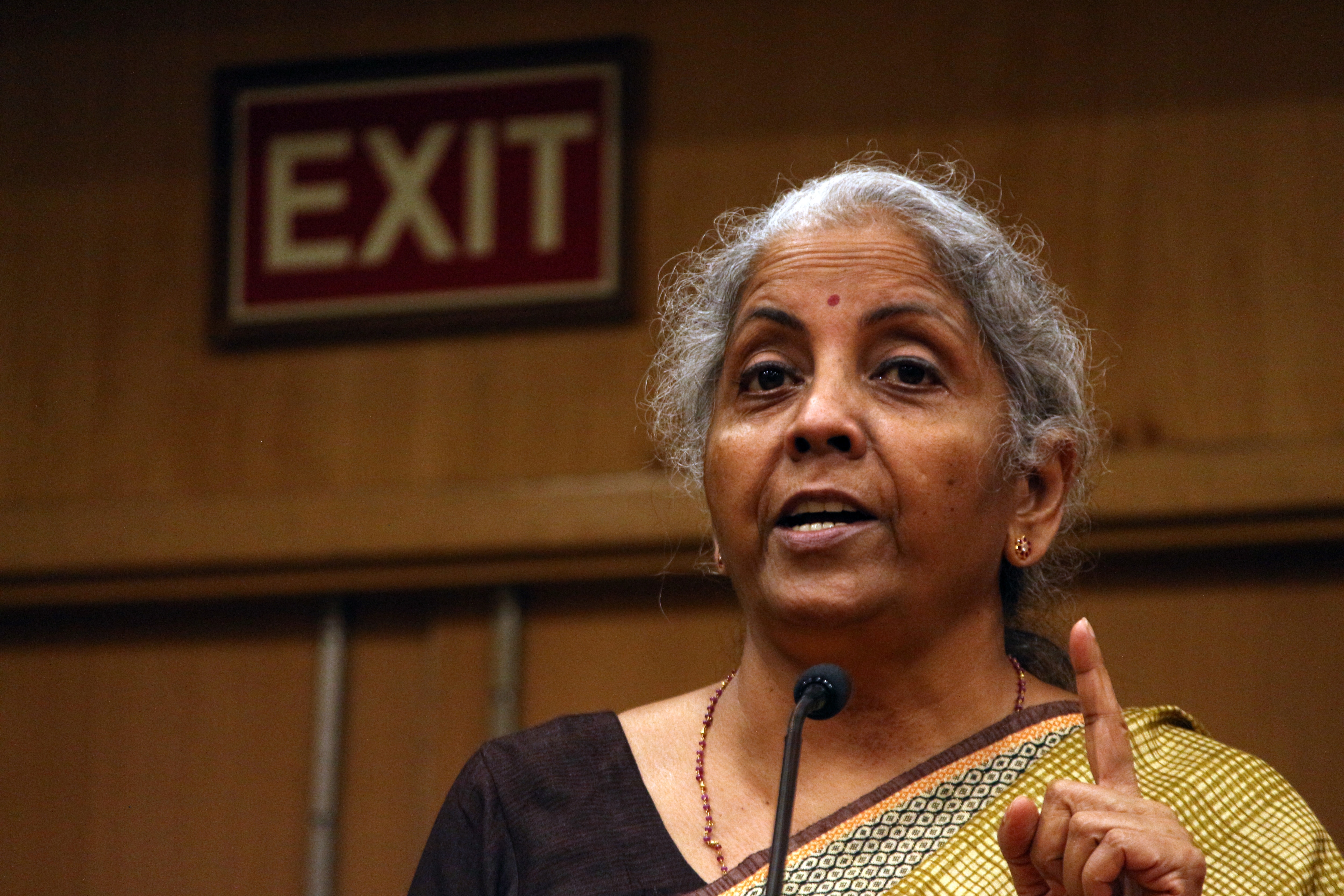
Finance Minister Nirmala Sitharaman said India will assess the impact of additional export duty on petroleum products every 15 days to see how the situation develops.
“These are extraordinary times. These are times when oil prices internationally are unbridled. For any country like India, which depends largely on imports, we also need to pay that kind of money to get imports,” she said on the sidelines of the fifth GST Day, marking five years of the tax rollout. “At a time, we don't have enough supplies within India, for exploration and refining that's happening in India. We want that kind of activity to be invested in.”
“It's not to discourage exports, not to discourage India as a refining hub,” she said. Supplies, she said, need to be made available to cater to the domestic market.
The government has imposed special additional duties on export of petrol and diesel effective July 1, according to a notification. A special additional excise duty of Rs 6 a litre has been imposed on export of petrol, and Rs 13 a litre on diesel.
RBI Watchful Of Rupee
With the exchange rate reaching new highs, the finance minister said the Reserve Bank of India and the ministry were seized of the matter with periodic updates being given by the central bank governor.
“I am confident on the rupee. The RBI is very keenly watching the exchange rate. We are equally aware that out of rupee vs dollar and other currencies vs the dollar, the rupee has performed relatively better,” Sitharaman said. “Yes, it would have an impact immediately is that imports will become expensive and that is one thing am very watchful and mindful about.”
GST Collection
Sitharaman said the GST collections for May, collected in June, have touched Rs 1,44,616 crore. That's 56% higher than the corresponding period a year ago.
The finance minister urged the Central Board of Excise and Customs to continue to effect complete transparency in its process and remove any discretion in the system.

-
A New Samvat Wishlist: Inclusive Prosperity And Human Development

India has strengthened its economic foundations through infrastructure, digital access and enterprise. Its next growth chapter must deepen productivity, create better livelihoods and widen participation in prosperity.
-
Love, Sex Aur Dhokha: The Audacious Plot To Spy On Jensen Huang
A Taipei dinner, a Singapore chip buyer and a suspected Chinese asset: inside the alleged spy operation that got close to NVIDIA's Jensen Huang.
-
Ten Things I Learnt This Samvat
Patience can be a trap. Cheap stocks can stay cheap. Leverage can wipe you out. What did Samvat 2082 teach us? Niraj Shah writes on 10 lessons from the year gone by.
-
Talking Points This Week: Tech Nerves, FII Buying, And A Faraway Banking Shock
The global markets are not shining this Diwali. The exception in the large markets is, India.
-
Midterm Rally Lasted A Day. The Hard Reality Of A Divided US May Last Two Years | Opinion
Between a contested AI boom, a debt ceiling that arrives in 2027 and a president with every incentive to act alone, the next two years may prove more volatile than the first day's rally suggests.
-
Blue Wave Will Derail the AI Trade but Won't Dismantle the AI Era | Unhedged Position
The Democrats' sweep of the US Congress will see politics collide with economic forces both over the long and short term.
-
It's Time To Take The GST Council's Bet On Trust Global
Payment records can prove India's services exports, and clear, proportionate rules can bring foreign digital sellers into the tax net.
-
Opinion | India at 38: From Innovation Overperformer to Innovation Powerhouse
India now has 453 VC-backed deep science startups, 18 of them late-stage, after 117 percent growth since 2020. Laurus Labs, at USD 9.3 billion, is the most valuable deep science company in any middle-income economy outside China.
-
Navigating Energy Crossroads: S Jaishankar's Call For Diversified Supply Chains At G20 Ministerial Meeting
As geopolitical fault lines continue to test maritime trade routes and commodity flows, Jaishankar's message remains pertinent: true economic resilience requires open markets, protected transit lines, and a genuine commitment to multilateral cooperation rather than coercion.









