The Tax Changes In Budget 2017 Are An Open Secret

Is Finance Minister Arun Jaitley a man of his word? Because if he is then it's already clear what he will do with taxes, indirect and direct, in Budget 2017. Well, mostly.
The GST Factor
With the imminent arrival of GST, any changes in indirect taxes that are not in keeping with the four rates approved by the GST Council, will be short term and counterproductive.
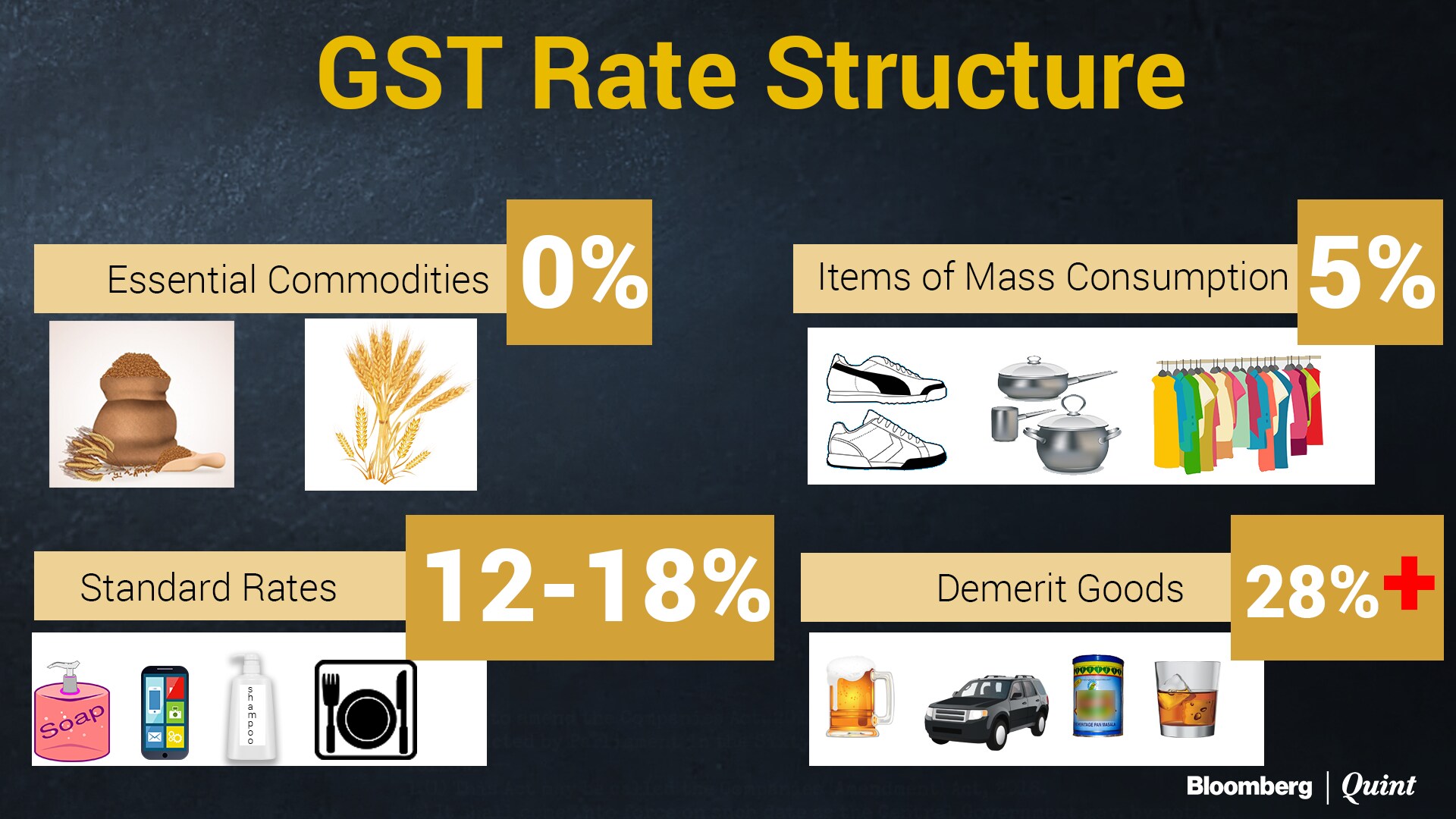
While the broad GST rate structure is known, the GST Council has not yet finalised which rates will apply to various goods and services, though it is widely expected that services will be taxed at 12 and 18 percent versus the current applicable rate of 15 percent.
BMR Advisors' Rajeev Dimri leads the indirect tax practice and says many changes in taxation of services and widening of input credit side could begin right away.
There is a case to align the tax on services to the GST structure. Some services will fall in 18 percent while some will need to be dropped to 12 percent as per the overall policy.Rajeev Dimri, Partner, BMR Advisors
Direct Tax Roadmap Ready
Jaitley has left himself little room to maneuver in the direct tax space as well, having laid down a roadmap in 2015 and re-affirmed it in 2016.
Budget 2015
“The basic rate of Corporate Tax in India at 30 percent is higher than the rates prevalent in the other major Asian economies, making our domestic industry uncompetitive. Moreover, the effective collection of Corporate Tax is about 23 percent. We lose out on both counts, i.e. we are considered as having a high Corporate Tax regime but we do not get that tax due to excessive exemptions. A regime of exemptions has led to pressure groups, litigation and loss of revenue. It also gives room for avoidable discretion. I, therefore, propose to reduce the rate of Corporate Tax from 30 percent to 25 percent over the next 4 years.”
In that same speech, Jaitley said he wanted to start the phased reduction of corporate tax rate and phased elimination of exemptions right away, but thought it appropriate to give advance notice that these changes will start from the next financial year.
In Budget 2016 he fulfilled just one part of that promise, by setting out kill dates for certain exemptions.
- Accelerated depreciation will be limited to maximum 40 percent starting April 1, 2017.
- The benefit of deductions for ‘research' will be limited to 150 percent staring April 1, 2017 and 100 percent starting April 1, 2020.
- Tax incentives for new SEZ units will be available to those units which commence activity before March 31, 2020.
- Tax incentives for skill development will continue up to April 1, 2020.
The finance minister also offered some relief to new manufacturers and small companies...
- 25 percent corporate tax rate for new manufacturing companies as long as they don't claim any tax incentive.
- Lower tax rate of 29 percent for enterprises with a turnover not exceeding Rs 5 crore per year.
But there was no reduction in the headline corporate tax rate of 30 percent nor did Jaitley provide a roadmap for bringing it down to 25 percent.
The reduction in corporate tax rate has to be calibrated with additional revenue expected from the incentives being phased out. The benefits from phasing out of exemptions are available to the government only gradually.Arun Jaitley, Finance Minister (Budget 2016)
And despite his Budget 2015 promise to do away with exemptions and deductions, in Budget 2016 he also announced new incentives for startups and innovation.
Startups
100 percent profit deduction for three of five years.
Minimum alternate tax to apply.
No tax on capital gains is invested in notified Fund of Funds/startups
Patent Box
10 percent rate of tax on income from worldwide exploitation of patents developed and registered in India.
While that was a departure from the broad theme of eliminating deductions and exemptions, even critics will admit that a government ought to have latitude to use tax policy to promote specific economic ideals.
What Will He Do In 2017?
1. Cut The Corporate Tax Rate?
Will Budget 2017 live up to the promise Jaitley made two years ago – of lower rates and the elimination of exemptions?
“Absolutely,” says Punit Shah, partner at Dhruva Advisors.
The phased reduction in corporate tax rates is certainly on the cards. I don't think it will be upfront. The tax rate may be reduced by one to one and a half percentage point in this budget. The sunset provisions for exemptions/incentives were already indicated in the roadmap....so, I expect the same to be operationalised accordingly.Punit Shah, Partner, Dhruva Advisors
Ameet Patel, partner at Manohar Chowdhry & Associates says he expects a bigger cut in the corporate tax rate, to 27.5 percent.
Shah adds that the one thing to watch out for is whether Minimum Alternate Tax would also be reduced or eliminated, once exemptions and incentives are abolished. He says this is a logical corollary to the elimination of exemptions, pointing out that there was no mention regarding this in the roadmap and that clarity would be welcome.
2. Usher In GAAR?
Last year Jaitley had reiterated his commitment to usher in GAAR (General Anti Avoidance Rules) in 2017 and had deferred POEM (Place of Effective Management) by a year, to 2017. So expect both those to apply starting April 1, 2017, even though some experts are hopeful GAAR will be deferred by a year.
3. Boost ‘Make In India'?
Besides these promised changes tax experts expect a few more, mostly to boost the government's pet projects such as Make In India. Especially as customs duty falls outside the purview of GST.
Some sectors do require possible reduction in duties. However to encourage the Make in India program, there is also a case to increase duties on few finished products. Today, some industry segments argue that there is no economic benefit in manufacturing in India.Rajeev Dimri, Partner, BMR Advisors
4. Capital Gains Tax Changes?
Recent comments by the prime minister on “low or zero tax rate” for certain types of financial income sparked fears of a change in the long-term capital gains tax exemption, despite the finance minister's assurance that there will be none.
The capital gains tax regime may change a bit, in line with what the prime minister mentioned. Either imposition of nominal long-term capital gains tax of say 5 percent on listed shares or an increase in the holding period to two years, from the existing one year, may be a possibility.Punit Shah, Partner, Dhruva Advisors
5. The Rest...
Like every year, this year too tax experts are expecting a change in dividend distribution tax such that the burden of payment shifts from the company to the recipient, but there's no indication the minister's list includes that.
Patel says he expects ICDS, the tax accounting standards applicable starting accounting year 2017-18, to be scrapped, and he also believes Budget 2017 will announce a change in the financial year, from April - March to January - December.
On February 1
If Jaitley is a man of his word then the tax portion of the Budget 2017 speech is already scripted. Most of it.
The only factor that may prompt the minister to change his mind is the demonetisation factor. If he expects a longer than ‘a-couple-of-quarters' impact on economic growth and hence lower tax buoyancy, then this ambitious and progressive plan to cut tax rates and eliminate exemptions may be pushed further down the road. Or replaced by other fiscal stimulus.
Leaving the government only two years to deliver on the 2015 promise. Or not.

-
High US Salaries, No Green Card Certainty: The Financial Calculation Facing Indian H-1B Families

The suspension of PERM processing at eight technology employers does not cancel existing H-1B visas. What it does is force a question many Indian families have been avoiding: is the US salary worth tying your career and family plans to one employer?
-
Unhedged Position: Can India See An Indonesia-Style Time Correction?
The Nifty is trading below levels it first clocked in 2024. Is there, then, as I have suggested in the headline, potential that the current time correction drags on painfully for the next three-five, even ten years?
-
Navigating Friction And Energy Realities: An Analysis Of Marco Rubio's October Visit To India
Occurring at a critical juncture marked by stalled trade negotiations and escalating geopolitical pressures over global energy supplies, the visit offers a profound window into modern US-India relations.
-
India Exports Capital. Why Not Export Trusteeship?
The big question, then, is whether India can build an institution that global borrowers, investors, banks, and lawyers can trust, even without an Indian connection.
-
France's Economy & Politics Are In Crisis | The Reason Why
Let's look at how the French economy and politics evolved under Nicolas Sarkozy, Franois Hollande and Emmanuel Macron.
-
You May Inherit The Business. You Must Earn Its Credibility.
Succession tests the founder's ability to share authority as much as it tests the next generation's readiness to assume it.
-
Signing Deals Is One Thing; Making Them Work Is Another | The Week In Whys
Sometimes, things don't turn out as planned. Indian companies have lost some bids to rivals, some projects won't produce until 2030.
-
FOMC Wall, PERM Suspension, Hospital Stocks | Talking Points This Week
A PERM suspension would directly affect green-card sponsorship rather than H-1B visas, so the near-term earnings impact could remain relatively limited. The key question is whether this marks a new phase in US scrutiny of Indian IT.
-
Everything, Everywhere, All At Once: Dalal Street's Week To Forget | Joining The Dots
Visa curbs, a Starlink spat and cancer drug caps: what connects this week's shocks for Indian markets
-
India Is Going Abroad For Critical Minerals. But It May Take Years To Pay Off | The Reason Why
Although India's steps are in the right direction, they remain modest compared with India's growing dependence.









