Strong Case To Bring Real Estate Under GST, Says Arun Jaitley
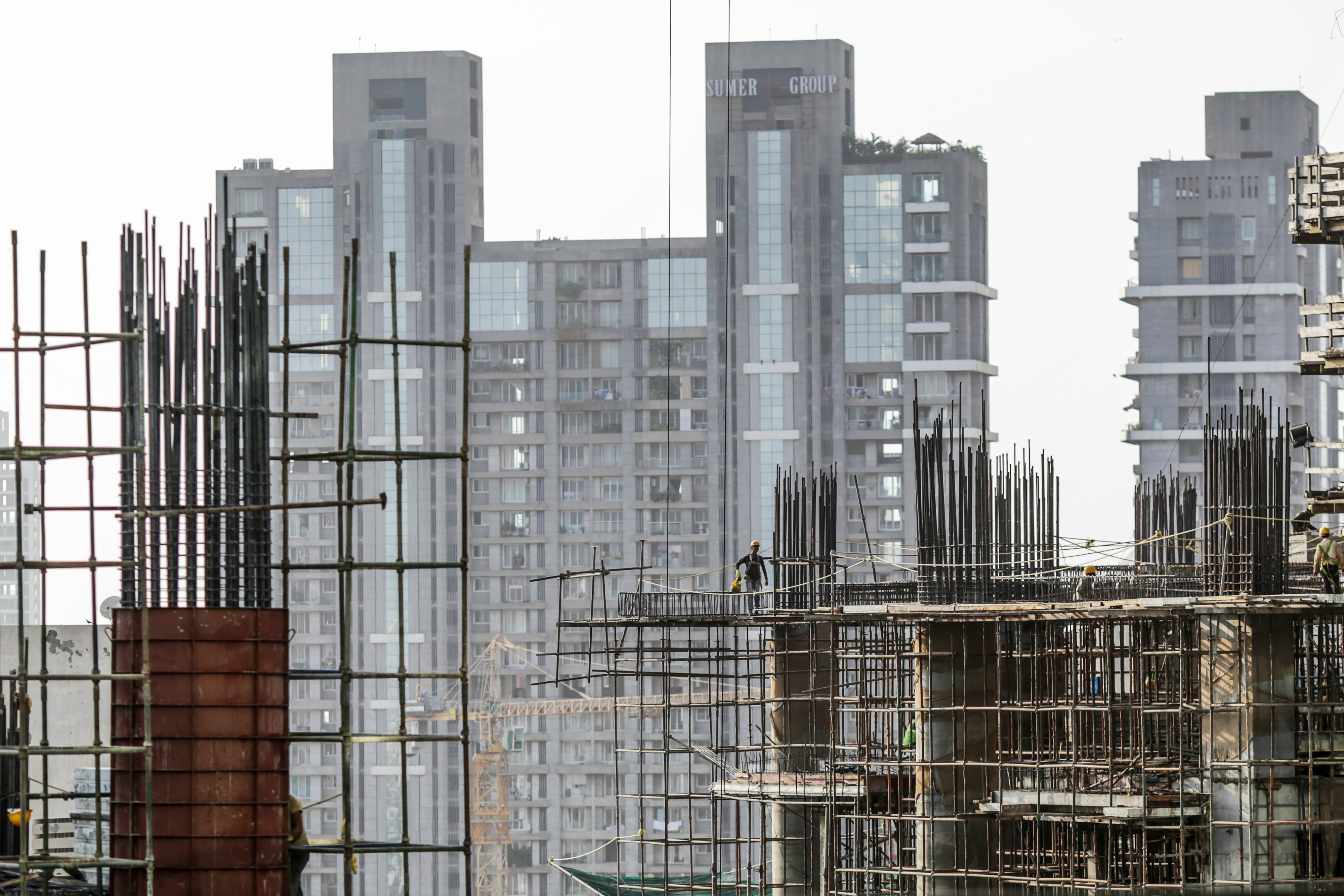
Finance Minister Arun Jaitley said there is "strong case" to bring the real estate sector under the ambit of the Goods and Services Tax.
The one sector in India where maximum amount of tax evasion and cash generation takes place and which is still outside the GST is real estate.Arun Jaitley, Finance Minister
The matter will be discussed at the next meeting of the GST Council, which will be held on November 9, in Guwahati, Jaitley said, while delivering a lecture at Harvard University.
“In the next meeting itself, we are addressing one of the problem areas or at least (having) discussion (on) it. Some states want, some do not. There are two views. Therefore, by discussion, we would try to reach one view,” Jaitley said, while delivering the ‘Annual Mahindra Lecture' on India's tax reforms.
The finance minister said the move would benefit the consumers who will only have to pay one ‘final tax' on the whole product. “As a result, the final tax paid on the whole product under GST would almost be negligible,” he said.
Jaitley said the reduction in eventual expenditure coupled with incentivising people to enter the tax net may also help reduce the size of ‘shadow economy.'
A 12 percent GST is levied on construction of a complex, building, civil structure or intended for sale to a buyer, wholly or partly. However, land and other immovable property have been exempted from GST.
‘Demonetisation Was Necessary'
On demonetisation, Jaitley said it was a ‘fundamental reform' which was necessary to transform India into a more tax-compliant society.
“If you see the long-term impact of it, demonetisation brought in more digitised transactions; it brought the issue to the centerstage. It expanded the individual tax base. It compressed the cash currency by three per cent which was operating in the market,” Jaitley said.
“Those objectives are for the long-term. No doubt there are short-term challenges, but (necessary) for transforming India from a non-compliant to a more compliant society,” he added.
The finance minister said India had historically been one of the least efficient tax system in the world with an extremely small tax base.
“Frankly, over the last several decades, serious efforts, real efforts to expand this base had not been made. You had marginal efforts,” he said, adding that systematic efforts to challenge the ‘shadow economy' were made only recently.
“In the last few years, the bulk of the increase in tax payers has not been in terms of number of companies but individuals who are coming into the tax net,” he said.
Jaitley said some people had ‘misunderstood' the objective of demonetisation ‘which wasn't to confiscate somebody's currency.'
“Obviously if somebody has currency and deposits in the bank, it does not become lawful holding. They still have to account for it. Therefore, the anonymity which was attached to a cash currency came to an end and that holding got identified,” he said.
“The government was able to trace out about 1.8 million people whose deposits are disproportionate to their normal incomes. And they are all to answerable to the law and pay their taxes,” he added.
Jaitley is on a week-long stay in the U.S., during which he will participate in annual meetings of the International Monetary Fund and the World Bank.

-
Where You Live Shapes How You Get To Work | The Reason Why

Two-wheelers are the most popular way to get to work in India, accounting for nearly 43% of workplace commutes.
-
High US Salaries, No Green Card Certainty: The Financial Calculation Facing Indian H-1B Families
The suspension of PERM processing at eight technology employers does not cancel existing H-1B visas. What it does is force a question many Indian families have been avoiding: is the US salary worth tying your career and family plans to one employer?
-
Unhedged Position: Can India See An Indonesia-Style Time Correction?
The Nifty is trading below levels it first clocked in 2024. Is there, then, as I have suggested in the headline, potential that the current time correction drags on painfully for the next three-five, even ten years?
-
Navigating Friction And Energy Realities: An Analysis Of Marco Rubio's October Visit To India
Occurring at a critical juncture marked by stalled trade negotiations and escalating geopolitical pressures over global energy supplies, the visit offers a profound window into modern US-India relations.
-
India Exports Capital. Why Not Export Trusteeship?
The big question, then, is whether India can build an institution that global borrowers, investors, banks, and lawyers can trust, even without an Indian connection.
-
France's Economy & Politics Are In Crisis | The Reason Why
Let's look at how the French economy and politics evolved under Nicolas Sarkozy, Franois Hollande and Emmanuel Macron.
-
You May Inherit The Business. You Must Earn Its Credibility.
Succession tests the founder's ability to share authority as much as it tests the next generation's readiness to assume it.
-
Signing Deals Is One Thing; Making Them Work Is Another | The Week In Whys
Sometimes, things don't turn out as planned. Indian companies have lost some bids to rivals, some projects won't produce until 2030.
-
FOMC Wall, PERM Suspension, Hospital Stocks | Talking Points This Week
A PERM suspension would directly affect green-card sponsorship rather than H-1B visas, so the near-term earnings impact could remain relatively limited. The key question is whether this marks a new phase in US scrutiny of Indian IT.
-
Everything, Everywhere, All At Once: Dalal Street's Week To Forget | Joining The Dots
Visa curbs, a Starlink spat and cancer drug caps: what connects this week's shocks for Indian markets









