RBI's Digital Lending Guidelines Could Slow Down India's Fintech Express
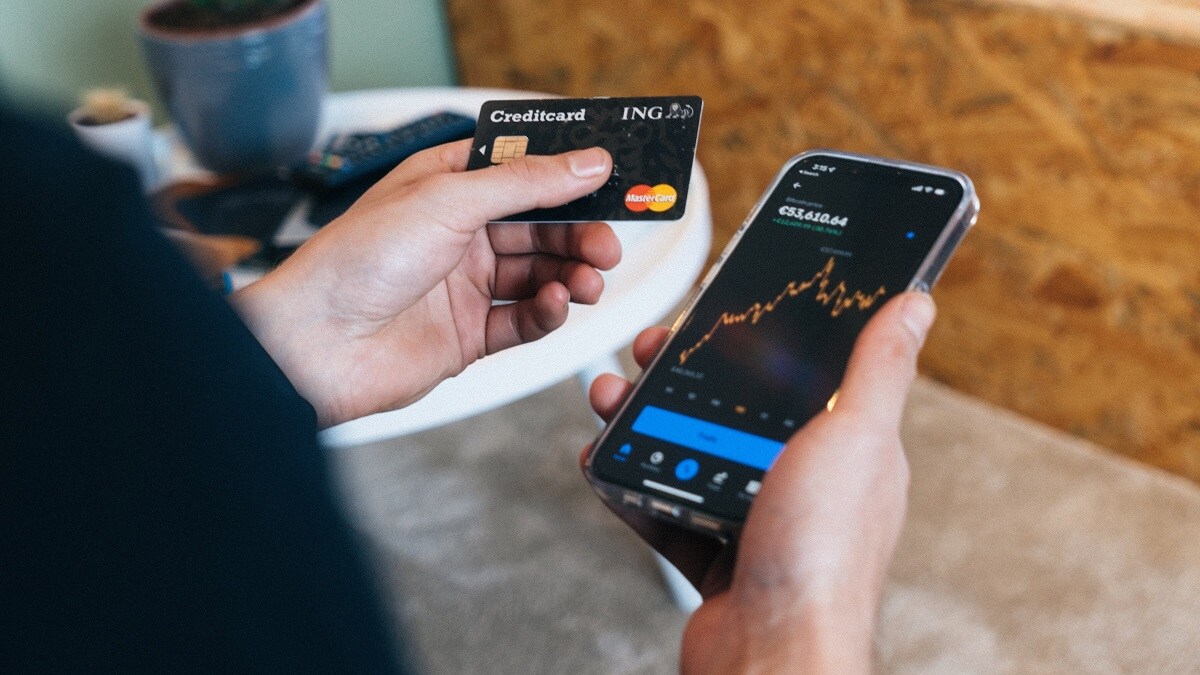
The Reserve Bank of India's latest guidelines on digital lending may result in fintech firms having to rethink their business models.
Most fintech entrepreneurs, who spoke with BQ Prime, believe that the guidelines are not as disruptive as feared earlier, though they do bring in a higher level of compliance for companies and ensure that lending can only be directed through regulated entities.
"We see these guidelines as extremely positive measures for customers and thereby, fintech companies who follow industry-best practices," said Lizzie Chapman, chief executive officer and co-founder of ZestMoney, one of the largest BNPL lenders in India. "Specific to digital lending, we also believe the guidelines make it abundantly clear that India will not be a market where regulatory loopholes can be exploited to build businesses."
The guidelines are from a list of recommendations by a working group under the banking regulator. While the RBI has accepted some of the recommendations, it has left some for further consideration and others for discussion with the government.
Overall, analysts said that the RBI guidelines are unclear on certain key issues, which will need to be clarified in the near future.
"Proposals under the new guidelines appear to be less taxing for the digital lending space vs the draft guidelines, while they miss clarity on a few other important aspects, including FLDG, predatory pricing/capping of borrowers, and separate licence for digital lenders," Emkay Global said in its note on Thursday.
According to companies and industry watchers, norms which will likely impact companies include:
The flow of funds between lender and borrower.
Deferred payment products
First loss default guarantee loans
Moreover, the norms will also increase the compliance cost for fintechs, analysts said.
According to the CEO of a fintech firm, changes such as issuing a key fact statement, changing data collection methods, and rapid reporting to credit bureaus could all increase the operational expenditure for fintech firms.
"The key interpretation in our view is that the burden of compliance increases and many fintechs, which were growing aggressively without proper discipline, will see slower growth in the medium term as they try adhering to the new rules of RBI," analysts at Macquarie said in a report on Thursday.
Flow Of Funds
The RBI's latest norms require that any loan disbursal must happen directly from the lender's account to the borrower's account. The funds will not be routed through lending service providers or any other third-party service provider.
This, according to experts, will result in a rethink on fintech business models, which depended on multiple lender arrangements and used pool accounts to hold the loan funds, before disbursing the money to borrowers.
"There is a cost in terms of the borrower experience and it will meaningfully impact the operational complexity of these models," Shivashish Chatterjee, co-founder and joint managing director, DMI Finance Pvt., said in a LinkedIn post.
Fintech firms, which were earning a float on these firms, will also be impacted, a senior fintech consultant said, speaking on condition of anonymity.
The guidelines on flow of funds could also lead to practical issues for fintechs. For example, currently, a buy-now-pay-later lender sends money to a merchant's account, rather than a borrower's bank account. Similarly, auto lenders pay the dealership rather than the buyer of a car, the consultant quoted above said.
The RBI does make exemptions for specific situations, such as co-lending arrangements and "disbursals where loans are mandated for specified end-use". Whether these exemptions will allow checkout financing and auto loans will be known only when the detailed guidelines are released.
Deferred Payment Products
BNPL lenders could also face higher scrutiny because the new norms require them to report every payment as a loan to the credit bureaus.
This could be a speed bump for fast-growing BNPL lenders who have positioned their products as deferred payments rather than as loans, the fintech CEO quoted above said. Once the customer is clear that a loan is being extended to them, the usage of BNPL could be impacted, he said.
The requirement for upfront disclosures on annual percentage rate could also be disruptive for some BNPL players, since they do not clarify the effective rate charged to the customers, when they are borrowing money. Presently, the customer believes that these funds are at zero cost, which is not the case if a payment is missed, the CEO quoted above said.
"Overall, the recommendations identified for implementation is good news for serious and credible fintech companies who believe in scale against a backdrop of high levels of consumer protection," Chapman of ZestMoney said, in her statement.
If merchant payments through checkout financing are not included as exemptions in the flow of funds rule, BNPL financiers will end up becoming just the face for established institutional lenders, reducing the need for such firms, another fintech founder said, also speaking on the condition of anonymity.
The FLDG Question
Fintechs were worried that the RBI would outright ban the use of a first loss default guarantee structure for them. However, the regulator has not decided clearly on this issue yet.
The working group, in its recommendations in November 2021, had said that to prevent loan origination by unregulated entities, regulated enitities should not be allowed to extend any arrangement involving a synthetic structure, such as the FLDG to such entities. The RBI on Thursday said that the rule is still under consideration right now.
Synthetic securities are a structure where credit risk of an underlying pool of exposures is transferred, fully or partly, through the use of credit derivatives or credit guarantees, which hedge the credit risk of the portfolio which remains on the balance sheet of the lender. An FLDG loan is a synthetic securitisation product, as fintechs guarantee 100% of the loan given out by a traditional lender.
Till a decision on this is made, the regulator has said that all FLDG arrangements will need to follow the rules set under its master direction on securitisation of assets. These norms specify that banks and other regulated lenders cannot enter into synthetic securities.
"This will have significant implications for many existing partnerships. Going forward, it appears that only LSPs that have an NBFC within their group structure will likely be able to continue to rely on the FLDG lending model," said Shilpa Mankar Ahluwalia, partner and head–fintech, Shardul Amarchand and Mangaldas.
If the detailed guidelines also state that regulated entities cannot enter into synthetic securitisation with fintechs, the entire business model where fintechs used to "rent-an-NBFC" will be disrupted, the fintech CEO quoted above said.
This model allowed a lending service provider to maintain an off-balance sheet exposure on an NBFC's book, through a credit guarantee structure.
The RBI's working group had highlighted this model as being fraught with operational risk, since the lender was taking a passive exposure, with the underwriting being fully handled by the third party.

-
Navigating Energy Crossroads: S Jaishankar's Call For Diversified Supply Chains At G20 Ministerial Meeting

As geopolitical fault lines continue to test maritime trade routes and commodity flows, Jaishankar's message remains pertinent: true economic resilience requires open markets, protected transit lines, and a genuine commitment to multilateral cooperation rather than coercion.
-
Indians Are Travelling, But Not Every Journey Is A Holiday | The Week In Whys
Pilgrims, patients and working women are the real travellers, and the system hasn't quite caught up with them.
-
Getting To Work Costs Women More | The Reason Why
It is not just about women paying more than men. It is about women paying much more in cities than in villages.
-
AI Bias In Investing Cannot Be Eliminated, But It Can Be Governed
Framing is a particularly important example as identical financial information presented in terms of gains rather than losses can lead an LLM to reach a different assessment.
-
Joining The Dots | Dark Skies, Steady Diya: Why Hope Holds This Diwali
With war, a weak rupee and foreign outflows weighing on sentiment, policymakers at the NDTV World Summit and market veterans at NDTV Profit Ignite: Diwali Edition offered the same advice: stay invested and filter out the noise.
-
The Curious Case of Equitas Small Finance Bank And A CEO Who Quit For Stock
PN Vasudevan believes persistent investor concerns over a perceived conflict of interest had become a governance overhang on Equitas Small Finance Bank's stock, even as the lender improved profitability and asset quality.
-
Talking Points This Week: AI Cash Burn, A Tiger Comeback And An India That Still Finds Its Own Path
India is not immune to higher oil or tighter global liquidity, yet its earnings base is broader, its domestic policy levers are still available.
-
Foreign Investors Own Half Of HDFC Bank and ICICI Bank. An LTCG Cut Could Matter Most Here
Foreign portfolio investors have US$115 billion parked in HDFC Bank, ICICI Bank. If the government cuts long-term capital gains tax, Jefferies says returning foreign money could land here first.
-
'Never Seen This Level Of Negativity': Sandeep Tandon Says The Next Rally May Be Closer Than You Think
Veteran investor Sandeep Tandon says foreign selling is easing, large-caps are due a comeback and mid-caps are crowded, while he turns positive on gold, power and pharma this Diwali.










