RBI Rate Decision, Rupee Plunge, Trump's Gaza Peace Plan, And More — The Week That Was
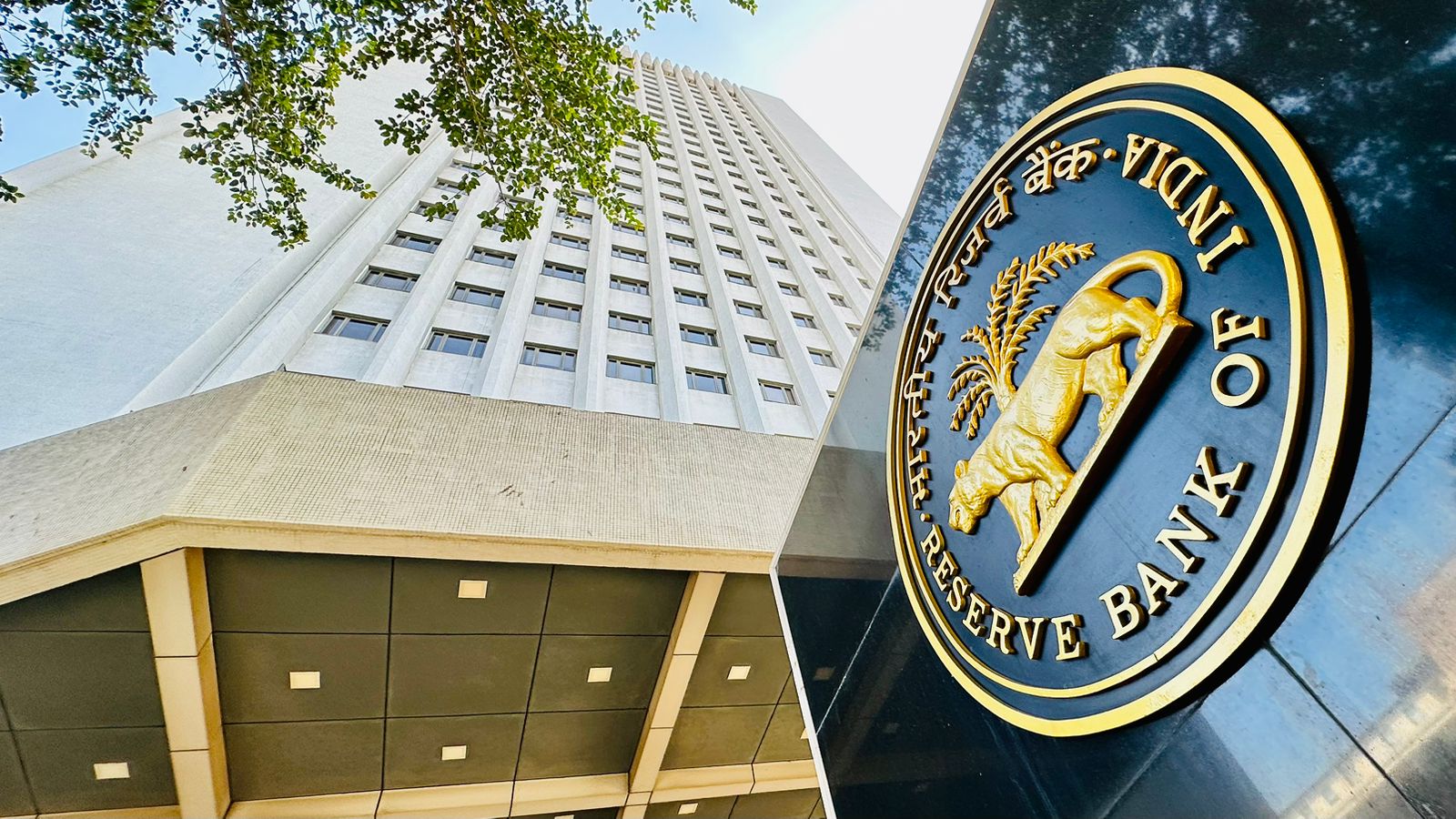
The week started with the domestic currency hitting a fresh all-time low on Sept. 30, led by global uncertainties. The focus later shifted to the Reserve Bank of India's Monetary Policy Committee, which kept the benchmark rate unchanged at 5.5%.
Below are the top events and news of the week that ended on Oct. 3.
MPC Repo Rate Decision
On Wednesday, at the conclusion of its bi-monthly MPC meet, the RBI kept the repo rate unchanged at 5.5% for the second consecutive time, in a unanimous decision.
The central bank also retained its 'neutral' stance, with most of the commentary from RBI Governor Sanjay Malhotra alluding to lower inflation.
However, the RBI revised the CPI inflation forecast downward, while revising the GDP growth forecast upward. Space for monetary action has opened up, Malhotra said, adding that the MPC considers it prudent to wait before beginning to cut rates further.
RBI's Lending Reforms
RBI proposed a series of measures to improve credit flow, ease costs and expand lending flexibility. The central bank said that a risk-based deposit insurance premium framework will be introduced, lowering costs for higher-rated banks.
Further, the bank also proposed to remove the regulatory ceiling on lending against listed debt securities. Moreover, limits for lending against shares raised from Rs 20 lakh to Rs 1 crore per person, and IPO financing caps enhanced from Rs 10 lakh to Rs 25 lakh per person.
Another key decision announced was the proposal of a framework set to enable Indian banks to finance corporate acquisitions. Earlier, Indian banks were barred from funding mergers and acquisitions, forcing companies to rely on non-banking financial institutions or bond markets for such transactions.
Rupee At Record Low
The Indian rupee plunged to a fresh lifetime low of Rs 88.80 per US dollar on Monday, Sept. 30, marking a deepening of pressure on the currency amid global and domestic headwinds.
However, the Reserve Bank of India on Wednesday announced a slew of measures to promote the internationalisation of the rupee. These include allowing foreigners to invest money stored in rupee vostro accounts in corporate bonds.
"We have been making steady progress in the use of Indian rupee for international trade. Three measures are proposed in this regard," Governor Sanjay Malhotra said on Wednesday.
Finance Minister On Global Uncertainty
Finance Minister Nirmala Sitharaman on Friday described the current global landscape as undergoing a deep structural shift, rather than a short-term disruption. Speaking at the 4th Kautilya Economic Conclave 2025, she noted that the foundations of the global order are rapidly evolving, with long-standing norms of international engagement being fundamentally redefined.
“We are in an era of unprecedented global uncertainty,” Sitharaman said. She noted that shifts which once took decades are now unfolding within weeks, leaving policymakers grappling with volatility and diminished confidence in continuity.
The minister stressed that India's rise as a stabilising force is neither accidental nor transient.
With a steady share of consumption and investment, she said India's growth is anchored in domestic factors, supported by improved capital expenditure and controlled inflationary pressures.
Trump's Gaza Peace Plan
On Monday, following a meeting between US President Donald Trump said Israeli Prime Minister Benjamin Netanyahu in Washington, the White House released a 20-point plan designed to end the war between Israel and Hamas in Gaza.
The plan, upon acceptance, stipulates the release of all hostages and the remains of those who died within 72 hours by Hamas. On the other hand, Israel would be required to release nearly 2,000 prisoners. It also notes that Israel would not occupy or annex Gaza.
As per the proposal, Gaza residents would remain in their land, and aid would immediately flow in the region. A “panel of experts” would be also be setup to “rebuild and energize” the war-torn area, it added.

-
High US Salaries, No Green Card Certainty: The Financial Calculation Facing Indian H-1B Families

The suspension of PERM processing at eight technology employers does not cancel existing H-1B visas. What it does is force a question many Indian families have been avoiding: is the US salary worth tying your career and family plans to one employer?
-
Swiggy vs Eternal: Food Delivery's Two Rivals Are No Longer In The Same Race
Eternal is building a private AI assistant, dark.ai. Swiggy is still working out how to make Instamart pay, with an operating loss of Rs 895 crore in the July-September quarter while Blinkit stayed profitable.
-
Where You Live Shapes How You Get To Work | The Reason Why
Two-wheelers are the most popular way to get to work in India, accounting for nearly 43% of workplace commutes.
-
Unhedged Position: Can India See An Indonesia-Style Time Correction?
The Nifty is trading below levels it first clocked in 2024. Is there, then, as I have suggested in the headline, potential that the current time correction drags on painfully for the next three-five, even ten years?
-
Navigating Friction And Energy Realities: An Analysis Of Marco Rubio's October Visit To India
Occurring at a critical juncture marked by stalled trade negotiations and escalating geopolitical pressures over global energy supplies, the visit offers a profound window into modern US-India relations.
-
India Exports Capital. Why Not Export Trusteeship?
The big question, then, is whether India can build an institution that global borrowers, investors, banks, and lawyers can trust, even without an Indian connection.
-
France's Economy & Politics Are In Crisis | The Reason Why
Let's look at how the French economy and politics evolved under Nicolas Sarkozy, Franois Hollande and Emmanuel Macron.
-
You May Inherit The Business. You Must Earn Its Credibility.
Succession tests the founder's ability to share authority as much as it tests the next generation's readiness to assume it.
-
Signing Deals Is One Thing; Making Them Work Is Another | The Week In Whys
Sometimes, things don't turn out as planned. Indian companies have lost some bids to rivals, some projects won't produce until 2030.
-
FOMC Wall, PERM Suspension, Hospital Stocks | Talking Points This Week
A PERM suspension would directly affect green-card sponsorship rather than H-1B visas, so the near-term earnings impact could remain relatively limited. The key question is whether this marks a new phase in US scrutiny of Indian IT.









