RBI Monetary Policy: Repo Rate Cut By 25 Basis Points To 6%, Growth Forecast Trimmed
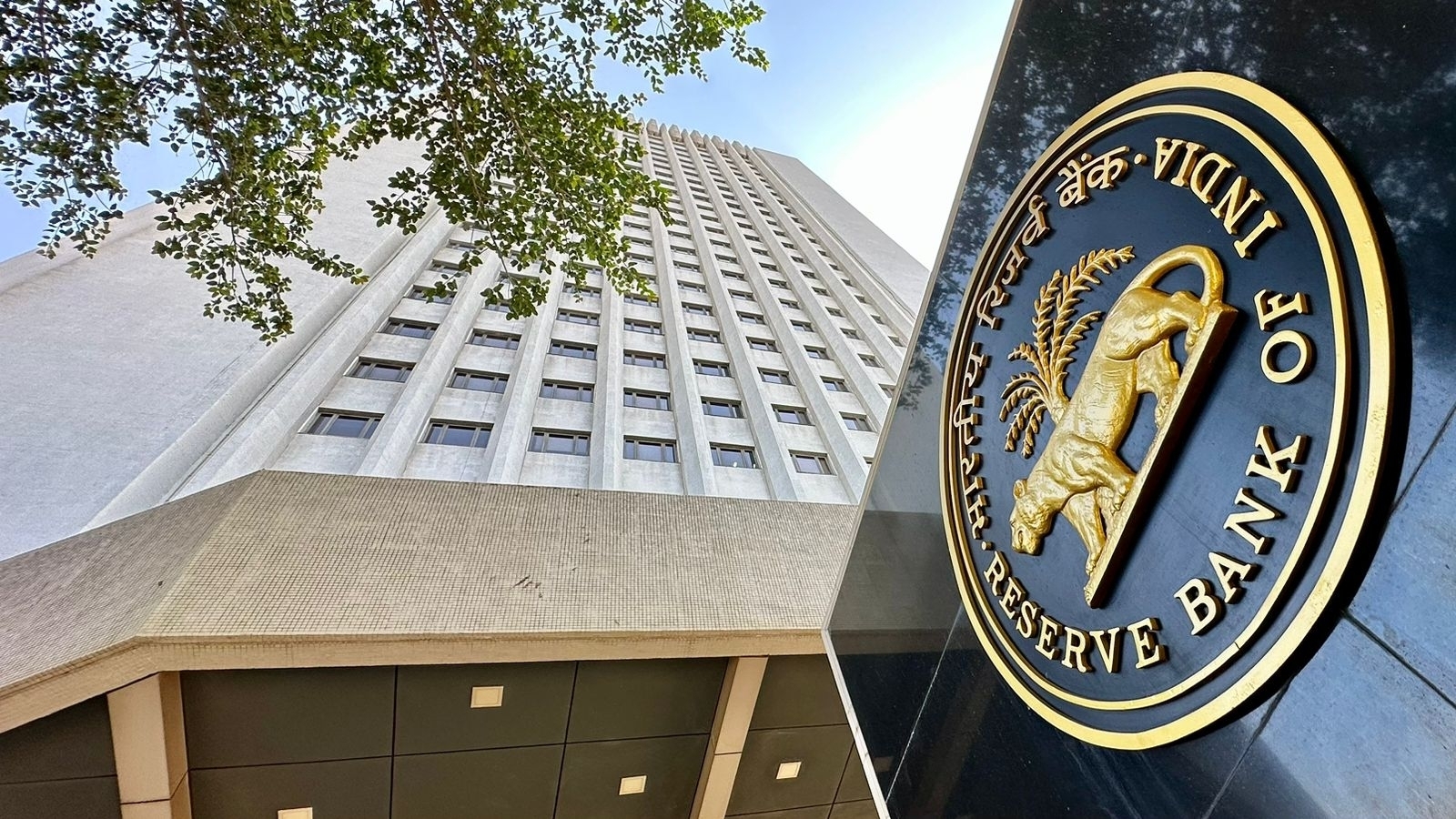
India's Monetary Policy Committee, led by RBI Governor Sanjay Malhotra, cut the benchmark repo rate by 25 basis points while changing its neutral stance to accommodative. This is the second rate cut in a row, following the first one in February.
After the review, the MPC decided the following on lending rates:
To cut the repo rate by 25 basis points to 6.0% unanimously.
The standing deposit facility rate, pegged 25 basis points below the repo rate, is at 5.75%.
The marginal standing facility rate, which is 25 basis points above the repo rate, is 6.25%.
The MPC also decided to change the stance from neutral to accommodative. However, it noted that the rapidly evolving situation requires continuous monitoring and assessment of the economic outlook.
In our context, stance signals the policy rates going forward. Today's change in stance means that absent any shocks, going forward there will be either a further rate cut or a status quo.Sanjay Malhotra, Governor, RBI
A Bloomberg poll of economists expected a 25 basis points rate cut.
The MPC noted that inflation is currently below the target, supported by a sharp fall in food inflation. Moreover, there is a decisive improvement in the inflation outlook. On the other hand, impeded by a challenging global environment, growth is still on a recovery path after an underwhelming performance in the first half of 2024-25.
Growth Outlook
Going forward, sustained demand from rural areas, an anticipated revival in urban consumption, expected recovery of fixed capital formation supported by increased government capital expenditure, higher capacity utilisation, and healthy balance sheets of corporates and banks are expected to support growth.
Merchandise exports would be weighed down by the evolving global economic landscape, which appears to be uncertain at the current juncture, while services exports are expected to sustain the resilience.
On the supply side, while agricultural prospects appear bright, industrial activity continues to recover, and the services sector is expected to be resilient. Headwinds from global trade disruptions continue to pose downward risks.
Taking all these factors into consideration, real GDP growth for 2025-26 is now projected at 6.5%, with Q1 at 6.5%, Q2 at 6.7%, Q3 at 6.6% and Q4 at 6.3%. The risks are evenly balanced.Sanjay Malhotra, Governor, RBI
Inflation Outlook
The outlook for food inflation has turned decisively positive.
There has been a substantial and broad-based seasonal correction in vegetable prices. The uncertainties on rabi crops have abated considerably, and the second advance estimates point to a record wheat production and higher production of key pulses over last year. Along with robust kharif arrivals, this is expected to set the stage for a durable softening in food inflation. A sharp decline in inflation expectations for the three months and one-year ahead periods would help anchor inflation expectations going ahead.
Furthermore, the fall in crude oil prices augurs well for the inflation outlook.
Concerns on lingering global market uncertainties and the recurrence of adverse weather-related supply disruptions pose upside risks to the inflation trajectory.
Taking all these factors into consideration, and assuming a normal monsoon, CPI inflation for the financial year 2025-26 is projected at 4%, with Q1 at 3.6% Q2 at 3.9% Q3 at 3.8% and Q4 at 4.4%. The risks are evenly balanced.Sanjay Malhotra, Governor, RBI

-
High US Salaries, No Green Card Certainty: The Financial Calculation Facing Indian H-1B Families

The suspension of PERM processing at eight technology employers does not cancel existing H-1B visas. What it does is force a question many Indian families have been avoiding: is the US salary worth tying your career and family plans to one employer?
-
Swiggy vs Eternal: Food Delivery's Two Rivals Are No Longer In The Same Race
Eternal is building a private AI assistant, dark.ai. Swiggy is still working out how to make Instamart pay, with an operating loss of Rs 895 crore in the July-September quarter while Blinkit stayed profitable.
-
Where You Live Shapes How You Get To Work | The Reason Why
Two-wheelers are the most popular way to get to work in India, accounting for nearly 43% of workplace commutes.
-
Unhedged Position: Can India See An Indonesia-Style Time Correction?
The Nifty is trading below levels it first clocked in 2024. Is there, then, as I have suggested in the headline, potential that the current time correction drags on painfully for the next three-five, even ten years?
-
Navigating Friction And Energy Realities: An Analysis Of Marco Rubio's October Visit To India
Occurring at a critical juncture marked by stalled trade negotiations and escalating geopolitical pressures over global energy supplies, the visit offers a profound window into modern US-India relations.
-
India Exports Capital. Why Not Export Trusteeship?
The big question, then, is whether India can build an institution that global borrowers, investors, banks, and lawyers can trust, even without an Indian connection.
-
France's Economy & Politics Are In Crisis | The Reason Why
Let's look at how the French economy and politics evolved under Nicolas Sarkozy, Franois Hollande and Emmanuel Macron.
-
You May Inherit The Business. You Must Earn Its Credibility.
Succession tests the founder's ability to share authority as much as it tests the next generation's readiness to assume it.
-
Signing Deals Is One Thing; Making Them Work Is Another | The Week In Whys
Sometimes, things don't turn out as planned. Indian companies have lost some bids to rivals, some projects won't produce until 2030.
-
FOMC Wall, PERM Suspension, Hospital Stocks | Talking Points This Week
A PERM suspension would directly affect green-card sponsorship rather than H-1B visas, so the near-term earnings impact could remain relatively limited. The key question is whether this marks a new phase in US scrutiny of Indian IT.









