RBI Governor Shaktikanta Das Warns NBFCs Against Imprudent Growth, Compliance Culture
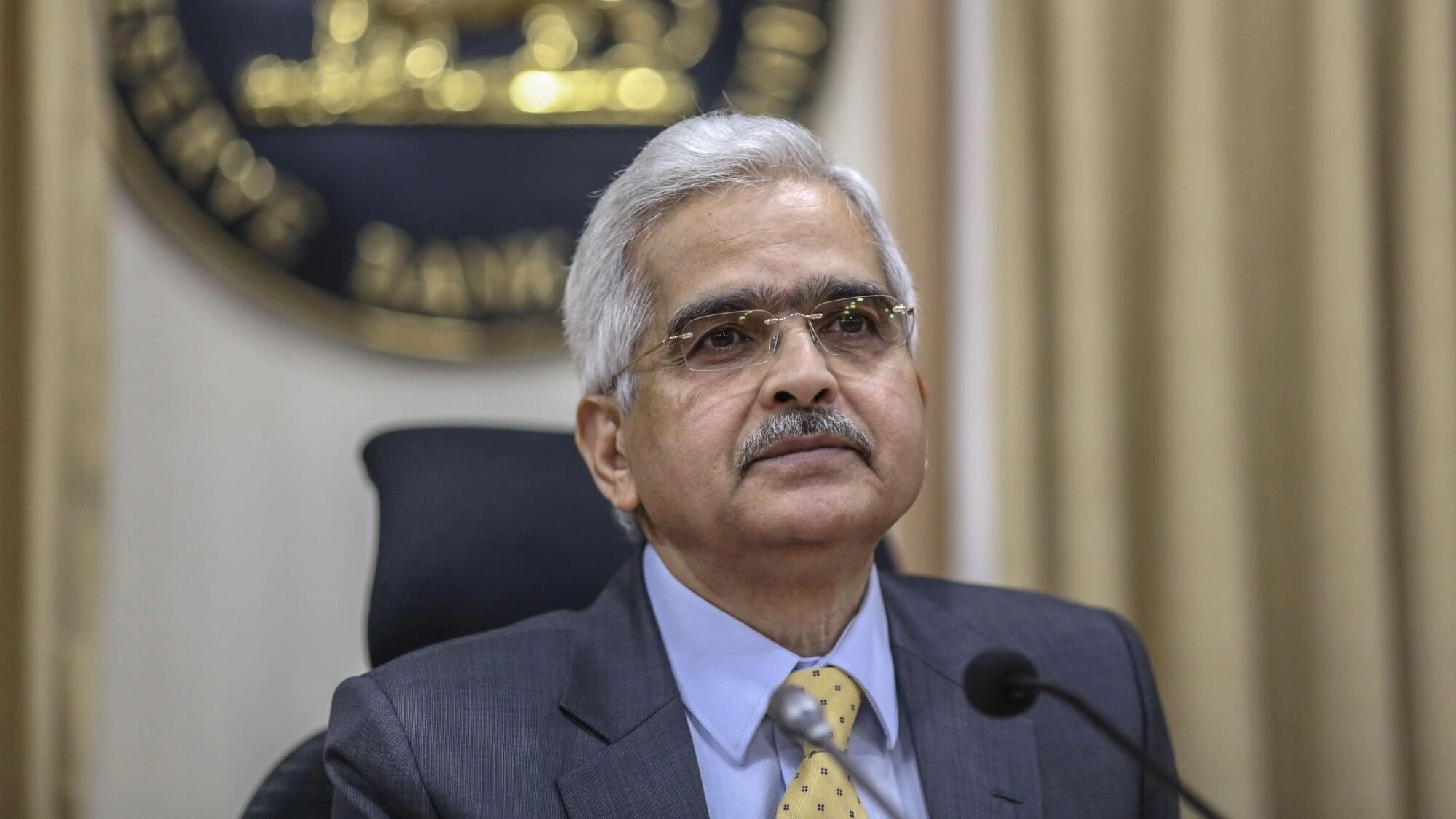
In a broad message to the non-banking financial services sector, the Reserve Bank of India Governor Shaktikanta Das on Wednesday warned the companies against imprudent growth, unfair business practices and usurious interest rates charged by certain outliers.
While the central bank is bilaterally engaging with these NBFCs, Das said that it is a major message not only for the outliers to keep in mind but should also act as a guidance for the entire sector.
"The consequent high cost and indebtedness could pose financial stability risks if not addressed by these NBFCs in time," he said while announcing the monetary policy.
The RBI is closely monitoring these areas of concerns and will not hesitate to take appropriate action, if necessary, he said, adding that self correction by NBFCs would, however, be the desired option.
At the post monetary policy conference, Deputy Governor Swaminathan J said that June to August numbers show there are certain elevated slippages and higher credit costs being seen in select segments.
"So the messaging is targeted towards such NBFCs that are pursuing high risk, high growth strategy and also to certain segments, which are likely to see stress in our estimate," he said.
This has come as the RBI has observed that some NBFCs are aggressively pursuing growth without building up sustainable business practices and risk management frameworks, which should be commensurate with the scale and complexity of their portfolio, Das said.
"An imprudent growth at any cost approach would be counterproductive for their own health. Driven by significant accretion from both domestic and overseas sources and sometimes under pressure from their investors, some NBFCs including MFIs, housing finance companies are chasing excessive returns on their equity," he said.
While such pursuits are in the domain of the boards of these NBFCs, what is concerning is interest rates charged are becoming usurious along with unnecessary high processing fees and frivolous penalties.
Das has asked NBFCs to review their compensation practices, variable pay structures, which appear to be purely target driven in certain NBFCs, as such practices may result in adverse work culture and poor customer service.
In a nutshell, Das said that it is important that NBFCs including microfinance institutions and housing finance companies follow sustainable business goals, a compliance first culture, a strong risk management framework, a strict adherence to fair practices code and a sincere approach to customer driven grievances.
In addition, he also said that the central bank does not treat banks and NBFCs or any other institutions as adversaries.
"We work closely with them in the spirit of cooperation...Its not an adversarial relationship but as the regulator and supervisor of the financial system, it is our duty to point out possible or potential risks becoming more serious," Das responded to a query at the post policy press conference.
These guidelines have come as retail growth has been outpacing overall banking sector credit growth. Last year, the central bank had increased risk weights on personal loans given out by banks and that of banks' exposure to NBFCs.
As of August, non-food bank credit growth rose 15% on year against personal loans, which grew 16.9% on year and credit card outstanding nearly 20%, latest RBI data showed.

-
Where You Live Shapes How You Get To Work | The Reason Why

Two-wheelers are the most popular way to get to work in India, accounting for nearly 43% of workplace commutes.
-
High US Salaries, No Green Card Certainty: The Financial Calculation Facing Indian H-1B Families
The suspension of PERM processing at eight technology employers does not cancel existing H-1B visas. What it does is force a question many Indian families have been avoiding: is the US salary worth tying your career and family plans to one employer?
-
Unhedged Position: Can India See An Indonesia-Style Time Correction?
The Nifty is trading below levels it first clocked in 2024. Is there, then, as I have suggested in the headline, potential that the current time correction drags on painfully for the next three-five, even ten years?
-
Navigating Friction And Energy Realities: An Analysis Of Marco Rubio's October Visit To India
Occurring at a critical juncture marked by stalled trade negotiations and escalating geopolitical pressures over global energy supplies, the visit offers a profound window into modern US-India relations.
-
India Exports Capital. Why Not Export Trusteeship?
The big question, then, is whether India can build an institution that global borrowers, investors, banks, and lawyers can trust, even without an Indian connection.
-
France's Economy & Politics Are In Crisis | The Reason Why
Let's look at how the French economy and politics evolved under Nicolas Sarkozy, Franois Hollande and Emmanuel Macron.
-
You May Inherit The Business. You Must Earn Its Credibility.
Succession tests the founder's ability to share authority as much as it tests the next generation's readiness to assume it.
-
Signing Deals Is One Thing; Making Them Work Is Another | The Week In Whys
Sometimes, things don't turn out as planned. Indian companies have lost some bids to rivals, some projects won't produce until 2030.
-
FOMC Wall, PERM Suspension, Hospital Stocks | Talking Points This Week
A PERM suspension would directly affect green-card sponsorship rather than H-1B visas, so the near-term earnings impact could remain relatively limited. The key question is whether this marks a new phase in US scrutiny of Indian IT.
-
Everything, Everywhere, All At Once: Dalal Street's Week To Forget | Joining The Dots
Visa curbs, a Starlink spat and cancer drug caps: what connects this week's shocks for Indian markets









