RBI Annual Report: At GDP Growth Of 6.5%, India To Remain Fastest Growing Major Economy In FY26
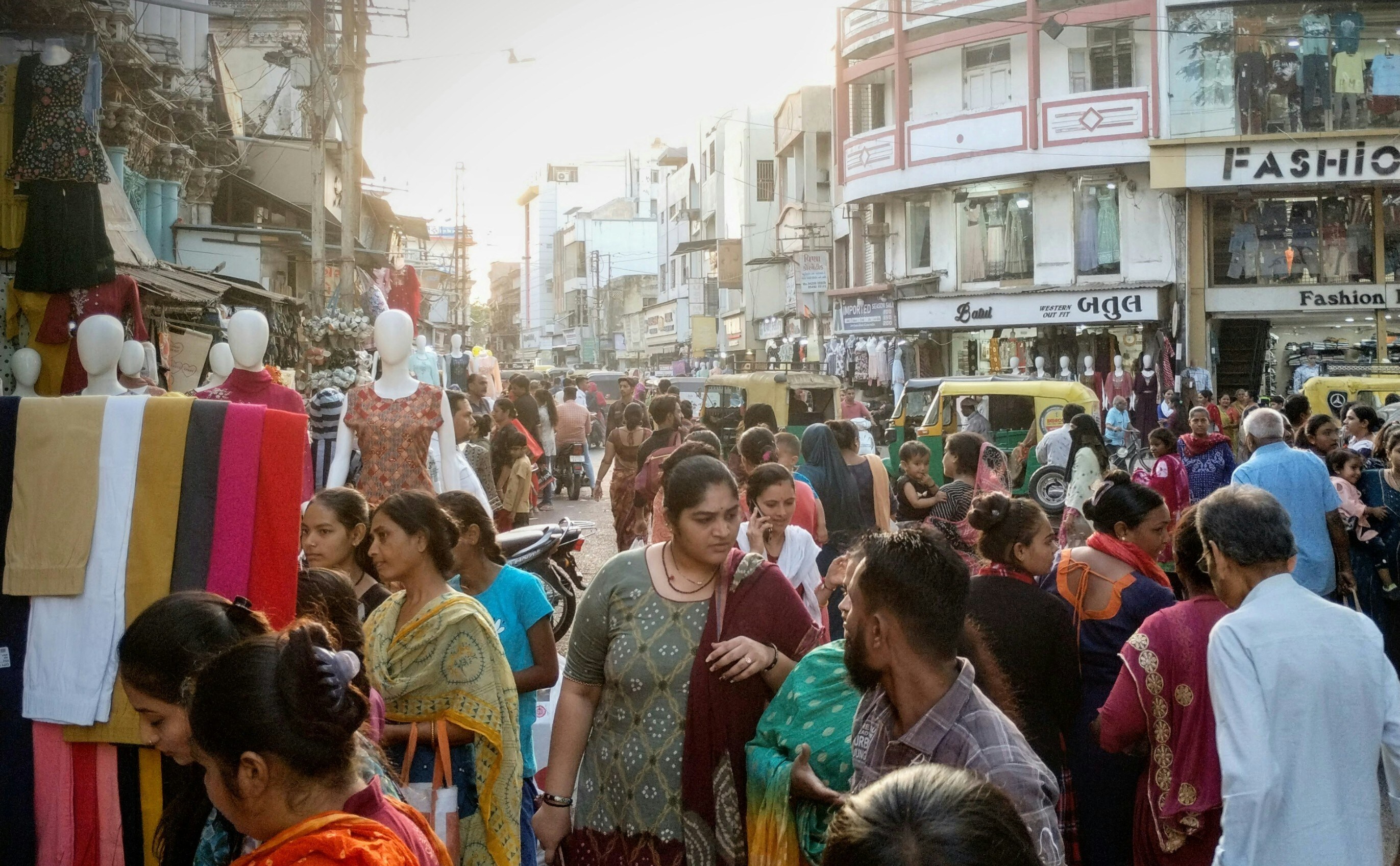
The Indian economy is poised to sustain its position as the fastest growing major economy during 2025-26, supported by pickup in private consumption, healthy balance sheets of banks and corporates, easing financial conditions and the government's continued thrust on capital expenditure, the RBI said in its annual report.
The easing of supply chain pressures, softening of global commodity prices and higher agricultural production on the back of a likely above-normal south-west monsoon augur well for the inflation outlook in 2025-26, it said. Financial markets may exhibit sporadic episodes of volatility triggered by turbulent global financial markets in the wake of heightened uncertainty regarding the evolution of trade tariff policies, among others.
Export sector is also expected to encounter some headwinds from rising geopolitical tensions, inward-looking policies and risk of potential tariff-war among major economies. However, India's participation in 14 free trade agreements and six preferential trade agreements, along with the new trade deals under negotiation with the US, Oman, Peru and the European Union may support growth in trade. Resilient services exports and inward remittances are likely to cushion CAD, which would remain eminently manageable in 2025-26.
Manufacturing sector is expected to gain further traction in 2025-26, supported by improvement in domestic demand, higher capacity utilisation, healthy balance sheets of corporates and banks, and consumer and business optimism. The government's focus on widening the manufacturing base and the policy support through the ongoing PLI scheme and National Manufacturing Mission announced in the Union Budget 2025-26 is expected to further strengthen ‘Make in India' initiative.
The construction sector is also expected to continue its robust performance in 2025-26, aided by increased allocation for Pradhan Mantri Awas Yojana. Moreover, the announcement of the second Asset Monetisation Plan (2025- 30), aimed at unlocking Rs 10 lakh crore through asset monetisation, is expected to provide a significant boost to the infrastructure sector.
These factors are expected to create new employment opportunities, improve labour income and strengthen domestic demand. The optimism about manufacturing and services sectors is also reflected in the forward-looking surveys conducted by the Reserve Bank. Taking into account these factors, real GDP growth for 2025-26 is projected at 6.5%, with risks evenly balanced.
Going forward, easing supply chain pressures, softening global commodity prices, expected higher agricultural production supported by above-normal south-west monsoon and elevated reservoir levels augur well for the inflation outlook in 2025-26. The increasing incidence of climate shocks as seen in recent years, however, warrants careful monitoring of food price outlook.
Prolonged geopolitical uncertainties, excessive global financial market volatilities, trade fragmentation and restrictive trade policies pose upward risks to the inflation trajectory. Taking into account these factors, CPI inflation for 2025-26 is projected at 4%, with risks evenly balanced.
With inflation falling below the target in February and March 2025, supported by a sharp fall in food inflation, there is now greater confidence about a durable alignment of headline inflation with the target of 4.0% over a 12-month horizon.
Robust outlook for India's services trade balance and inward remittance receipts is expected to support CAD to remain well within the sustainable limit during 2025-26. Moreover, the inclusion of Indian sovereign bonds in global bond indices and raising the FDI cap in insurance sector to 100% from 74% earlier, as announced in the Union Budget 2025-26, should continue to bolster foreign investment flows.
In the regulatory space, the Reserve Bank would consolidate and streamline regulations to improve business efficiency and simplify compliance. The PRAVAAH17 portal, which was launched in May 2024, has now made mandatory with effect from May 1, 2025, for REs to submit their applications to the Reserve Bank, it said.
It will continue to improve the efficiency and effectiveness of the portal. The Reserve Bank would continue with the supervisory initiatives aimed at early identification of risks and vulnerabilities, increasing the focus on root cause of vulnerabilities, and harmonising the supervisory rigour across various segments of the financial system.
Further, the Reserve Bank would focus on enhancing cyber resilience and capabilities of supervised entities, by implementing recommendations of the inter-regulatory Working Group on uniformity in baseline cybersecurity guidelines of financial entities.

-
A New Samvat Wishlist: Inclusive Prosperity And Human Development

India has strengthened its economic foundations through infrastructure, digital access and enterprise. Its next growth chapter must deepen productivity, create better livelihoods and widen participation in prosperity.
-
Love, Sex Aur Dhokha: The Audacious Plot To Spy On Jensen Huang
A Taipei dinner, a Singapore chip buyer and a suspected Chinese asset: inside the alleged spy operation that got close to NVIDIA's Jensen Huang.
-
Ten Things I Learnt This Samvat
Patience can be a trap. Cheap stocks can stay cheap. Leverage can wipe you out. What did Samvat 2082 teach us? Niraj Shah writes on 10 lessons from the year gone by.
-
Talking Points This Week: Tech Nerves, FII Buying, And A Faraway Banking Shock
The global markets are not shining this Diwali. The exception in the large markets is, India.
-
Midterm Rally Lasted A Day. The Hard Reality Of A Divided US May Last Two Years | Opinion
Between a contested AI boom, a debt ceiling that arrives in 2027 and a president with every incentive to act alone, the next two years may prove more volatile than the first day's rally suggests.
-
Blue Wave Will Derail the AI Trade but Won't Dismantle the AI Era | Unhedged Position
The Democrats' sweep of the US Congress will see politics collide with economic forces both over the long and short term.
-
It's Time To Take The GST Council's Bet On Trust Global
Payment records can prove India's services exports, and clear, proportionate rules can bring foreign digital sellers into the tax net.
-
Opinion | India at 38: From Innovation Overperformer to Innovation Powerhouse
India now has 453 VC-backed deep science startups, 18 of them late-stage, after 117 percent growth since 2020. Laurus Labs, at USD 9.3 billion, is the most valuable deep science company in any middle-income economy outside China.
-
Navigating Energy Crossroads: S Jaishankar's Call For Diversified Supply Chains At G20 Ministerial Meeting
As geopolitical fault lines continue to test maritime trade routes and commodity flows, Jaishankar's message remains pertinent: true economic resilience requires open markets, protected transit lines, and a genuine commitment to multilateral cooperation rather than coercion.









