Powell Signals Fed Would Respond To Persistent Inflation Shock
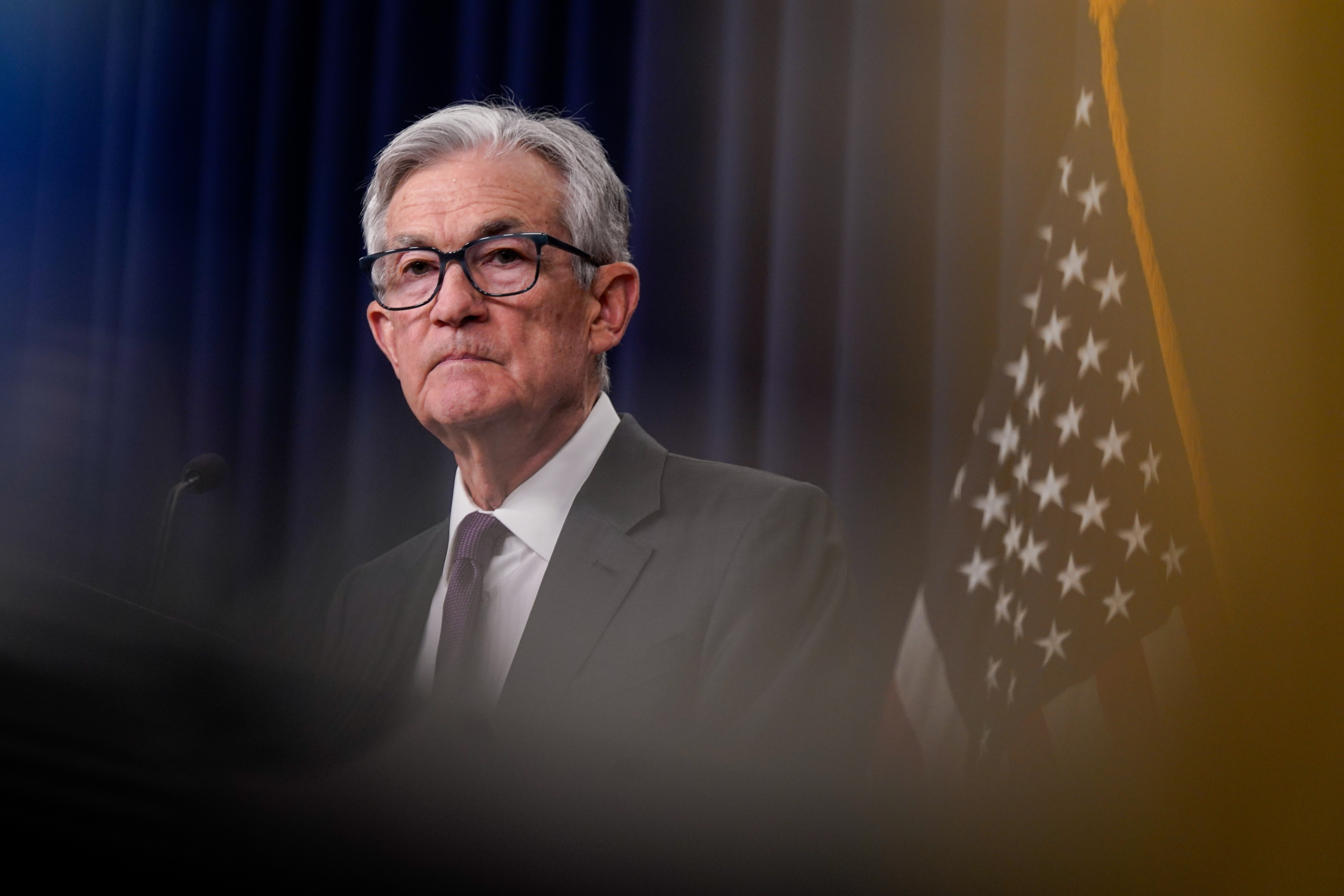
Federal Reserve Chair Jerome Powell said the economic impact of new tariffs is likely to be significantly larger than expected, and the central bank must make sure that doesn't lead to a growing inflation problem.
“While uncertainty remains elevated, it is now becoming clear that the tariff increases will be significantly larger than expected,” Powell said in prepared remarks Friday at the Society for Advancing Business Editing and Writing annual conference. “The same is likely to be true of the economic effects, which will include higher inflation and slower growth.”
His remarks follow President Donald Trump's announcement of sweeping new tariffs on imports from across the globe, which has already begun provoking retaliatory responses from foreign governments.
Powell's tone was more cautious than his March 19 press conference when he said the inflationary impact of tariffs was expected to be transitory.
“While tariffs are highly likely to generate at least a temporary rise in inflation, it is also possible that the effects could be more persistent,” Powell said Friday.
He then stressed that Fed action will be focused on arresting any rise in public perceptions that inflation was slipping from the Fed's control.
“Our obligation is to keep longer-term inflation expectations well anchored and to make certain that a one-time increase in the price level does not become an ongoing inflation problem,” he said. “We are well positioned to wait for greater clarity before considering any adjustments to our policy stance.”
The Fed chair and his colleagues are facing a narrower path to land the economy back at full employment with low inflation. Tariffs announced by the Trump administration Wednesday challenge both sides of the Fed's mandate to maintain stable prices and maximum employment.
Fed officials will next gather May 6-7 in Washington.
Shortly before Powell's speech, Trump said on Truth Social that it is a “PERFECT” time for Powell to cut interest rates. “He is always ‘late,”' Trump posted. “CUT INTEREST RATES, JEROME, AND STOP PLAYING POLITICS!”
Stocks have tumbled by about 11% this year, measured by the S&P 500 Index, and yields on government 10-year notes had fallen below 4%, as of Friday morning, on the near-term risks to growth.
Powell spoke after the release of the March jobs report which showed non-farm payrolls rose by 228,000 last month. The unemployment rate ticked up to 4.2%. Some analysts are discounting the importance of the report in light of the tariff news.
Reading current data, Powell said the economy “is still in a good place.”
Bloomberg Economics has estimated the tariffs Trump announced so far could take the average effective tariff rate in the US to around 22%, from 2.3% in 2024.
Forecasters are raising their recession probability estimates, and futures contracts on the benchmark lending rate show investors betting on as many as four cuts in the policy rate this year.
Tariffs — essentially a tax on imports — could raise prices on a variety of consumer goods and services and squeeze margins at businesses trying to hold the line on price.
Inflation has been above the 2% target since 2021, and a continued miss could test public confidence in the price goal.
A tariff-induced spike in prices that produced second-round effects with further increases in inflation — and public expectations of higher prices over the medium term — would cause officials to hold back on cutting the rate and raise the possibility of an increase.
If the tariffs result in a one-time price shock with negative effects on growth and hiring, then Fed officials might consider the need for a cut, albeit with some delay as they wait for more data.

-
Talking Points This Week: Tech Nerves, FII Buying, And A Faraway Banking Shock

The global markets are not shining this Diwali. The exception in the large markets is, India.
-
Midterm Rally Lasted A Day. The Hard Reality Of A Divided US May Last Two Years | Opinion
Between a contested AI boom, a debt ceiling that arrives in 2027 and a president with every incentive to act alone, the next two years may prove more volatile than the first day's rally suggests.
-
Blue Wave Will Derail the AI Trade but Won't Dismantle the AI Era | Unhedged Position
The Democrats' sweep of the US Congress will see politics collide with economic forces both over the long and short term.
-
It's Time To Take The GST Council's Bet On Trust Global
Payment records can prove India's services exports, and clear, proportionate rules can bring foreign digital sellers into the tax net.
-
Opinion | India at 38: From Innovation Overperformer to Innovation Powerhouse
India now has 453 VC-backed deep science startups, 18 of them late-stage, after 117 percent growth since 2020. Laurus Labs, at USD 9.3 billion, is the most valuable deep science company in any middle-income economy outside China.
-
Navigating Energy Crossroads: S Jaishankar's Call For Diversified Supply Chains At G20 Ministerial Meeting
As geopolitical fault lines continue to test maritime trade routes and commodity flows, Jaishankar's message remains pertinent: true economic resilience requires open markets, protected transit lines, and a genuine commitment to multilateral cooperation rather than coercion.
-
Indians Are Travelling, But Not Every Journey Is A Holiday | The Week In Whys
Pilgrims, patients and working women are the real travellers, and the system hasn't quite caught up with them.
-
Getting To Work Costs Women More | The Reason Why
It is not just about women paying more than men. It is about women paying much more in cities than in villages.
-
AI Bias In Investing Cannot Be Eliminated, But It Can Be Governed
Framing is a particularly important example as identical financial information presented in terms of gains rather than losses can lead an LLM to reach a different assessment.









